Importing plastic products from China to the USA can be a cost-effective way to source products for retail, manufacturing, packaging, and e-commerce. However, getting the best price is only part of the process. Importers also need to understand tariff classification, shipping costs, U.S. product regulations, and customs clearance requirements.
Whether you’re importing plastic bags, household items, packaging materials, or industrial components, the key is to identify the correct product classification, confirm applicable duties, prepare the necessary documents, and choose a shipping method that fits your budget and delivery schedule.
This guide covers the main plastic products exported from China to the United States, how to classify them, which shipping options to consider, and how to avoid common import compliance problems.
1. Main Plastic Products China Exports to the U.S.
China supplies a wide range of plastic products to the U.S. market, serving industries such as consumer goods, construction, packaging, automotive manufacturing, and electronics.
The main product categories include the following.
Plastic Packaging Materials
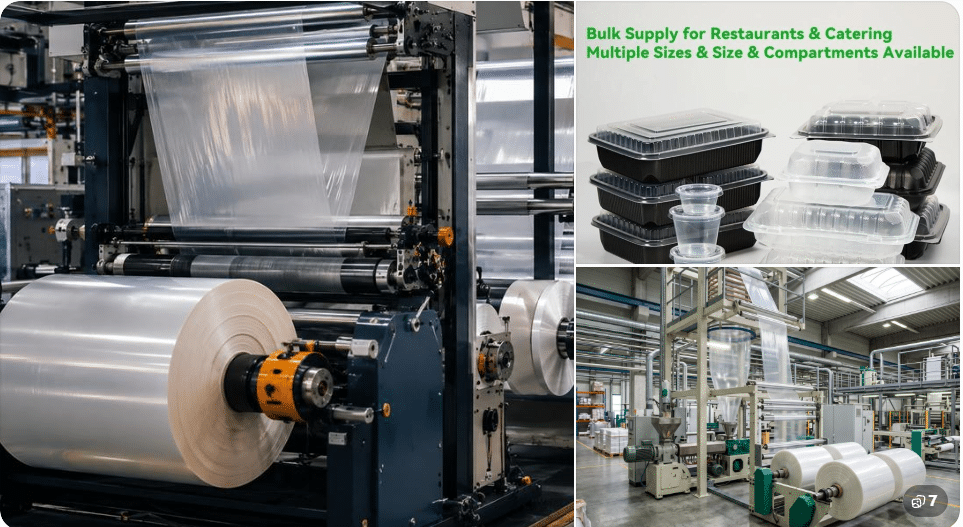
Plastic packaging is widely used in retail, food distribution, warehousing, and e-commerce. Common imports include plastic bags, wrapping films, protective packaging, containers, and other packaging materials.
Before importing, check whether the intended use triggers food-contact requirements, state packaging rules, or restrictions on certain single-use plastic products.
Plastic Household Products
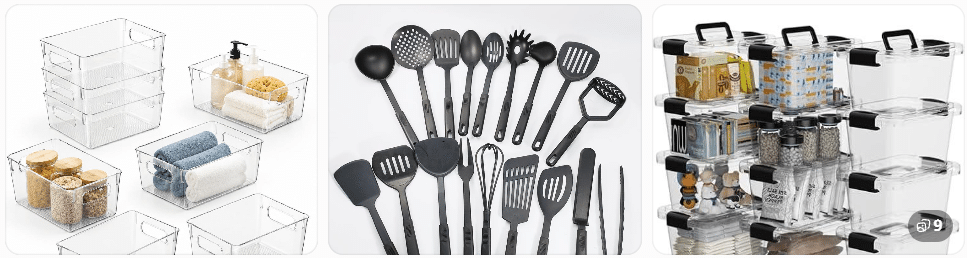
Household plastic products include storage containers, kitchen accessories, organizers, laundry baskets, buckets, and other everyday items. These products are commonly sold through retailers, wholesalers, and online marketplaces.
For products intended for food contact or use by children, additional safety requirements may apply depending on the product’s materials, design, and intended use.
Plastic Building and Construction Materials
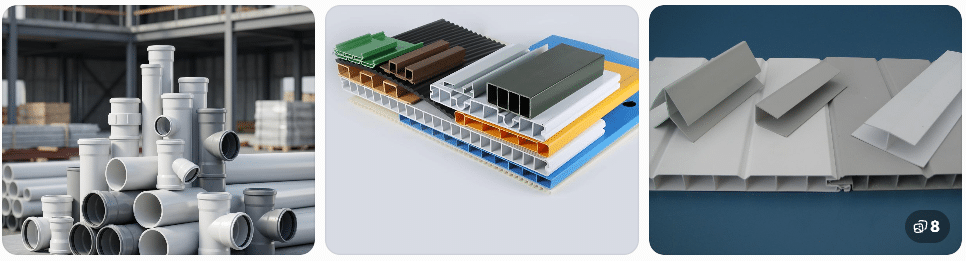
Construction-related imports include PVC pipes and fittings, plastic panels, flooring components, insulation accessories, and other building materials.
Importers should confirm product specifications, applicable building codes, fire-performance requirements, and relevant industry standards before ordering.
Plastic Industrial and Automotive Components
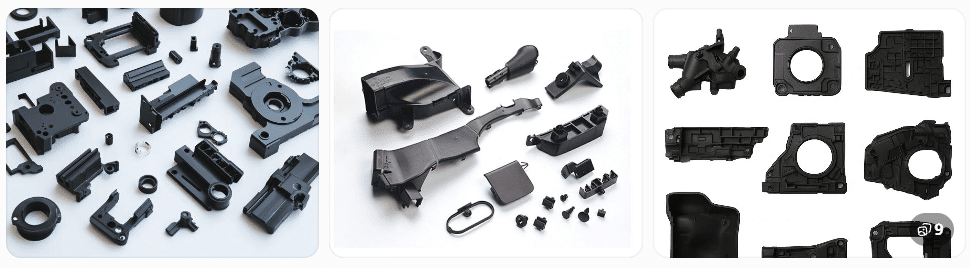
Industrial plastic products include injection-molded parts, machinery components, protective housings, automotive fittings, and custom-engineered components.
For these products, dimensional accuracy, material consistency, durability, and quality control are often more important than the lowest purchase price.
Plastic Consumer Goods and Accessories
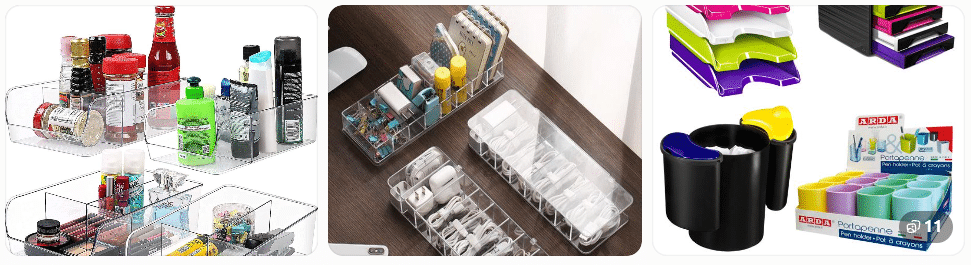
This category includes office supplies, plastic accessories, organizers, toys and other consumer goods. Requirements vary considerably by product type.
For example, plastic toys intended primarily for children may be subject to mandatory toy safety standards and testing, while ordinary office accessories may face a different set of requirements.
Importing tip: Before requesting a shipping quote, prepare a detailed product description, material composition, intended use, unit value, country of origin, dimensions, and weight. These details help your customs broker determine the appropriate tariff classification and identify potential compliance requirements.
2. Understanding Tariff Classification for Plastic Goods
Tariff classification is one of the most important steps when importing plastic products into the United States. The correct Harmonized Tariff Schedule of the United States (HTSUS) classification determines the product’s applicable duty rate and helps establish whether additional tariffs or other import requirements apply.
How Are Plastic Products Classified?
Plastic products do not all fall under the same tariff category. Classification depends on factors such as material composition, product design, intended use, and whether the goods are raw materials, semi-finished products, or finished articles.
Common classification categories include:
| Product Category | Potential HTSUS Chapter | Examples |
|---|---|---|
| Plastic raw materials and polymers | Chapter 39 | Plastic resins and polymer materials |
| Plastic sheets, films, and plates | Chapter 39 | Packaging films and plastic sheets |
| Plastic bags and packaging articles | Chapter 39 | Shopping bags and plastic packaging |
| Plastic household articles | Chapter 39 | Storage containers and household accessories |
| Plastic pipes and fittings | Chapter 39 | PVC pipes and connectors |
| Plastic components for machinery or other products | Varies | Molded components and specialized parts |
These are general classification references, not definitive tariff assignments. Some plastic products may be classified outside Chapter 39 depending on their function, construction, or use.
How to Determine the Correct HTSUS Code
Before shipping, take the following steps:
- Obtain a detailed product description from the manufacturer.
- Confirm the exact plastic material, such as polyethylene (PE), polypropylene (PP), polyvinyl chloride (PVC), or acrylonitrile butadiene styrene (ABS).
- Identify the product’s intended use, structure, and manufacturing process.
- Review the current HTSUS and identify the appropriate tariff subheading.
- Ask a qualified U.S. customs broker to verify the classification and applicable duty rates.
The U.S. International Trade Commission publishes the official HTSUS, which importers can use to review tariff classifications and general duty information.
Check Additional Tariffs on Chinese-Origin Products
In addition to ordinary customs duties, certain products originating in China may be subject to additional duties under Section 301 or other applicable trade measures.
These additional duties depend on the specific tariff classification, country of origin, and measures in effect when the goods enter the United States. Not every plastic product is subject to the same additional rate.
The Office of the United States Trade Representative provides a search tool for checking Section 301 measures against an eligible HTS subheading.
Important: Do not calculate your landed cost using the ordinary duty rate alone. Verify all applicable tariffs, exclusions, trade measures, and other charges for your specific product before confirming the purchase order.
3. Container Shipping and Air Freight
Once your product classification and import requirements are clear, the next decision is how to transport your goods from China to the United States.
The two main options for commercial shipments are ocean freight and air freight. The best choice depends on cargo volume, delivery deadlines, product value, and budget.
Ocean Freight: FCL and LCL
Ocean freight is generally suitable for larger shipments because it offers a lower transportation cost per unit when cargo volume is sufficient.
Full Container Load (FCL)
FCL means your shipment uses an entire container. It is often a good option for bulk plastic products, household goods, packaging materials, and large orders of industrial components.
Advantages include:
- Lower shipping cost per unit for suitable shipment volumes.
- Fewer consolidation and deconsolidation steps.
- Better control over container loading and cargo handling.
However, you must account for container utilization, destination charges, and inland delivery costs.
Less Than Container Load (LCL)
LCL allows smaller shipments to share container space with goods from other importers.
It is useful when your order does not justify a full container, although consolidation fees and additional handling can increase the overall cost per unit.
For lightweight but bulky plastic products, compare the shipment’s cubic volume carefully. Products such as empty containers, plastic organizers, and packaging materials can occupy substantial space even when their actual weight is relatively low.
Air Freight
Air freight is suitable for urgent shipments, product samples, high-value plastic components, and inventory that needs to be replenished quickly.
Its main advantages are faster transit and greater flexibility for smaller shipments. The disadvantages are higher transportation costs and chargeable-weight rules that can make bulky plastic products expensive to ship.
Ocean Freight vs. Air Freight
| Factor | Ocean Freight | Air Freight |
|---|---|---|
| Transit time | 18-45 days | 5-10 days |
| Cost | Generally lower for large shipments | Generally higher |
| Shipment size | Well suited to bulk cargo | Better suited to smaller or urgent cargo |
| Best use case | Large orders and planned inventory | Samples, urgent orders, and time-sensitive components |
| Main considerations | Port handling, congestion, and inland delivery | Chargeable weight, flight schedules, and handling costs |
Transit times are indicative and should be confirmed with your freight forwarder. Door-to-door delivery usually takes longer than the main international transportation segment.
How to Reduce Shipping Costs
To control transportation costs when importing plastic products from China:
- Compare FCL, LCL, and air freight based on the actual cargo dimensions and weight.
- Optimize carton dimensions and packaging to reduce wasted space.
- Request a complete quotation covering origin charges, international freight, destination handling, and inland delivery.
- Plan orders in advance to avoid unnecessary air freight.
- Confirm whether cargo insurance and customs brokerage are included.
The cheapest freight option is not necessarily the cheapest overall solution. Compare the total landed cost, including customs duties, taxes, handling, and delivery to your warehouse.
Quick Decision Guide
- Choose Ocean FCL if your shipment fills a 20 ft. or 40 ft. container, and timing is flexible
- Choose Ocean LCL if your cargo is under 15 CBM and cost matters more than speed
- Choose Air Freight if you need goods in 2 weeks or less, or if your goods are high-value and lightweight
How much does it cost to ship from China to the US
Total costs vary widely based on product type, shipment size, and current tariff rates. As a general estimate, expect to add 30% to 60% on top of your product cost when you factor in freight, duties, and broker fees. Always run a landed cost calculation before ordering.
| Shipping Mode | Cost Range |
|---|---|
| LCL (Less than Container Load) | $50 to $100 per cubic meter |
| FCL (20-foot container) | $2,800 to $4,300 |
| FCL (40-foot container) | $3,800 to $5,500 |
| Air Freight | $4.5 to $9.5 per kilogram |
Example: Landed Cost of Plastic Chairs from Shenzhen to Los Angeles
Suppose you import 1,000 plastic chairs from Shenzhen, China, to Los Angeles, USA, at a purchase price of $8 per chair.
Shipping Route: Shenzhen → Port of Los Angeles → Los Angeles Warehouse
- Quantity: 1,000 chairs
- Purchase Price: $8.00 per chair
- Total Value of Goods: $8,000
- Shipping Method: 20-foot full container load (FCL)
- Assumed Trade Terms: FOB Shenzhen
- Destination: Commercial warehouse in Los Angeles
Landed Cost Calculation
| Cost Item | Calculation | Estimated Cost |
|---|---|---|
| Product Cost | 1,000 × $8 | $8,000 |
| China Inland Transportation and Export Handling | Estimated | $450 |
| Ocean Freight | Estimated | $2,000 |
| Marine Insurance | Estimated | $50 |
| U.S. Destination and Customs Brokerage Fees | Estimated | $800 |
| Local Trucking in Los Angeles | Estimated | $450 |
| Import Duties | Illustrative 37.5% of $8,000 | $3,000 |
| Other Government Fees | Estimated | $43.58 |
| Total Landed Cost | Sum of all costs | $14,793.58 |
Landed Cost per Chair:
$14,793.58 ÷ 1,000 = $14.79 per chair
In this example, the purchase price is $8 per chair, but the estimated landed cost increases to approximately $14.79 per chair after transportation, customs clearance, duties, and other import-related expenses.
Important: The 37.5% duty rate is an illustrative assumption, not a confirmed rate for all plastic chairs from China. The actual tariff depends on the correct U.S. HTS classification and applicable additional duties, including any exclusions or changes in effect on the date of entry. Confirm the final rate with a U.S. customs broker before shipping.
4. Regulatory Compliance Beyond CBP
Clearing U.S. Customs and Border Protection (CBP) does not automatically mean a plastic product meets every U.S. regulatory requirement. Depending on the product’s intended use, materials, and target market, importers may also need to comply with requirements administered by other federal agencies.
FDA Requirements for Food-Contact Plastics
Plastic food containers, bottles, utensils, packaging films, and other products intended to contact food may fall under U.S. Food and Drug Administration (FDA) requirements.
The substances used in these products must be authorized for the intended food-contact use where required. Compliance can depend on the specific resin, additives, manufacturing conditions, and type of food contact.
Before importing food-contact plastic products, confirm:
- Whether the materials and additives are authorized for the intended use.
- Whether supporting compliance documentation and migration-testing data are available.
- Whether the product’s temperature limits and conditions of use match the intended application.
- Whether any additional FDA requirements apply to the particular product.
A supplier’s statement that a product is “food grade” should not be treated as sufficient proof of compliance.
CPSC Requirements for Consumer Products
Plastic toys, children’s products, and certain other consumer goods may be subject to requirements enforced by the U.S. Consumer Product Safety Commission (CPSC).
For children’s products subject to applicable federal safety rules, importers generally must ensure testing by a CPSC-accepted laboratory and issue a Children’s Product Certificate (CPC) based on the required testing. Other regulated consumer products may require a General Certificate of Conformity (GCC).
Before ordering these products, verify the applicable standards, testing requirements, certification obligations, and recordkeeping rules.
EPA Requirements and Chemical Compliance
Plastic products may contain polymers, additives, plasticizers, pigments, and other chemical substances. Depending on the product and its composition, certain chemical import requirements may apply.
The Environmental Protection Agency (EPA) administers the Toxic Substances Control Act (TSCA),which includes import certification requirements for applicable chemical substances and mixtures. Certain requirements may also apply to articles containing regulated substances.
Importers should obtain sufficient information about product composition and consult their customs broker or compliance specialist to determine whether TSCA certification or other chemical restrictions apply.
State and Local Requirements
Federal compliance is not always the end of the process. Certain plastic products may also be affected by state or local rules concerning single-use plastics, packaging, recycling, labeling, or chemical restrictions.
These requirements vary by jurisdiction and product type. If you plan to sell through multiple U.S. states, check the rules that apply to your products and intended sales locations before importing a large quantity.
5. How Plastic Products Clear U.S. Customs
Once your products are ready for shipment, the next step is to prepare the import entry and coordinate customs clearance.
Although the exact process depends on the shipping method and product type, most commercial imports follow several key stages.
Step 1: Prepare the Required Documents
Before shipment, work with your supplier and freight forwarder to prepare the necessary documents.
Common documents include:
- Commercial invoice: Identifies the products, quantities, transaction values, seller, and buyer.
- Packing list: Specifies carton counts, packaging details, dimensions, and weights.
- Bill of lading: The principal transport document for ocean freight.
- Air waybill: The transport document for air freight.
- HTSUS classification information: Supports tariff classification and duty calculation.
- Country-of-origin information: Establishes where the goods originate.
- Product compliance documents: Includes applicable test reports, certificates, permits, or agency-specific information.
CBP requires an adequate description of the merchandise, quantities, values, and appropriate tariff classification as part of the applicable entry documentation.
Ensure that product descriptions and declared values are accurate and consistent across the relevant documents.
Step 2: Confirm the Importer of Record
The Importer of Record (IOR) is responsible for ensuring that the import entry is accurate and that applicable customs requirements are met.
Before shipment, confirm who will act as the IOR and who will handle customs entry, duty payments, and any required product compliance documentation.
A customs broker can file entries on your behalf, but using a broker does not automatically remove the importer’s legal responsibilities.
Step 3: Submit the Import Security Filing for Ocean Freight
For most ocean cargo entering the United States, an Importer Security Filing (ISF), commonly called “10+2,” must be submitted to CBP no later than 24 hours before the cargo is loaded onto the vessel destined for the United States.
Late, inaccurate, or incomplete filings can lead to penalties and shipment complications.
Coordinate with your customs broker or freight forwarder early enough to obtain the required information from the supplier.
Step 4: File the Customs Entry and Pay Applicable Duties
When the shipment arrives, the importer or its authorized customs broker submits the required entry information.
CBP reviews the entry and may examine the shipment or request additional documentation. The importer must pay the applicable duties and other charges according to the relevant entry procedures.
The customs broker should confirm the applicable duty rates, additional tariffs, entry deadlines, and any other requirements before the shipment arrives.
Step 5: Complete Any Required Agency Review
If the plastic products fall under the jurisdiction of another agency, additional information, inspections, testing records, or certificates may be required.
For example, food-contact products may require FDA review, while regulated children’s products may need supporting safety documentation.
A shipment subject to additional agency review may take longer to clear than an otherwise similar shipment without those requirements.
Step 6: Arrange Final Delivery
After the shipment is released, arrange transportation to your warehouse, distribution center, retail location, or fulfillment facility.
For ocean freight, confirm container pickup deadlines, terminal charges, free time, and the potential costs of demurrage or detention. For air freight, check warehouse handling and cargo collection arrangements.
U.S. Customs Clearance Checklist
| Requirement | What to Confirm |
|---|---|
| Product classification | Correct HTSUS code and applicable duty rates |
| Country of origin | Accurate origin declaration |
| Commercial invoice | Correct descriptions, quantities, and values |
| Packing list | Accurate carton counts and shipment details |
| Importer of Record | Responsible party identified |
| ISF filing | Timely filing for applicable ocean shipments |
| Tariff calculation | Ordinary duties and applicable additional tariffs |
| Product compliance | Required agency documents and certifications |
| Final delivery | Transportation and destination charges confirmed |
6. Common Compliance Risks When Importing Plastic Products
Even when a supplier is experienced in exporting to the United States, importers can still encounter compliance problems. The most effective way to reduce these risks is to verify important details before production and shipment.
Risk 1: Incorrect Tariff Classification
Plastic products can look similar but fall under different tariff subheadings because of differences in composition, construction, or intended use.
An incorrect classification may result in additional duties, delayed clearance, or other customs consequences.
How to avoid it: Provide your customs broker with detailed product specifications, photographs, material information, and intended-use descriptions. Verify the classification against the current HTSUS and applicable trade measures.
Risk 2: Unexpected Tariffs and Import Costs
The total duty burden may include ordinary customs duties and additional tariffs applicable to certain Chinese-origin goods.
How to avoid it: Calculate the landed cost before placing the order. Confirm the current tariff treatment for the specific HTSUS classification, including applicable Section 301 measures and other additional duties.
Risk 3: Missing Product Testing or Certification
Products such as plastic toys and regulated consumer goods may require testing, certification, or other compliance documentation.
How to avoid it: Identify the applicable requirements before production. Obtain valid test reports and certificates, and ensure that they cover the exact product model, materials, and manufacturing specifications being imported.
Risk 4: Inadequate Documentation
Incomplete invoices, inconsistent product descriptions, inaccurate values, or missing shipping information can delay customs clearance.
How to avoid it: Review the commercial invoice, packing list, transport documents, classification details, and origin information before departure. Make sure all documents accurately describe the actual shipment.
Risk 5: Unsupported Food-Contact Claims
Some suppliers advertise plastic products as food-safe without providing sufficient evidence that the materials are authorized for the intended application.
How to avoid it: Request material specifications, relevant regulatory documentation, and supporting test data. Verify compliance based on the product’s intended use and applicable FDA requirements.
Risk 6: Incorrect Country-of-Origin Declarations
The country of origin must be declared accurately. Shipping goods through another country or changing their packaging does not automatically change their origin.
How to avoid it: Maintain records showing where the products were manufactured and assess any claimed origin change under the applicable rules. Do not rely on a supplier’s proposed labeling or routing arrangement without verification.
Risk 7: Choosing a Freight Forwarder Based Only on Price
A low freight quotation may exclude customs brokerage, destination handling, delivery charges, or other important services.
How to avoid it: Request an itemized quotation that clearly identifies included services, exclusions, customs responsibilities, and potential additional charges. Choose a provider that can coordinate effectively with your customs broker.
Conclusion
Importing plastic products from China to the USA requires more than finding a supplier and arranging transportation. Importers need to understand product classification, calculate the full duty burden, choose the right shipping method, prepare accurate documents, and verify all applicable regulatory requirements.
Ocean freight is generally a practical choice for larger shipments, while air freight is better suited to urgent or smaller consignments. Regardless of the transportation method, accurate tariff classification and early compliance checks can help prevent unexpected costs and clearance delays.
Before placing your order, confirm the product specifications, HTSUS classification, country of origin, applicable tariffs, and any product-specific requirements. Then work with a reliable freight forwarder and qualified U.S. customs broker to coordinate transportation and clearance.
With proper preparation, you can make better sourcing decisions, control landed costs, and build a more reliable supply chain for plastic products imported from China.
Disclaimer: Import duties, additional tariffs, and product regulations can change. Verify the requirements applicable to your specific products and entry date with CBP, the relevant regulatory agencies, and a qualified customs professional before shipping.