Importing toys from China to the United States involves more than finding a manufacturer and arranging international shipping. Importers must also understand U.S. toy safety regulations, product testing, customs classification, import duties, labeling requirements, customs clearance, and final delivery.
For U.S. importers, wholesalers, toy brands, and e-commerce sellers, the most effective approach is to confirm product compliance before production, calculate the full landed cost before shipping, and prepare all required documents before the goods leave China.
This guide covers the key steps, regulations, costs, shipping methods, and potential risks involved in importing toys from China to the USA.
1. Where to Find Toy Manufacturers and Suppliers in China
China has an extensive toy manufacturing industry, with major production clusters in Guangdong, Zhejiang, and Jiangsu. The best sourcing channel depends on your product category, order volume, customization needs, and quality requirements.
| Sourcing Channel | Best For | What to Check |
|---|---|---|
| Toy manufacturers | Bulk orders, OEM, and ODM production | Factory capabilities, production capacity, quality control |
| Alibaba.com | Wholesale sourcing and international orders | Supplier verification, samples, compliance documents |
| Yiwu wholesale markets | Small toys, inexpensive products, mixed purchases | Product quality, labeling, batch consistency |
| Canton Fair and industry exhibitions | Finding long-term suppliers and new products | Factory credentials, samples, delivery capacity |
| Sourcing agents and inspection companies | Multi-supplier purchasing and complex orders | Service fees, inspection scope, contractual responsibilities |
What to Check Before Placing an Order
Before selecting a supplier, confirm the following details:
- Product specifications: Materials, dimensions, colors, age grading, accessories, and battery configuration.
- Order terms: Minimum order quantity (MOQ), unit price, sample fees, payment terms, and production lead time.
- Quality requirements: Material safety, durability, small-parts risks, coatings, and chemical testing.
- Compliance documents: Existing test reports, applicable safety standards, tracking information, and label samples.
- Packaging and export details: Carton dimensions, gross and net weight, units per carton, country-of-origin marking, and export documentation.
A supplier’s CE marking or test report issued for another market does not automatically establish compliance with U.S. toy safety requirements. Importers should verify the applicable U.S. standards based on the product’s design, intended age group, and intended use.
2. Understanding U.S. Toy Import Regulations
Toy imports into the United States are subject to requirements administered primarily by the U.S. Consumer Product Safety Commission (CPSC) and U.S. Customs and Border Protection (CBP). Other agencies may also apply to specific products.
2.1 Key U.S. Toy Safety Regulations and Standards
| Regulation or Standard | Main Requirements | Products Potentially Affected |
|---|---|---|
| Consumer Product Safety Improvement Act (CPSIA) | Lead limits, phthalate restrictions, and children’s product tracking labels | Children’s products covered by applicable provisions |
| ASTM F963 | Toy mechanical, physical, flammability, and other applicable safety requirements | Toys covered by the mandatory toy safety rules |
| 16 CFR Part 1250 | Mandatory toy safety rules incorporating the applicable version of ASTM F963 | Toys within the scope of the rule |
| 16 CFR Part 1303 | Restrictions on lead-containing paint and certain surface coatings | Products with covered paints or surface coatings |
| 16 CFR Part 1307 | Restrictions on specified phthalates | Applicable children’s toys and child care articles |
| 16 CFR Part 1501 | Small-parts requirements addressing choking hazards | Certain products intended for young children |
| 16 CFR Part 1505 | Electrical safety requirements for applicable electrically operated toys | Covered electric toys |
Toys intended for children 12 years old or younger generally require testing by a CPSC-accepted third-party laboratory when testing is required by the applicable rules. The manufacturer or importer must issue a Children’s Product Certificate (CPC) based on the required compliance evidence.
The applicable version of ASTM F963 should be determined according to the product’s manufacturing date and the relevant effective-date provisions.
Official reference: U.S. Consumer Product Safety Commission (CPSC) — Testing and Certification Requirements.
2.2 What Documents and Certificates Are Required?
Children’s Product Certificate (CPC)
A CPC identifies the applicable children’s product safety rules and certifies that the product complies with those requirements. It must be issued by the responsible domestic manufacturer or importer based on appropriate compliance evidence.
Third-party laboratory test reports
Test reports demonstrate compliance with applicable safety requirements. Depending on the toy, testing may cover mechanical hazards, chemical substances, flammability, electrical safety, or other relevant risks.
Tracking labels
Covered children’s products generally require tracking information on the product and its packaging to the extent practicable. This may include the manufacturer’s or private-label brand owner’s information, production location and date, and batch or other identifying details.
Commercial import documents
Typical documents include the commercial invoice, packing list, bill of lading or air waybill, product classification information, country-of-origin details, and information required for customs and regulatory declarations.
2.3 CPSC Electronic Filing Requirements in 2026
As of July 8, 2026, CPSC electronic filing requirements apply to most regulated consumer products within the scope of the applicable rule. Importers should confirm the requirements for submitting certificate data through the CBP Partner Government Agency (PGA) Message Set.
Before shipping, verify that:
- Your customs broker or filing system supports the applicable CPSC electronic filing process.
- Certificate information matches the product model, test reports, and imported goods.
- Required certificate data is available before the import declaration is submitted.
- Each applicable product or SKU has the correct supporting compliance information.
A PDF copy of a CPC alone may not satisfy all applicable electronic filing requirements.
2.4 Additional Compliance Risks by Toy Type
| Toy Type | Key Compliance Considerations |
|---|---|
| Plastic toys and building blocks | Small parts, mechanical safety, and chemical restrictions |
| Plush toys and fabric toys | Filling materials, seam strength, flammability, and applicable material requirements |
| Electric and remote-controlled toys | Electrical safety, batteries, chargers, and applicable wireless equipment rules |
| Magnetic toys | Magnet strength, detachable components, and ingestion hazards |
| Infant toys and teething toys | Age grading, product construction, materials, and chemical safety |
| Toy cosmetics and makeup kits | Ingredients, intended use, and potential FDA requirements |
| Toy guns and imitation firearms | Applicable identification requirements, including orange-tip rules where relevant, and state or local restrictions |
| Toys containing button batteries | Battery compartment protection, applicable battery safety rules, and warning labels |
Not every toy requires the same tests or certifications. Requirements depend on its design, intended age group, materials, functions, and applicable regulations.
3. HTS Codes and Import Duties for Toys from China
Before importing toys, determine the correct classification under the U.S. Harmonized Tariff Schedule (HTSUS). The classification affects the ordinary duty rate and may determine whether additional trade measures apply.
3.1 Common HTS Classification Categories for Toys
| Product Type | Potential HTS Classification | Classification Considerations |
|---|---|---|
| Tricycles, scooters, and similar wheeled toys | Relevant subheadings under heading 9503 | Product construction, propulsion, and intended use |
| Building blocks and construction toys | Relevant subheadings under heading 9503 | Materials, configuration, and function |
| Dolls and doll accessories | Relevant subheadings under heading 9503 | Whether the item is a doll, accessory, or another type of toy |
| Electric and remote-controlled toys | Relevant subheadings under heading 9503 or another applicable heading | Principal function and product design |
| Stuffed animal toys | Relevant subheadings under heading 9503 | Product type and construction |
| Board games and tabletop games | Relevant subheadings under heading 9504 or another applicable heading | Game format and intended use |
| Sports equipment and imitation products | Potentially other HTS chapters | Whether the product is legally classified as a toy |
These categories are starting points for research, not complete tariff classifications. The final code must be determined using the current HTSUS, applicable legal notes, general rules of interpretation, and the product’s actual characteristics.
Use the official U.S. International Trade Commission (USITC) HTSUS search tool to research product classifications.
3.2 What Duties and Fees Apply to Chinese Toys?
| Cost or Duty | Explanation |
|---|---|
| General import duty | Based on the final HTS classification and applicable general duty rate |
| China-related additional tariffs | Depend on the trade measures in effect, the product classification, and applicable conditions |
| Section 301 tariffs | Apply when the product falls within a covered tariff provision, subject to any applicable exclusions or special rules |
| Merchandise Processing Fee (MPF) | Customs processing fee determined by the applicable entry type and current fee schedule |
| Harbor Maintenance Fee (HMF) | May apply to covered ocean shipments, depending on the applicable rules |
| Inspection and port charges | May include examination, terminal handling, storage, and demurrage or detention charges |
| International freight costs | Ocean freight, air freight, insurance, customs brokerage, and inland delivery |
3.3 How to Calculate Import Duties
Import duties are generally calculated using the applicable customs value and the relevant tariff rates. MPF, HMF, and logistics charges should be calculated separately rather than treated as additional product duty rates.
For example, assume a shipment of toys has a customs value of $20,000:
- General duty: If the applicable rate were 5%, the duty would be $1,000.
- Additional duty: If a separate applicable rate were 10%, the additional duty would be $2,000.
- Total of these two hypothetical duties: $3,000, excluding other applicable fees.
The 5% and 10% rates are illustrative assumptions, not confirmed 2026 tariff rates for Chinese toys. Actual rates must be verified using the product’s classification, origin, entry date, and applicable trade measures.
3.4 What Should Importers Check About Tariff Changes in 2026?
U.S.-China trade policies can change, and announcements about proposed tariff adjustments or product lists should not automatically be treated as effective duty reductions.
Before shipping, confirm:
- Whether the complete HTS code appears on an applicable tariff list.
- Whether the relevant measure has formally taken effect.
- Whether the product’s Chinese origin meets the measure’s conditions.
- Whether any exclusions, special rates, or additional trade measures apply.
- Whether the rate quoted by your broker corresponds to the actual import entry date.
Use official legal notices and the current HTSUS to confirm applicable duties rather than relying solely on news reports or supplier estimates.
4. Toy Labeling, Packaging, and Country-of-Origin Marking
Labeling issues can be expensive to correct after production. Confirm the required product labels and retail packaging before approving mass production.
4.1 Made in China Marking
Foreign-origin goods imported into the United States generally must be marked with their country of origin unless an applicable exception applies.
For toys manufactured in China, the origin marking must comply with CBP requirements regarding wording, visibility, legibility, and permanence, as applicable.
A brand name on the packaging does not replace the required country-of-origin marking.
4.2 Age Grading and Warning Labels
Determine the appropriate age grading based on the toy’s design, intended users, and applicable safety requirements.
Certain toys containing small parts, small balls, or marbles may be subject to specific restrictions or choking-hazard warning requirements. Products intended for children under three require particular attention to small-parts hazards.
Common labeling checks include:
- Product name, model, and intended age group.
- Manufacturer, importer, or brand-owner information.
- Country-of-origin marking.
- Applicable warnings and instructions.
- Children’s product tracking information.
- Consistency between retail packaging and the actual product.
Warning labels must reflect the actual product risks and applicable regulations. Adding a warning label does not make an otherwise noncompliant product compliant.
5. Shipping Methods for Toys from China to the USA
The best shipping method depends on shipment volume, weight, cargo value, delivery deadlines, and the final destination in the United States.
For large quantities of bulky toys, ocean freight is often suitable for controlling transportation costs. Air freight and express courier services may be more appropriate for urgent replenishment, product launches, samples, or small shipments.
5.1 Ocean Freight: FCL
Full container load (FCL) shipping is suitable for large orders that can fill a container or for importers who prefer exclusive use of a container.
Common container options include 20GP, 40GP, and 40HQ.
Best for:
- Large wholesale orders.
- Regular inventory replenishment.
- Established toy supply chains.
Before booking, calculate ocean freight, origin handling, destination terminal charges, customs clearance, and inland transportation.
5.2 Ocean Freight: LCL
Less-than-container-load (LCL) shipping is suitable when the shipment is too small to justify a full container.
Charges generally depend on chargeable volume or weight, along with origin and destination handling fees.
Best for:
- Small and medium-sized orders.
- Multi-supplier purchases.
- Initial product testing and market launches.
Pay particular attention to destination deconsolidation, warehouse handling, and minimum charges, which can make small LCL shipments more expensive than expected.
5.3 Air Freight
Air freight is generally faster than ocean freight but more expensive. Airlines calculate chargeable weight using actual weight and volumetric weight, subject to their applicable rules.
Best for:
- Urgent replenishment.
- New product launches.
- High-value, lightweight toy shipments.
Carton dimensions can significantly affect the final shipping cost.
5.4 International Express Courier
Express services generally provide door-to-door transportation and are suitable for samples, small parcels, and urgent shipments.
Before booking, check whether the toys contain batteries, liquids, magnetic components, or other items that may trigger special transportation requirements.
Best for:
- Product samples.
- Pre-launch testing.
- Small, time-sensitive shipments.
5.5 Comparing Shipping Methods
| Factor | FCL Ocean Freight | LCL Ocean Freight | Air Freight | Express Courier |
|---|---|---|---|---|
| Shipment size | Large | Small to medium | Small to medium | Small |
| Unit shipping cost | Often lower for large volumes | Depends on volume and handling fees | Usually higher | Usually higher |
| Transit time | Longer | Longer, with consolidation handling | Shorter | Generally short |
| Best use | Large wholesale orders | Small orders and mixed cargo | Urgent replenishment | Samples and small parcels |
| Main considerations | Vessel schedules, congestion, container charges | Consolidation, deconsolidation, destination fees | Chargeable weight and flight schedules | Volumetric weight and product restrictions |
Actual transit times depend on the origin city, destination, carrier schedule, routing, and customs conditions. Allow time for pickup, export clearance, departure scheduling, ocean or air transportation, destination handling, import clearance, and final delivery.
5.6 Major U.S. Ports for Toy Imports

U.S. West Coast
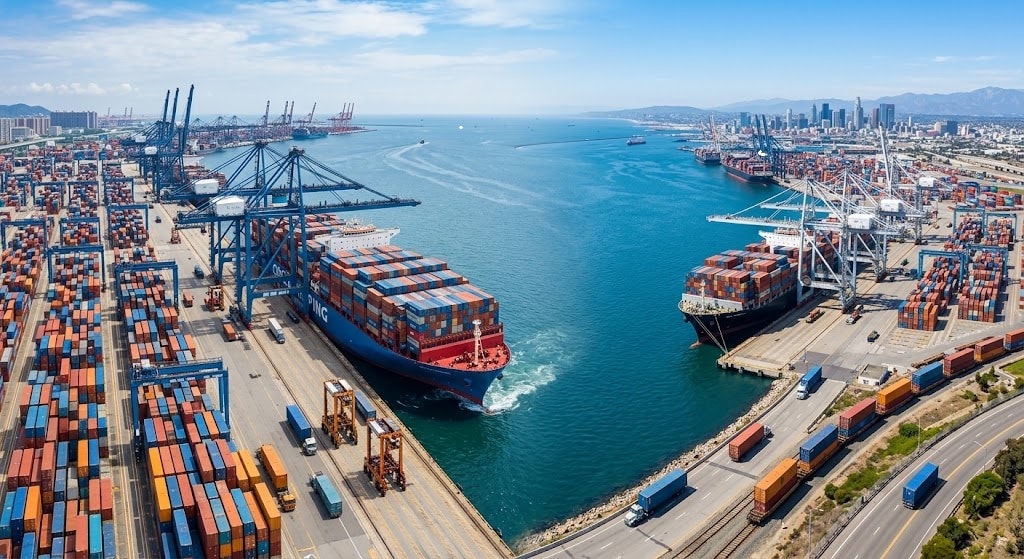
The Ports of Los Angeles and Long Beach are major gateways for imported goods destined for California and other western states. Cargo may also move inland by rail or truck.

U.S. East Coast
The Port of New York and New Jersey serves importers and distribution networks in the Northeast. Compare routing options, port charges, and inland delivery costs.

U.S. Southeast
The Port of Savannah is an important gateway for distribution in Georgia and surrounding markets.
Port selection should be based on the carrier’s actual service, warehouse location, rail or trucking rates, and total delivery time—not just the distance from the port to the destination.
6. Step-by-Step Process for Importing Toys from China
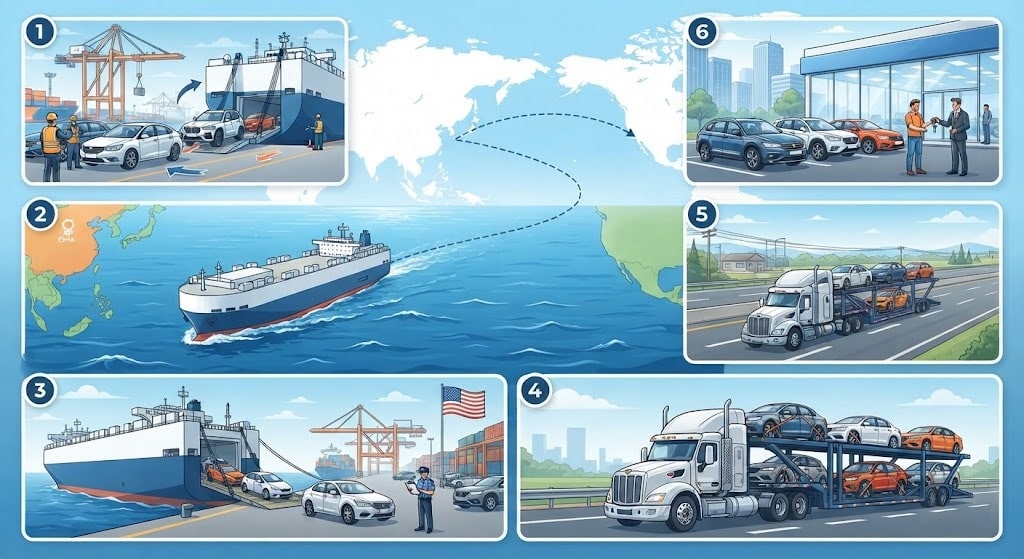
- Define the product and import requirements. Confirm the toy category, intended age group, materials, battery configuration, sales channel, and applicable U.S. safety rules.
- Select suppliers and approve samples. Verify factory capabilities, sample quality, production lead time, packaging specifications, and export experience.
- Arrange product testing and certification. Identify the applicable testing requirements and prepare test reports, the CPC, and required labels.
- Confirm the HTS classification and duties. Check the general duty rate, applicable additional tariffs, MPF, HMF, and other potential charges.
- Choose trade terms and a shipping method. Clarify responsibilities under EXW, FOB, CIF, or DDP and select ocean freight, air freight, or express service.
- Prepare export and import documents. Check the commercial invoice, packing list, transport documents, origin information, and applicable regulatory filing data.
- Arrange pickup, export clearance, and transportation. Verify carton dimensions, packaging strength, shipping marks, cargo descriptions, and container loading.
- Complete U.S. import clearance. The importer or authorized customs broker handles the applicable customs entry, CPSC electronic filing, and payment of duties and fees.
- Resolve inspections and arrange cargo release. Respond promptly to requests for additional documents, examinations, or corrective action.
- Complete warehousing and final delivery. Deliver the shipment to a wholesale warehouse, retail distribution center, e-commerce fulfillment facility, or other designated destination.
6.1 ISF Filing for Ocean Shipments
For applicable ocean imports, the Importer Security Filing (ISF), commonly known as the “10+2” filing, generally must be submitted at least 24 hours before the cargo is loaded onto the vessel at the foreign port.
Importers should coordinate with their freight forwarder and customs broker to confirm filing responsibilities, required data, and deadlines. Incorrect or late filing can result in penalties and other enforcement consequences.
7. Documents Required to Import Toys into the USA
| Document | Main Purpose |
|---|---|
| Commercial Invoice | Identifies the buyer, seller, goods, quantities, prices, and transaction details |
| Packing List | Specifies package counts, dimensions, gross weight, net weight, and packing details |
| Bill of Lading or Air Waybill | Provides transportation and shipment information |
| HTS Classification Information | Supports correct customs classification |
| CPC and Test Reports | Demonstrate applicable children’s product safety compliance |
| Country-of-Origin and Manufacturing Information | Supports origin marking, customs declarations, and compliance reviews |
| CPSC Electronic Filing Data | Supports electronic certificate filing when required |
| ISF Information | Supports applicable ocean import security filings |
| Importer and Customs Brokerage Information | Supports customs entry, applicable bonds, and fee processing |
The exact document checklist depends on the product, shipping method, importer, and applicable regulations. Not every document in the table must be submitted for every shipment, but all applicable legal requirements must be satisfied.
8. How to Calculate the Total Cost of Importing Toys
The total cost of importing toys includes more than the factory price and ocean freight. Testing, packaging, duties, customs clearance, warehousing, and domestic delivery can all affect profitability.
8.1 Main Import Cost Components
| Cost Component | Main Cost Drivers |
|---|---|
| Product purchase | Unit price, order quantity, tooling, and customization |
| Testing and compliance | Required tests, product complexity, and laboratory fees |
| Domestic transportation in China | Factory location and cargo volume |
| Export handling | Export declaration, documentation, packing, and port handling |
| International freight | Shipping method, chargeable weight, cargo volume, routing, and peak-season demand |
| U.S. import duties | HTS classification, customs value, origin, and applicable additional duties |
| Customs and port charges | Brokerage, MPF, applicable HMF, terminal handling, and examinations |
| U.S. inland delivery | Trucking, rail, warehousing, final-mile delivery, and appointment fees |
| Other expenses | Insurance, relabeling, demurrage, detention, and delays |
8.2 How to Calculate Landed Cost per Toy
Landed Cost per Unit=Product Cost + Freight + Duties + Other Import CostsSaleable Units\text{Landed Cost per Unit}= \frac{\text{Product Cost + Freight + Duties + Other Import Costs}}{\text{Saleable Units}}Landed Cost per Unit=Saleable UnitsProduct Cost + Freight + Duties + Other Import Costs
For example, assume a shipment contains 10,000 toys:
- Total product purchase cost: $20,000.
- International transportation, import duties, and other related charges: $8,000.
- Total import cost: $28,000.
- Landed cost per unit: $2.80.
This is a simplified example, not an actual shipping quote or tariff calculation. It may exclude warehousing, marketplace commissions, returns, and domestic fulfillment expenses.
9. Choosing Between EXW, FOB, CIF, and DDP
Different Incoterms allocate transportation responsibilities, costs, and risks between the buyer and seller. The chosen term should be clearly stated in the purchase contract and shipping quotation.
| Incoterm | Main Characteristics | What the Importer Should Confirm |
|---|---|---|
| EXW | The buyer generally handles transportation from the agreed location and most subsequent arrangements | Factory pickup, export clearance, and origin handling |
| FOB | The seller delivers the goods on board the vessel at the named port; used for sea and inland waterway transport | Ocean freight, insurance, and import-side costs after loading |
| CIF | The seller arranges and pays for carriage and the required minimum insurance cover to the named destination port | Destination charges, import clearance, and inland delivery |
| DDP | The seller bears contractual responsibility for delivery to the named destination, including import clearance and applicable import duties | Importer of record arrangements, tax payment, declaration responsibilities, and included charges |
DDP does not eliminate U.S. product compliance obligations. For toy shipments, confirm who is responsible for customs entry, CPSC certificate data and electronic filing, and the payment of applicable duties and fees.
A DDP quotation should not automatically be treated as proof that all taxes, regulatory filings, and product compliance obligations have been handled correctly. Contractual responsibilities must align with the actual import and clearance arrangements.
10. Common Risks When Importing Toys from China
10.1 Failed Product Safety Testing
Noncompliant products may face detention, refusal of admission, recalls, or restrictions on sale.
How to reduce the risk: Confirm applicable testing standards before mass production and arrange sample testing and production quality checks when appropriate.
10.2 Missing or Inconsistent CPC and Electronic Filing Data
A certificate that does not match the product model, test reports, or actual imported goods may trigger compliance reviews and clearance delays.
How to reduce the risk: Check certificate details, product identifiers, and eFiling requirements before shipping.
10.3 Incorrect HTS Classification or Duty Estimates
Classification or tariff errors can lead to underpayment, additional duties, penalties, and unexpected costs.
How to reduce the risk: Verify the complete tariff code, current duty rate, and applicable trade measures before the goods ship.
10.4 Inaccurate Packaging Dimensions or Cargo Estimates
Toys often have lightweight but bulky packaging, which can increase chargeable volume or reduce container utilization.
How to reduce the risk: Measure cartons accurately, confirm package quantities, and compare the total cost of LCL, FCL, and air freight before booking.
10.5 Customs Delays and Additional Charges
Incomplete documents, regulatory examinations, port congestion, and delayed cargo pickup can increase storage and demurrage costs.
How to reduce the risk: Confirm documents, importer information, customs responsibilities, and destination pickup arrangements before departure. Allow sufficient time for potential delays.
11. How Hongocean Can Help with Toy Shipments from China to the USA
For U.S. wholesalers, toy brands, and e-commerce sellers importing toys from China, Hongocean can provide support with transportation planning, shipping documentation coordination, and logistics cost management.
- Shipping plan development: Compare FCL, LCL, air freight, and express options based on cargo volume, weight, delivery deadlines, and destination.
- Logistics cost estimates: Help estimate domestic pickup, export handling, international freight, U.S. port charges, and final delivery expenses.
- Customs coordination: Work with the importer and its U.S. customs broker to organize commercial invoices, packing lists, product descriptions, HTS classification information, and required declaration documents.
- Compliance document coordination: Remind customers to prepare applicable toy test reports, CPC information, and CPSC electronic filing data, and coordinate with the relevant service providers.
- Destination delivery: Coordinate cargo pickup, warehousing, trucking, and delivery after customs release.
- Shipment tracking: Monitor booking, departure, arrival, and delivery milestones to help identify potential delays.
Logistics services do not replace product certification or legal advice. Importers should confirm CPSC compliance, tariff classification, and final duty rates with the appropriate testing laboratories, customs brokers, or qualified trade professionals.
12. Frequently Asked Questions About Importing Toys from China to the USA
12.1 Do I Need a CPC to Import Toys from China?
Toys subject to U.S. children’s product safety requirements generally require a CPC, supported by the required testing or other legally permitted compliance evidence. Specific requirements depend on the product and applicable regulations.
See the CPSC Toy Safety Guide for additional information.
12.2 Do All Toys Imported from China Need ASTM F963 Testing?
Not every product is subject to identical testing requirements. For toys covered by the mandatory U.S. toy safety rules, importers must determine the applicable ASTM F963 version and relevant provisions, then complete the required testing and certification.
The testing scope depends on the toy’s type, design, and applicable requirements.
12.3 What Is the Import Duty on Toys from China to the USA?
There is no single duty rate for all toys. The general duty depends on the HTS classification, while additional China-related tariffs and other fees depend on the applicable trade measures and import circumstances.
Verify the current rates before shipment and reconfirm them for the actual customs entry date.
12.4 Is Ocean Freight or Air Freight Better for Toys?
Ocean freight is generally more economical per unit for large-volume shipments, while air freight or express courier services may be better for urgent replenishment and smaller, higher-value orders.
The best choice depends on cargo volume, delivery deadlines, and total logistics costs.
12.5 How Long Does It Take to Ship Toys from China to the USA?
Transit time depends on the Chinese origin port or city, U.S. destination, carrier schedule, routing, and customs conditions.
Plan for the entire process, including pickup, export handling, vessel or flight schedules, destination clearance, and final delivery—not just the time spent at sea or in the air.
12.6 Can a Chinese Factory Handle U.S. Customs Clearance?
A Chinese factory can arrange logistics services under the agreed contract, but the parties must clearly establish the U.S. import entry arrangements, regulatory filing responsibilities, and payment of duties and fees.
A supplier’s promise does not replace the importer’s responsibility to verify that the arrangement is legally and operationally appropriate.
12.7 Can I Ship Toys Directly to U.S. Consumers?
Direct-to-consumer shipping may be possible depending on the product, transportation method, and applicable import rules. Importers must still verify product safety, customs declarations, duties, and shipping restrictions.
A low-value parcel should not automatically be assumed to qualify for duty-free treatment or exemption from product safety requirements.
12.8 Should I Buy Cargo Insurance for Toy Imports?
Cargo insurance is worth considering, especially for high-value shipments or orders traveling through multiple transportation stages.
Review coverage, deductibles, packaging requirements, and exclusions. Cargo insurance does not replace product liability insurance.
Conclusion
Importing toys from China to the USA requires coordinated planning across sourcing, product safety, customs duties, transportation, and final delivery.
Confirm compliance before mass production, verify tariff classification and applicable duties before shipping, and calculate the complete logistics cost before booking. These steps help reduce the risks of customs delays, unexpected expenses, and delivery disruptions.
For U.S. importers, a reliable supply chain means more than finding a competitively priced manufacturer. It means ensuring that products meet U.S. market requirements and arrive at their final destination safely, compliantly, and on schedule.
For businesses planning to import toys from China, Hongocean can help compare shipping options, coordinate logistics documentation, estimate transportation costs, and arrange delivery to U.S. destinations.