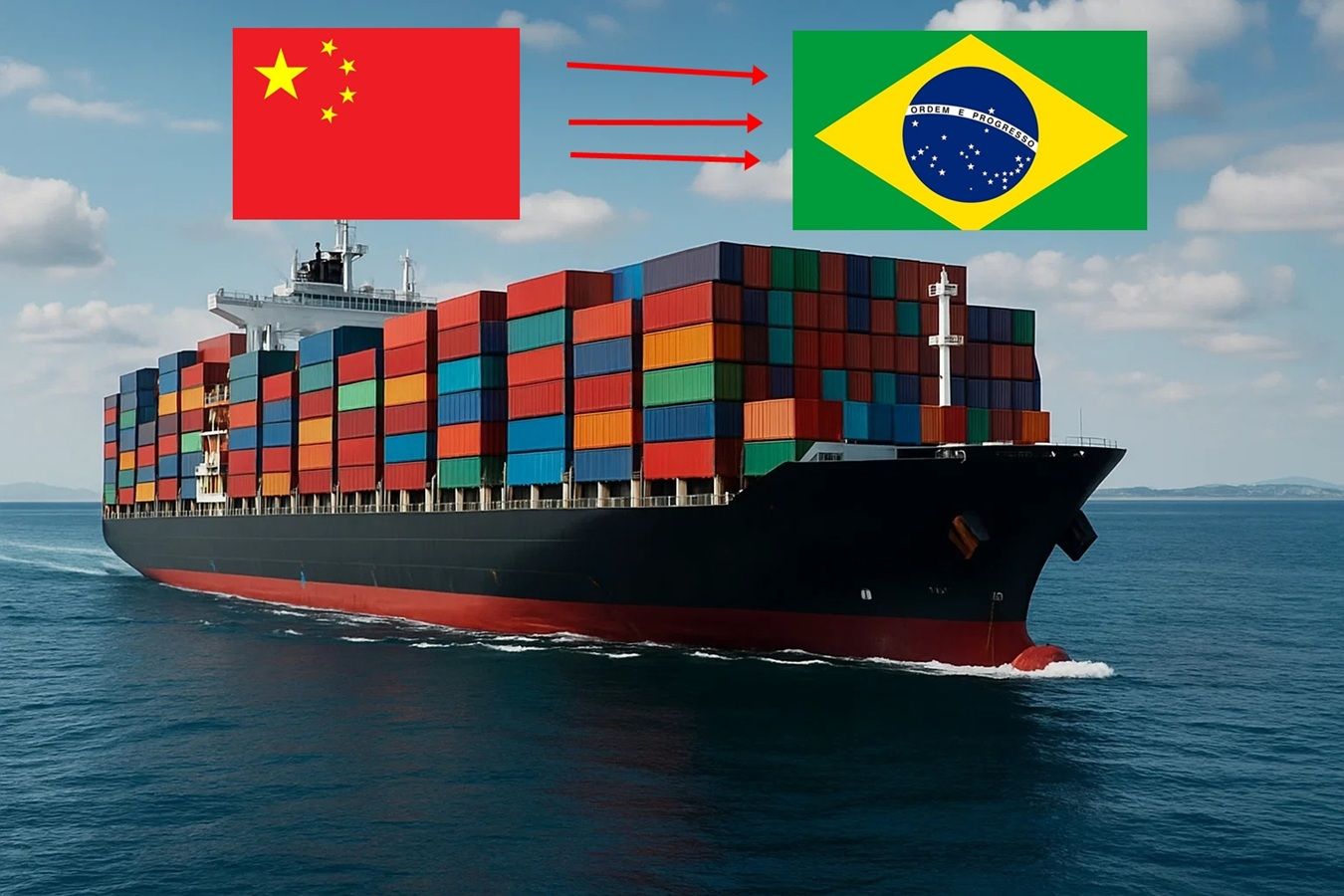

Shipping freight from China to Argentina is a major Asia-to-South America trade lane, but the distance and customs requirements make planning essential. Commercial shipments must clear Argentine Customs through the Agencia de Recaudación y Control Aduanero (ARCA), regardless of whether the cargo arrives by sea or air.
For most commercial cargo, sea freight is the most economical option, especially for full containers, machinery, furniture, electronics, industrial products, and other heavy or high-volume goods. Air freight is the faster option for urgent, high-value, low-volume, or time-sensitive shipments.
Argentina’s import process requires accurate documentation, tariff classification, valuation, and customs clearance before cargo can be released. The country eliminated its SEDI import declaration system in February 2025 as part of its trade liberalization measures, but importers still need to meet applicable customs, tax, product-specific, and documentation requirements.
This guide covers everything: required documents, the customs clearance process, duties and taxes, air and sea freight options, transit times, and the mistakes that cause the most costly delays.
Key Takeaways
-
Sea freight is the primary choice for large commercial shipments from China to Argentina, particularly FCL and LCL cargo.
-
Air freight is best for urgent, high-value, or low-volume shipments that cannot wait several weeks for ocean transit.
-
Core documents include a Commercial Invoice, Bill of Lading or Air Waybill, and Packing List.
-
Argentina requires accurate NCM/HS tariff classification to determine applicable import duties and taxes.
-
A Certificate of Origin may be required for certain products, including goods subject to trade remedies or specific origin requirements.
-
Working with an Argentine customs broker before shipment helps prevent documentation and clearance delays.
-
Current freight rates and transit times vary significantly by origin port, destination, cargo type, carrier, season, and service level.
What China-to-Argentina Freight Shipping Actually Involves
“Just booking a container” is a common misconception among first-time China-to-Argentina shippers. International commercial freight involves multiple parties and customs procedures before cargo reaches the final consignee.
Every commercial shipment requires:
-
A customs declaration filed by the Argentine importer or authorized customs broker
-
Coordination with an Argentine customs broker
-
Advance preparation of commercial and transport documentation
-
Correct HS/NCM classification and customs valuation
-
Payment or guarantee of applicable duties, taxes, and customs charges
-
Coordination with the ocean carrier, airline, freight forwarder, and destination agent
Who Is the Importer of Record?
The importer of record is the Argentine party legally responsible for ensuring that the shipment complies with Argentine import regulations and for paying applicable duties and taxes.
In practice, the Argentine buyer or importing company normally assumes this role. The importer works with a licensed customs broker to prepare and submit the import declaration and supporting documentation.
The importer should confirm its customs registration, tax status, product eligibility, and any required permits before the shipment leaves China. Argentina’s customs system is administered by ARCA, which publishes import information by customs office, transportation method, NCM classification, country of origin, and applicable tariff concepts.
Required Documentation for China-to-Argentina Freight
Documentation errors are one of the most common causes of customs delays. Argentine import documentation differs slightly depending on whether cargo arrives by sea or air.
Bill of Lading (BOL)
For ocean freight, the Bill of Lading is the primary transport document between the shipper, carrier, and consignee.
The BOL should accurately identify the shipper, consignee, cargo description, package quantity, weight, volume, ports of loading and discharge, freight terms, container number, seal number, and applicable shipment terms.
Argentina’s import documentation requirements include the original transport document, such as a bill of lading for maritime shipments.
Air Waybill (AWB)
Air freight shipments use an Air Waybill instead of a Bill of Lading.
The AWB identifies the shipper, consignee, origin airport, destination airport, cargo weight, package information, and transportation terms. Argentina requires an air waybill for air cargo shipments regardless of shipment value.
Commercial Invoice
The commercial invoice is one of the most important documents in the Argentine import process.
It should include:
-
Exporter’s full legal name and address
-
Importer’s full name and address
-
Invoice number and date
-
Detailed description of every product
-
Quantity and unit of measurement
-
Unit price and total transaction value
-
Currency
-
Country of origin
-
Port or airport of export
-
Means of transport
-
Incoterms
-
Payment terms
-
Destination information
Argentina’s import documentation rules specify detailed invoice information, including the exporter, consignee, goods description, quantity, value, origin, transport method, and port or place of entry.
Packing List
A packing list describes how the cargo is physically packed and is particularly important for commercial shipments requiring customs inspection.
It should identify:
-
Number of cartons, pallets, or packages
-
Gross and net weight
-
Dimensions
-
Product descriptions
-
Package marks and numbers
-
Container number where applicable
Argentina requires packing lists for customs clearance in many commercial import situations, particularly for identifying the contents of individual packages.
HS / NCM Codes
All commercial imports into Argentina require tariff classification under the Nomenclatura Común del Mercosur (NCM).
The HS code determines the applicable tariff classification and can influence customs duties, taxes, trade remedies, import restrictions, and product-specific requirements.
Using an incorrect classification can result in customs reassessment, additional duties, inspections, penalties, or delays.
Additional Documents by Freight Type
| Freight Type | Additional Requirements |
|---|---|
| Sea Freight | Bill of Lading, Commercial Invoice, Packing List, insurance certificate if applicable |
| Air Freight | Air Waybill, Commercial Invoice, Packing List |
| Machinery / Industrial Equipment | Technical specifications and product-specific documents where required |
| Food / Agricultural | Applicable sanitary, phytosanitary, or product permits |
| Chemicals / Hazmat | SDS, dangerous goods documentation, and applicable permits |
| Regulated Products | Product registrations, certifications, or approvals where required |
| Origin-Sensitive Goods | Certificate of Origin where applicable |
Argentina’s official import documentation requirements distinguish between maritime and air cargo and require transport documents plus commercial documentation for both.
How the Customs Clearance Process Works
Customs clearance for China-to-Argentina freight begins before the cargo arrives in Argentina. The quality and accuracy of the documents determine whether a shipment clears efficiently or is held for review.
Pre-Arrival Documentation
Before the vessel or aircraft reaches Argentina, the importer and customs broker should have the shipment documentation ready.
The broker reviews:
-
Commercial Invoice
-
Packing List
-
Bill of Lading or Air Waybill
-
HS/NCM classification
-
Country of origin
-
Customs value
-
Product-specific permits
-
Importer information
-
Applicable duties and taxes
For ocean freight, accurate documentation should be provided well before vessel arrival because delays at the port can result in storage, demurrage, and other charges.
For air freight, advance document preparation is even more important because aircraft transit is significantly faster than ocean shipping.
Customs Review and Inspection
At the Argentine port or airport, customs authorities review the import declaration and supporting documents.
Shipments may be selected for additional review based on:
-
Incorrect or incomplete documentation
-
Incorrect tariff classification
-
Valuation discrepancies
-
Product-specific regulatory requirements
-
Country-of-origin issues
-
Random customs controls
-
Anti-dumping, safeguard, or other trade-remedy considerations
A physical inspection can add hours or several days to the clearance process depending on the cargo and the reason for inspection.
Post-Clearance Release and Delivery
Once customs releases the shipment and applicable charges have been paid or otherwise satisfied, the cargo can move to the final consignee.
For ocean freight, this normally means arranging port pickup and inland transportation from the Argentine port.
For air freight, the cargo is collected from the destination airport after customs release and delivered to the consignee by truck or courier.
Keep the complete shipment file after delivery because customs authorities may require supporting documentation for post-entry verification.
Duties, Taxes, and Import Costs: What Businesses Owe in Argentina
Import Duties and Tariff Classification
Unlike the U.S.-Canada lane, China-to-Argentina shipments do not benefit from a bilateral free-trade agreement that automatically eliminates duties on qualifying Chinese-origin products.
The applicable import duty depends on the product’s NCM classification and other tariff rules.
The customs value generally forms the basis for calculating import duties and related import charges. Argentina’s official foreign-trade data identifies the NCM position, applicable tariff concept, and tariff amount for import transactions.
Some products may also be subject to:
-
Anti-dumping duties
-
Countervailing measures
-
Safeguard measures
-
Statistical or other customs charges
-
Product-specific taxes
-
Import VAT and related perceptions
Because the rate varies by product, shippers should verify the exact NCM code before calculating landed cost.
Argentine VAT on Imports
Argentina applies VAT to taxable imports, with the standard VAT rate generally 21%, while certain goods and services can be subject to reduced or special rates.
Importers may also face VAT perceptions and income-tax perceptions depending on their circumstances and the applicable rules. ARCA continues to maintain import-related VAT and income-tax perception regimes, including rules updated in 2026.
The exact landed cost therefore cannot be calculated from the ocean or air freight rate alone.
The Current Import Environment
Argentina has been simplifying its import regime. The government eliminated the SEDI import declaration system effective February 26, 2025, and the previous PAIS tax on foreign-exchange transactions was eliminated in December 2024.
However, this does not mean that commercial imports are tax-free. Importers still need to account for applicable customs duties, VAT, perceptions, statistical charges where applicable, customs brokerage, terminal handling, storage, and inland transportation.
For businesses importing from China, the most important step is to calculate landed cost by NCM code rather than applying a single generic percentage to every product.
Brokerage Fees and DDP
Customs brokerage, port or airport handling, storage, inspection, and inland transportation are separate from the international freight rate.
Delivered Duty Paid (DDP) can simplify the buyer’s experience by allowing the seller or logistics provider to coordinate transportation, customs clearance, duties, taxes, and final delivery.
However, DDP should only be offered when the provider has a compliant structure for acting as or supporting the importer of record in Argentina.
Choosing the Right Freight Mode and Carrier
Primary Freight Modes
-
Sea Freight (FCL): Best for full containers, machinery, furniture, electronics, raw materials, and other high-volume cargo. Lowest transportation cost per unit for large shipments.
-
Sea Freight (LCL): Best for smaller commercial shipments that do not require a full container. Charges are generally based on cubic meters or chargeable volume.
-
Air Freight: Best for urgent, high-value, low-volume, or time-sensitive cargo. Much faster than ocean freight but significantly more expensive per kilogram.
-
Express / Courier: Best for samples, documents, and small parcels rather than standard commercial containerized freight.
For most commercial China-to-Argentina shipments, sea freight is the practical choice for cost-sensitive cargo, while air freight is appropriate when inventory availability and delivery speed are more important than transportation cost.
Typical Transit Times by Lane
Typical transit times vary according to origin city, carrier, routing, transshipment, cargo type, and destination.
-
Shanghai – Buenos Aires: Ocean FCL roughly 38–45 days
-
Shanghai – Buenos Aires: Ocean LCL roughly 38–40+ days
-
Shanghai – Buenos Aires: Air freight roughly 7–14 days depending on service and routing
-
Shenzhen / Guangzhou – Buenos Aires: Ocean freight typically around 40–50 days
-
China – Buenos Aires: Express or expedited air services can be considerably faster for small shipments
Current market examples show Shanghai-to-Buenos Aires ocean FCL services around 45 days, LCL around 39 days, and air freight around 14 days for specified services. Actual transit depends on the booking, routing, carrier, and cargo.
Customs clearance and final delivery are additional to the port-to-port or airport-to-airport transit time.
What to Verify in a China-to-Argentina Freight Provider
Before booking, confirm:
-
Ocean FCL and LCL service availability
-
Air freight service options
-
Experience with Argentine customs
-
Destination customs brokerage capability
-
Ability to handle NCM classification
-
Port and airport handling arrangements
-
Cargo insurance options
-
Experience with regulated or specialized cargo
-
Door-to-door delivery capability
-
DDP or DAP options where appropriate
-
Ability to provide a complete landed-cost quotation
Common China-to-Argentina Freight Mistakes
Documentation Errors That Cause Holds
Three documentation issues consistently create problems:
-
Vague or mismatched product descriptions — The commercial invoice, packing list, and transport document should describe the same cargo accurately.
-
Incorrect HS/NCM codes — Incorrect classification can result in reassessment, additional duties, inspections, or penalties.
-
Missing certificates or product approvals — Certain goods require additional documentation before customs release.
Use the correct NCM classification before the shipment leaves China and provide the Argentine customs broker with the complete document package in advance.
Undervaluation
Declaring goods below their actual transaction value to reduce customs duties is a serious customs compliance problem.
The commercial invoice should accurately reflect the actual transaction value and clearly describe the goods.
Incorrect valuation can lead to customs reassessment, additional taxes, penalties, inspections, and shipment delays.
Carrier and Freight Provider Selection
Carrier selection is where documentation compliance meets execution.
Even perfect paperwork can encounter delays if the freight provider cannot coordinate the Argentine customs broker, destination port or airport, cargo handling, and final delivery.
Freight Provider Checklist
Before booking a China-to-Argentina shipment, verify:
-
✅ Ocean FCL capability
-
✅ Ocean LCL capability
-
✅ Air freight service
-
✅ Argentina customs brokerage support
-
✅ NCM/HS classification assistance
-
✅ Port and airport destination handling
-
✅ Cargo insurance options
-
✅ Door-to-door delivery
-
✅ DDP/DAP options where appropriate
-
✅ Experience with oversized, hazardous, or regulated cargo
-
✅ Real-time shipment tracking
Frequently Asked Questions
Do I have to pay customs for a commercial shipment from China to Argentina?
Commercial imports from China are subject to Argentine customs procedures and may be subject to import duties, VAT, perceptions, and other applicable charges. The exact amount depends on the product’s NCM classification, customs value, origin, and applicable regulations.
What documents do I need to ship from China to Argentina?
At minimum, commercial shipments generally require a Commercial Invoice, Packing List, and transport document. Ocean shipments use a Bill of Lading, while air shipments use an Air Waybill. Additional documents such as a Certificate of Origin, permits, licenses, or product certificates may be required depending on the cargo.
Do I need a customs broker to ship freight from China to Argentina?
A customs broker is strongly recommended for commercial imports because the Argentine importer must comply with customs declaration, classification, valuation, documentation, and tax requirements. Working with a broker before the cargo leaves China can reduce the risk of delays after arrival.
What is the difference between air and sea freight from China to Argentina?
Sea freight is cheaper but slower, making it suitable for FCL, LCL, machinery, furniture, raw materials, and other large shipments. Air freight is faster but more expensive, making it better for urgent, high-value, lightweight, or time-sensitive goods.
For example, current Shanghai-to-Buenos-Aires market examples show approximately 45 days for a 40ft ocean FCL service compared with approximately 14 days for a specified air-freight service.
How long does it typically take to ship freight from China to Argentina?
Sea freight from major Chinese ports to Buenos Aires generally takes around 38–50 days port to port, depending on the origin, carrier, routing, and service. Air freight can take approximately 7–14 days airport to airport on many services, with the exact time depending on routing and connections.
Customs clearance and inland delivery should be added to these transit estimates.
What types of freight are restricted or require additional approval in Argentina?
Food, agricultural products, pharmaceuticals, chemicals, hazardous materials, certain machinery, and other regulated products may require additional permits, certificates, registrations, or inspections.
The Certificate of Origin can also be important for products subject to anti-dumping, countervailing, safeguard, or specific origin requirements.
Should I use FCL, LCL, or air freight from China to Argentina?
Use FCL when you have enough cargo to justify a full container and want the lowest cost per unit. Use LCL for smaller commercial shipments that do not require a full container. Use air freight when speed is more important than transportation cost.
For high-volume China-to-Argentina shipments, comparing FCL, LCL, and air on a total landed-cost basis is usually better than comparing freight rates alone.