Blog
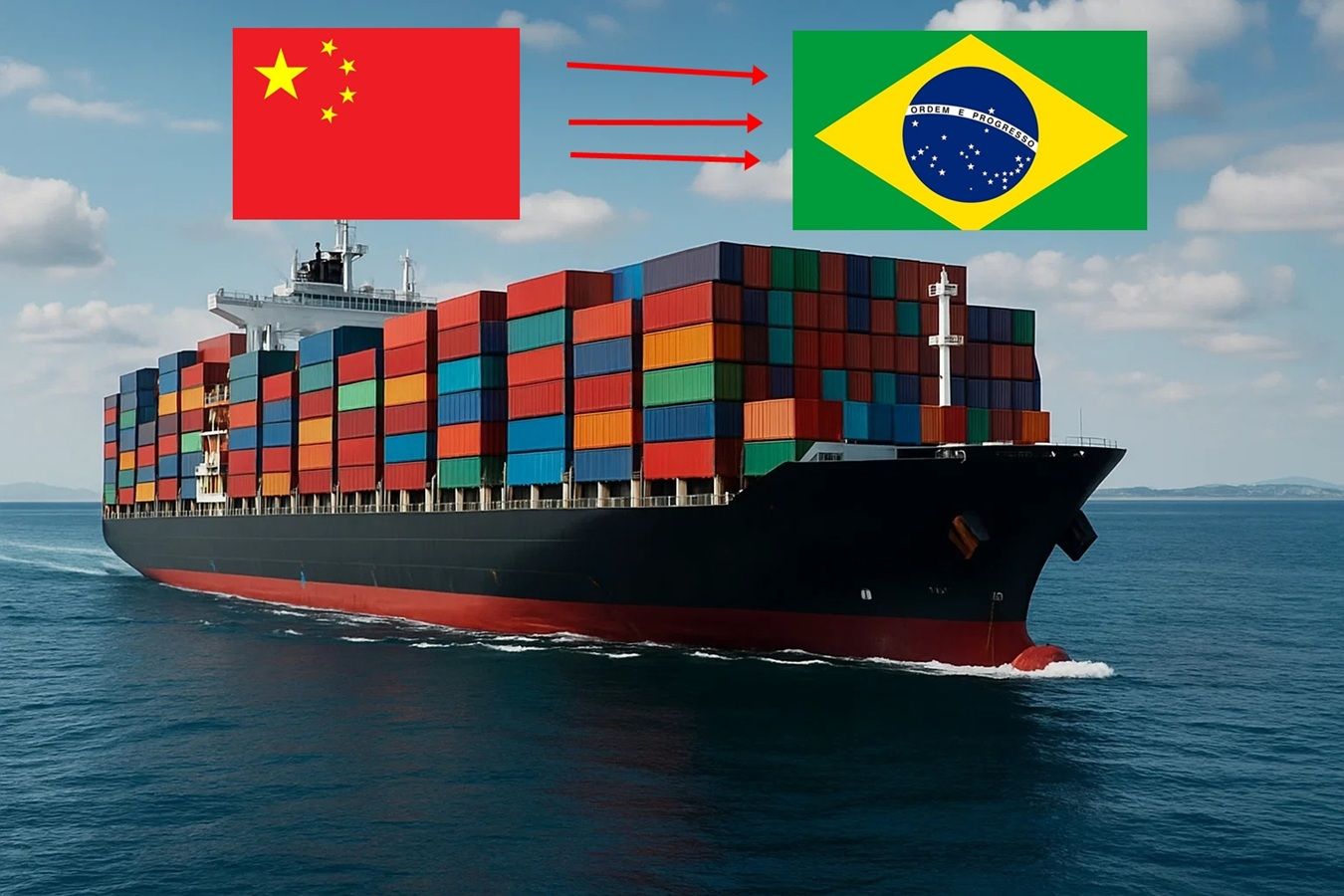
How Long Does Shipping Take from China to Brazil?
Shipping time from China to Brazil in Q4 2026: sea, air, express and DDP bands for Santos, Paranaguá, Manaus and

For most exporters, shipping from China to Brazil by ocean FCL is the lowest cost-per-kilo option for large or heavy cargo, with port-to-port transit of roughly 28 to 45 days from major Chinese ports to the Port of Santos, depending on the origin, carrier, and transshipment. When cargo is urgent, light, or high in value, air freight from China to Brazil can move in roughly 3 to 7 days airport-to-airport, with realistic door-to-door delivery often around 5 to 12 days through Sao Paulo Guarulhos (GRU) and Viracopos Campinas (VCP).
The single biggest cost driver on this lane is not always the freight rate: it is the Brazilian import tax stack. Import Duty (II), IPI, PIS, COFINS, and state ICMS can combine with customs and destination charges to materially increase landed cost. Your real cost depends heavily on correct NCM classification, customs valuation, product licensing, and the applicable state tax rules. Plan the tax side before you plan the freight.
| Mode | Transit (port/airport to port/airport) | Cost basis | Best for |
|---|---|---|---|
| Ocean FCL | 28 to 45 days | Per 20ft / 40ft container | Full containers, dense or heavy cargo, lowest cost per cubic meter |
| Ocean LCL | 35 to 50 days | Per cubic meter (cbm), with minimums | 1 to 13 cbm part loads not justifying a full box |
| Air freight | 3 to 7 days airport to airport, 5 to 12 days door to door | Per kg (chargeable weight) | Urgent, perishable, high-value, light cargo |
| Express | 3 to 8 days | Per kg, all-in courier rate | Documents, samples, and small parcels |
China to Brazil is a key China–Latin America trade route, with Brazil serving as the region’s largest economy and one of China’s most important trading partners. China and Brazil have no bilateral free trade agreement (FTA), so importers should carefully assess Brazil’s applicable import duties, taxes, and customs requirements. Mighty Shipping handles China-to-Brazil shipments and is experienced with Brazil’s RADAR/Siscomex import procedures, NCM tariff classification, and customs compliance.
| Port | Country / UN/LOCODE | Direct | Market Reach |
|---|---|---|---|
| Santos | Brazil / BRSSZ | Direct | São Paulo, Southeast Brazil; main container gateway |
| Paranaguá | Brazil / BRPNG | Direct | Paraná and southern Brazil |
| Itajaí | Brazil / BRITJ | Route-dependent | Santa Catarina and southern Brazil |
| Navegantes | Brazil / BRNVT | Route-dependent | Santa Catarina and nearby industrial regions |
| Itapoá | Brazil / BRIOA | Route-dependent | Southern Brazil; container cargo |
| Rio Grande | Brazil / BRRIG | Route-dependent | Rio Grande do Sul and southern Brazil |
| Rio de Janeiro | Brazil / BRRIO | Direct | Rio de Janeiro and Southeast Brazil |
Choosing a mode is a trade-off between speed and cost per kilo, and the break-even depends on chargeable weight and value. Ocean FCL gives the lowest unit cost when you can fill or nearly fill a container. Ocean LCL is the default for part loads, but its per-cbm pricing, destination handling, and longer consolidation and deconsolidation process mean a shipment above roughly 13 to 15 cbm is often worth comparing against a full 20ft container. Air wins whenever the freight is a small share of the goods value, when stockouts cost more than the air premium, or when the cargo is time-critical.
One Brazil-specific factor that changes the calculus is AFRMM. For international long-distance maritime navigation, the statutory AFRMM rate is currently 8% of the applicable ocean freight remuneration, not the 25% rate used in older shipping guides. Always model the current AFRMM treatment into the landed-cost calculation rather than relying on outdated 25% figures.
A second factor is clearance time at destination. Brazilian customs assigns each declaration to a customs channel: green (automatic clearance), yellow (document review), red (document plus physical inspection), or gray (valuation-related examination). A red or gray channel can add days or weeks regardless of the mode you chose, so the practical transit on this lane is the freight time plus a clearance buffer. Clean, consistent paperwork is the single biggest lever you control over that buffer, which is why the documentation discipline below matters as much as the rate you book.
The Port of Santos, in Sao Paulo state, is Brazil’s largest container gateway and handles a major share of China’s containerized exports to Brazil. Paranagua in Parana and Itajaí or Navegantes in Santa Catarina are strong alternatives for southern distribution, while Rio de Janeiro, Itaguaí, Salvador, and Suape serve other regional markets. On the China side, the major export gateways include Shanghai, Ningbo, Shenzhen/Yantian, Guangzhou/Nansha, Xiamen, Qingdao, and Tianjin.
Shenzhen/Yantian and other South China gateways can reach Santos in roughly 27 to 45 days, while Shanghai and Ningbo services commonly take around 33 to 46 days depending on the service and transshipment. Xiamen and Qingdao can run around 35 to 45 days, while northern China origins may take longer. Actual schedules vary with carrier routing, transshipment, port congestion, blank sailings, and seasonal conditions.
| China load port | Brazil discharge port | Indicative FCL transit |
|---|---|---|
| Shenzhen / Yantian | Santos | 27 to 45 days |
| Shanghai / Ningbo | Santos | 33 to 46 days |
| Xiamen / Qingdao | Santos / Paranagua | 35 to 45 days |
| Tianjin | Santos / Rio de Janeiro | 40 to 50 days |
| Shanghai / Shenzhen | Itajaí / Rio de Janeiro | 35 to 50 days |
As an indicative 2026 guide, FCL ocean rates from China to Brazil can vary widely by origin, destination, equipment, carrier, and booking date. Current market references put 20ft FCL rates roughly around $2,500 to $5,100, while 40ft rates can range from about $3,800 to $7,400 on different China-Brazil services. LCL is commonly quoted around $80 to $220 per cbm, depending on origin, destination, minimum charge, and local fees. These are planning ranges, not live quotes: BAF (bunker adjustment), peak-season surcharges, carrier capacity, transshipment, and equipment availability can move them significantly. Recent public July 2026 references show some China-Santos 20ft services around $4,700-$5,100, illustrating how quickly the market can change.
The LCL-to-FCL break-even on this lane typically sits near 13 to 15 cbm, so above that volume price a 20ft box against your LCL number. Always compare the full landed freight cost, including origin handling, destination charges, customs clearance, and inland delivery.
Sao Paulo Guarulhos (GRU) is the primary air cargo gateway for Brazil. Viracopos at Campinas (VCP) is another major cargo and express gateway, while Rio de Janeiro Galeao (GIG) serves the Rio market. On the China side, major air cargo gateways include Shanghai Pudong (PVG), Shenzhen Bao’an (SZX), Guangzhou Baiyun (CAN), Hong Kong (HKG), and Beijing Capital (PEK), depending on the airline and service.
Air transit from China to Brazil commonly takes around 3 to 7 days airport-to-airport, while realistic door-to-door service including pickup, export handling, flight connections, Brazilian customs clearance, and final delivery often runs 5 to 12 days. Air is priced on chargeable weight, the greater of actual and volumetric weight. Indicative 2026 general-cargo rates can be roughly $6.00 to $10.50 per kg, with smaller shipments, special cargo, fuel surcharges, and peak-season capacity often costing more.
Air wins when freight cost is a small fraction of cargo value, when the goods are perishable or time-critical, or when an ocean stockout would cost more than the air premium.
China export clearance for Brazil is handled through China’s customs declaration system. The exporter or its customs broker normally prepares the required export declaration and supporting commercial documents before the cargo leaves China. Depending on the commodity and transaction, additional export licences, inspection documents, certificates, or regulatory approvals may be required.
Core export documents are the commercial invoice, packing list, bill of lading or air waybill, and, where applicable, a certificate of origin and product-specific certificates. The commercial invoice deserves extra care for Brazil: it should carry a complete goods description, unit and total values, the Incoterm and named place, country of origin, and the NCM (tariff) code, because the Brazilian importer relies on the information to prepare the import declaration.
Discrepancies between the invoice, packing list, bill of lading, and customs declaration can trigger additional questions, documentary review, or customs delays. Product classification should therefore be confirmed before shipment rather than corrected after arrival.
Incoterms decide who clears export, who pays freight, and where risk passes. On this lane many shipments move under FOB, CIF, CFR, or FCA, depending on the commercial arrangement. Under FOB, the buyer normally arranges the main carriage after the Chinese export port. Under CIF, the seller covers ocean freight and insurance to the named Brazilian port. The Incoterm should be agreed before quoting because freight, insurance, customs valuation, and destination costs can differ substantially.
Brazilian imports are controlled by Receita Federal through the SISCOMEX foreign-trade system. Brazil is transitioning from the legacy Import Declaration (DI) toward the DUIMP (Declaracao Unica de Importacao) as part of its customs modernization program. Brazilian importers also need the appropriate RADAR authorization and import capacity before completing commercial imports. The exact procedure depends on the importer, product, declaration type, and stage of the DUIMP rollout.
Maritime imports may also be subject to AFRMM, and for long-distance international navigation the current statutory rate is 8%, rather than the 25% figure that appears in older logistics articles.
Brazil does not levy a single VAT. It applies several taxes and charges that can combine on the customs value and, depending on the tax, on bases that incorporate other taxes:
Because the tax calculation can vary by NCM, importer, state, product, and applicable regime, there is no reliable single percentage that applies to every China-to-Brazil shipment. Receita Federal’s import-tax simulator can be used to check the applicable taxes and administrative requirements before importing.
Required documents may include the commercial invoice, packing list, bill of lading or air waybill, and product-specific licences or approvals, such as ANVISA for certain health and cosmetics products, INMETRO for regulated equipment, or MAPA for agricultural products. Always confirm the exact requirements against the product’s NCM classification before shipment.
Transit varies with the Chinese origin, Brazilian destination, carrier, service type, and whether the shipment is direct or transshipped. The figures below are typical planning ranges; door-to-door adds pickup, consolidation, customs, and final delivery.
| Route and mode | Typical transit |
|---|---|
| Ocean FCL, Shenzhen/Yantian to Santos | 27 to 45 days |
| Ocean FCL, Shanghai / Ningbo to Santos | 33 to 46 days |
| Ocean FCL, Xiamen / Qingdao to Santos | 35 to 45 days |
| Ocean LCL, China to Santos | 35 to 50 days |
| Air freight, China gateway to GRU / VCP | 3 to 7 days airport to airport, 5 to 12 days door to door |
| Express courier, China to Brazil | 3 to 8 days |
These are planning estimates rather than guaranteed carrier schedules. Transshipment, congestion, blank sailings, weather, customs inspections, and inland delivery can extend the actual delivery time.
Hongocean gives exporters online quotes, booking, and tracking for the China to Brazil lane across ocean and air, with documentation and shipment coordination handled through the forwarding process. Compare China-to-Brazil ocean and air freight options, model your landed cost including Brazilian import taxes and charges, and choose the routing that fits your timeline and budget. Explore China export freight services to get a rate for your next shipment to Santos, Paranagua, Itajaí, Rio de Janeiro, or another Brazilian port or airport.
Ocean FCL generally takes around 27 to 45 days from major Chinese ports to Santos, with Shanghai/Ningbo services often around 33 to 46 days and South China services potentially around 27 to 45 days. Air freight commonly takes 3 to 7 days airport-to-airport, or roughly 5 to 12 days door to door.
Indicative 2026 FCL rates can range roughly from $2,500 to $5,100 for a 20ft and $3,800 to $7,400 for a 40ft, depending on the Chinese origin, Brazilian destination, carrier, equipment, season, and routing. These are planning ranges rather than live quotes, and current market references show significant month-to-month variation.
Brazil may apply Import Duty (II), IPI, PIS-Importacao, COFINS-Importacao, ICMS, and other applicable fees or charges. The exact rates depend on the product’s NCM classification, importer, destination state, and import regime. Maritime shipments may also be subject to AFRMM at 8% for long-distance navigation under the current statutory framework.
Yes. Commercial exports from China require the appropriate customs declaration and supporting documents. Depending on the goods, additional export licences, inspection documents, certificates, or other regulatory approvals may also be required.
RADAR is the Brazilian importer authorization framework used for access to the foreign-trade customs system, with applicable import capacity limits. DUIMP is Brazil’s Single Import Declaration being implemented as part of the modernization of the SISCOMEX import process. The exact declaration procedure depends on the importer, product, and current implementation stage.
Major Chinese gateways include Shanghai, Ningbo, Shenzhen/Yantian, Guangzhou/Nansha, Xiamen, Qingdao, and Tianjin. In Brazil, Santos is the principal container gateway, with Paranagua, Itajaí, Navegantes, Itaguaí, Rio de Janeiro, Suape, and Salvador serving different regional markets. For air freight, Sao Paulo Guarulhos (GRU) and Viracopos Campinas (VCP) are the main gateways, with Rio Galeao (GIG) serving the Rio market.
Shipping time from China to Brazil in Q4 2026: sea, air, express and DDP bands for Santos, Paranaguá, Manaus and
DDP shipping from China to Spain in Q4 2026: sea, air and rail bands to Valencia and Barcelona, the duty

DDP shipping from China to South Africa provides a door-to-door logistics solution for importers who want international transportation, import customs
Hongocean Freight forwarding CO., Ltd.
WhatsApp us