Blog
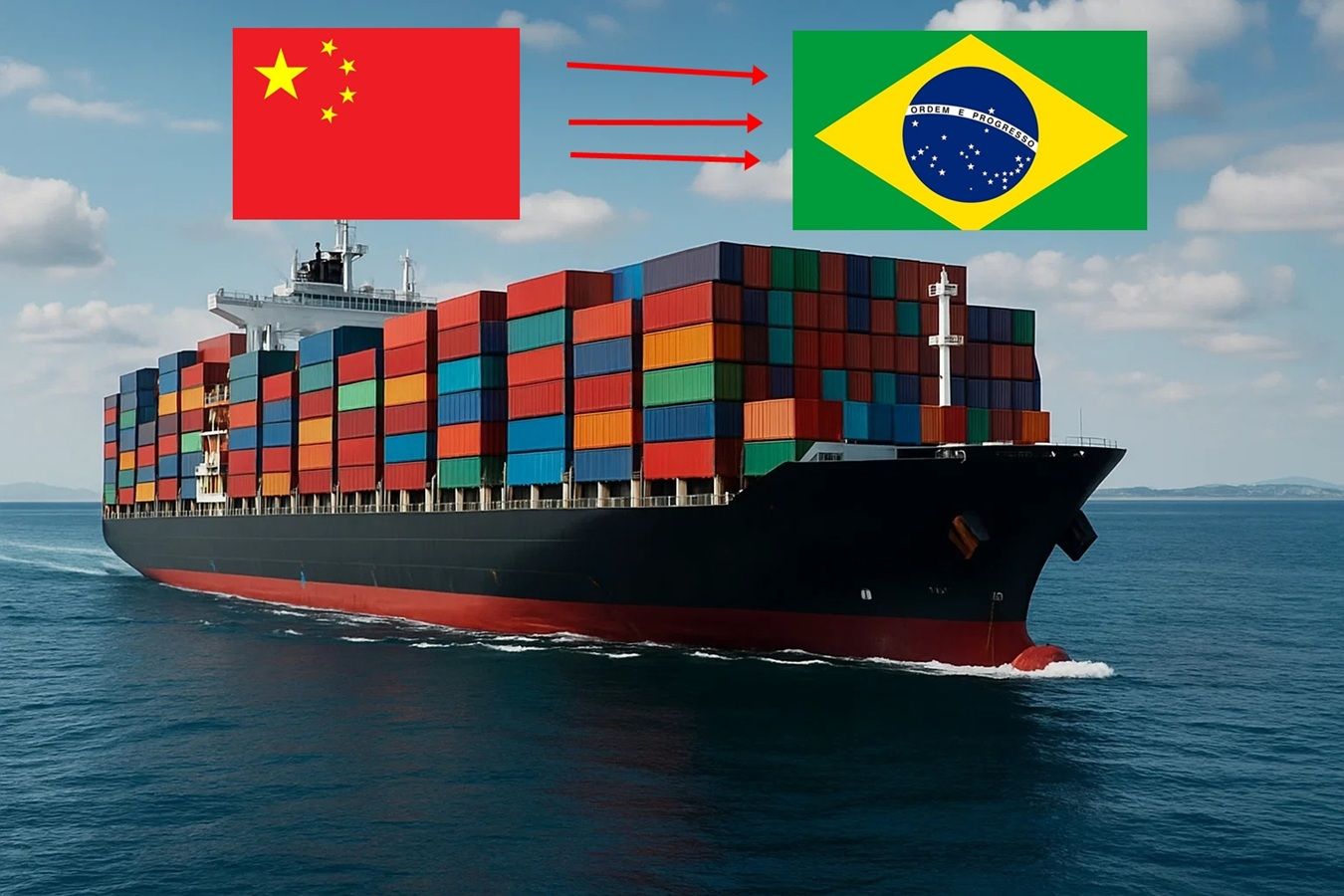
How Long Does Shipping Take from China to Brazil?
Shipping time from China to Brazil in Q4 2026: sea, air, express and DDP bands for Santos, Paranaguá, Manaus and
Getting goods from China to Australia is not just a matter of selecting a carrier. The overall cost and the delivery timetable can be affected by freight rates, transit times, customs clearance, import duties, GST, port charges, and inland delivery. If the appropriate shipping method is chosen and the correct documentation is prepared in advance, unexpected delays and extra charges can be avoided.
Because they have a good deal of experience, freight forwarders are able to simplify the process by serving as the one point of contact for the whole shipment. A properly organised logistics procedure includes the transportation from the supplier, export clearance, international freight, clearance at Australian customs and the final delivery.
Australia and China enjoy a substantial trading relationship, involving large quantities of manufactured goods, machinery, electronics, raw materials, food, and agricultural products being traded between the two countries. It is essential for Australian importers to know the freight options available and the customs requirements in order to keep both costs and delivery times under control.
With regard to the shipment of goods from China to Australia, China is one of Australia’s most important trading partners and Australian companies frequently import from Chinese suppliers a variety of consumer products, electronics, machinery, furniture, industrial equipment, textiles and other manufactured goods.
The transportation method that is most suitable will vary according to the amount of the cargo, its value, how urgent the delivery is, the destination, and the delivery conditions required. For large or bulky consignments, sea freight is usually the most economical option, whereas for urgent, high-value, or relatively small shipments air freight is more appropriate.
When it comes to smaller consignments, importers have the option of using LCL sea freight, air cargo, or express services. LCL is a cost-effective choice for shipments under about 13 to 15 CBM, whereas FCL tends to be the more attractive option as the amount of cargo grows. Air freight is usually worth looking at if the shipment is time-sensitive or if the goods are light but valuable.
The freight forwarding process usually starts by gathering cargo information such as the description of the product, its dimensions, weight, value, HS code, point of origin, destination, and the preferred Incoterm. It is important to have this information since it enables the most suitable shipping method to be determined and allows an estimate of the total landed cost to be made.
The following steps will be to arrange pickup from the Chinese supplier, obtain export customs clearance, carry out loading and international transportation, get Australian import customs clearance, pay the relevant duties and taxes, and then make the final delivery.
The Incoterms should also be given careful consideration. For importers who wish to have more control over the international freight and the choice of carrier, FOB is often a practical solution. Although CIF may seem simpler, the importer may still have to pay the charges upon arrival in Australia. Under EXW the buyer takes on the responsibility from the supplier’s premises, this including the export arrangements in China, while DAP can offer a simpler delivery arrangement without passing the import duties to the seller.
Freight forwarders will be able to arrange 20-foot and 40-foot containers, together with any special equipment needed, if anyone requires the extra capacity that only sea freight can give. LCL consolidation is also an option for consignments that do not need a full container.
Door-to-door transportation can include the supplier’s pickup, international freight, customs clearance, inland transport, and the final delivery. By doing so it is possible to decrease the number of parties taking part and make the management of the shipment from origin to destination easier.
Although air freight is faster than sea freight it might be more expensive. It should be used when delivery speed is important, especially for high-value goods, for urgent replenishment, for samples, for spare parts, or for products which have strict deadlines.
Standard air cargo transport from China to Australia usually takes about 3 to 7 days when calculated from door to door, and express air freight generally takes about 2 to 5 days though this may vary according to the origin, destination, customs clearance, and the level of service offered. Once again, these are the total lead times and not the actual flight times, since the delivery schedule also includes the time taken for screening, handling, and customs clearance.
Freight by air is usually calculated using the chargeable weight instead of the actual weight of the goods. The chargeable weight is typically the greater of the gross weight and the volumetric weight.
For example:
Volumetric weight = Length × Width × Height ÷ applicable dimensional factor
Lightweight yet bulky cargo can therefore become relatively costly to send by air, so it is important to give accurate carton dimensions when asking for an air freight quote.
Standard air cargo is suitable for larger business shipments, whereas express air freight is usually more convenient when sending small parcels or making urgent deliveries. The main cargo airports in China are Shanghai Pudong, Shenzhen, Guangzhou and Beijing, and the important air cargo airports in Australia are Sydney, Melbourne, Brisbane and Perth.
Carrying goods or cargo by sea is referred to as Sea Freight and this method is usually the most economical one when it comes to large amounts of goods. Even though the transit time is longer than that of air freight, the lower cost per unit means that ocean shipping is especially appropriate for machinery, furniture, consumer goods, industrial products and other bulky cargo.
Sea freight may be arranged in the form of a Full Container Load (FCL) or as a Less than Container Load (LCL).
FCL is usually appropriate in the case where the goods take up a large portion of the container’s capacity. The standard types of container are the 20-foot and 40-foot containers. Since the container is assigned exclusively to a single consignment, the amount of handling after loading is reduced and there is better control of the cargo.
LCL involves combining goods from a number of shippers into a single container. For smaller shipments it can be more economical, especially when the cargo volume is under about 13–15 CBM. But when the shipment grows larger, the consolidation and deconsolidation fees can make LCL less appealing.
The decision between FCL and LCL should therefore take into account not only the volume of the cargo but also the handling requirements, the delivery time, the destination charges, and the risk of extra handling.
Refrigerated containers can be used in the case of temperature-sensitive cargo, and in such instances special equipment may be needed for oversized machinery or other kinds of difficult-to-handle goods.
We offer sea freight services from China to Australia, with our services available from a number of major Chinese ports such as Shanghai, Ningbo, Shenzhen, Guangzhou, Qingdao, Tianjin, Xiamen, and various other regional ports.
The main Australian ports are Sydney, Melbourne, Brisbane, and Fremantle, and the port selected can have a great impact on the cost of transporting goods inland and on the time it takes to deliver them.
Shanghai and Ningbo are major choices when the cargo comes from eastern China, and Shenzhen and Guangzhou are especially convenient for companies which are suppliers in southern China, whereas Qingdao and Tianjin are generally used for cargo that starts in northern China.
In Australia, Sydney and Melbourne deal with large amounts of imported cargo, Brisbane serves as an important entrance for Queensland and Fremantle is generally used for shipments intended for Western Australia.
The shipping route must therefore be determined on the basis of both the position of the supplier and the final delivery address. It is sometimes possible to reduce the total landed cost by selecting a port which reduces the amount of inland trucking, even if that port’s ocean freight rate is not the lowest.
The prices for shipping from China to Australia can vary a great deal and there is not one rate that applies to all shipments since the cost depends on the type of cargo, the amount, the weight, the place of origin, the destination, the method of shipping, the season, the availability of equipment and the Incoterm chosen.
Indicative sea freight planning ranges can include:
| Shipping Method | Typical Planning Range |
| LCL (1–5 CBM) | USD 80–150 per CBM |
| 20ft FCL | USD 1,200–2,500 |
| 40ft FCL | USD 2,000–4,500 |
| Standard Air Cargo | USD 4–7 per kg |
| Express Air Freight | USD 6–9 per kg |
The figures given are ranges not definite prices. Changes to the actual freight costs may occur due to fuel charges, carrier capacity, peak seasons, port conditions, the characteristics of the cargo, and destination fees.
The ocean freight rate is only one element of the total shipping cost, there being additional charges such as export documentation, terminal handling, customs clearance, destination terminal fees, duties, GST, inspection charges, quarantine or biosecurity costs, local trucking, storage, detention, and demurrage.
That is why importers should base their choice on the total landed cost rather than selecting a shipment just because it has the lowest base freight rate.
| Port to Port | Door to Door | |
| Sea Freight (FCL) | 18-26 days | 23-37 days |
| Sea Freight (LCL) | 22-37 days | 27-45 days |
| Air Freight | 1-3 days | 3-7 days |
| Express Courier | 2-5 days |
The real transit times will vary according to the starting and ending ports, the sailing schedules, any transshipment, the customs clearance, the cargo consolidation, and the local delivery conditions.
For instance, standard sailing times for FCL shipments are about 18 to 22 days from Shanghai to Sydney, 20 to 24 days from Ningbo to Melbourne, 18 to 23 days from Shenzhen to Brisbane, and around 22 to 26 days from Qingdao to Fremantle; LCL shipments take longer due to the need for consolidation and deconsolidation.
Regular shipping services are available from the major Chinese ports to Sydney, Melbourne, and Brisbane. However, the time it takes to carry out door-to-door delivery will be longer than the ocean sailing time since it also involves pickup, export handling, customs clearance, and inland transportation.
Normally air freight takes about 3 to 7 days when calculated from door to door, and express deliveries take about 2 to 5 days. During peak times such as the Chinese New Year and the period before Christmas, congestion and the limited capacity can cause these time estimates to be longer.
Customs clearance plays an important role in the shipping process between China and Australia and has a direct impact on both the delivery time and the final landed cost.
Importers must make sure that the product description, the HS code, the declared value, the country of origin, the commercial invoice, and the packing list are accurate and consistent; otherwise customs questions, inspections, storage charges, and delays may result.
The HS code is so important since it determines the tariff treatment applicable and may also influence whether any additional regulatory requirements apply.
The customs value in Australia is usually determined on the basis of the transaction value where this is applicable, and in certain cases depending on the Incoterm and the specific circumstances, the freight, insurance, packing and other relevant costs may have to be taken into account when establishing the customs value.
Import duty can generally be calculated as:
Import Duty = Customs Value × Applicable Duty Rate
GST is usually at a rate of 10 per cent and is calculated on the applicable taxable import value, this value including the customs value, the duty and certain transportation or insurance costs.
The duty rate actually varies according to the product’s HS code and its country of origin, and certain products may be eligible for preferential treatment under the China-Australia Free Trade Agreement provided that the relevant requirements and origin documents are met.
The main documents required for customs clearance can include:
The Commercial Invoice must give a correct description of the goods, state their value, show the quantity, indicate their origin and state the HS code; this information should match that on the Packing List and the transport documents.
The Packing List must correctly state the number of cartons, together with their dimensions, weights, and contents; there may be delays in inspections or in obtaining clearance if there is a discrepancy between the actual cargo and the documents.
A Certificate of Origin shows the place where the goods were produced and may be important when one is claiming preferential tariff treatment under a relevant trade agreement.
Australia has stringent requirements with regard to biosecurity and the control of imports. In some cases permits, extra inspections, or treatment will be necessary before products can be imported, while for other products import is completely forbidden.
Products which are subject to restriction may cover agricultural products, pharmaceuticals, motor vehicles, tobacco products, firearms, weapons, and other controlled goods. The specific requirements will vary according to the product and its intended use.
Prohibited or highly restricted products can include:
Agricultural products and those containing timber, plant or animal materials may also be subject to biosecurity inspection. Instead of waiting until the cargo gets to Australia, importers should check the relevant requirements beforehand.
Each shipment has its own needs. The best way to transport goods depends on how much cargo there is, what type of product it is, where it is going, how fast it needs to arrive, the budget, and customs rules.
If you know your supplier’s locations, the sales deadlines, what your inventory requirements are, and your final delivery points, then you will find it easier to choose the appropriate combination of FCL, LCL, air freight, or express transportation.
International shipments may face port congestion, customs inspections, missing documentation, a shortage of equipment, and unexpected charges at the destination. With careful planning the effect of these problems can be reduced and the shipment can be kept in motion.
Reliable freight forwarding involves more than simply getting goods from one country to another; it also consists of managing the costs upon arrival, keeping delivery schedules safe, and minimizing unnecessary risks across the entire supply chain.
Shipping requirements and customs regulations keep on changing. Importers can find more efficient solutions by looking over the routes, freight alternatives, the documentation, and the customs requirements before each shipment is made.
It is easier to coordinate the suppliers, carriers, customs brokers, warehouses, and local delivery firms when there is a well-defined point of contact. This becomes especially useful if difficulties occur during transportation or customs clearance.
Shipping time from China to Brazil in Q4 2026: sea, air, express and DDP bands for Santos, Paranaguá, Manaus and
DDP shipping from China to Spain in Q4 2026: sea, air and rail bands to Valencia and Barcelona, the duty

DDP shipping from China to South Africa provides a door-to-door logistics solution for importers who want international transportation, import customs
Hongocean Freight forwarding CO., Ltd.
WhatsApp us