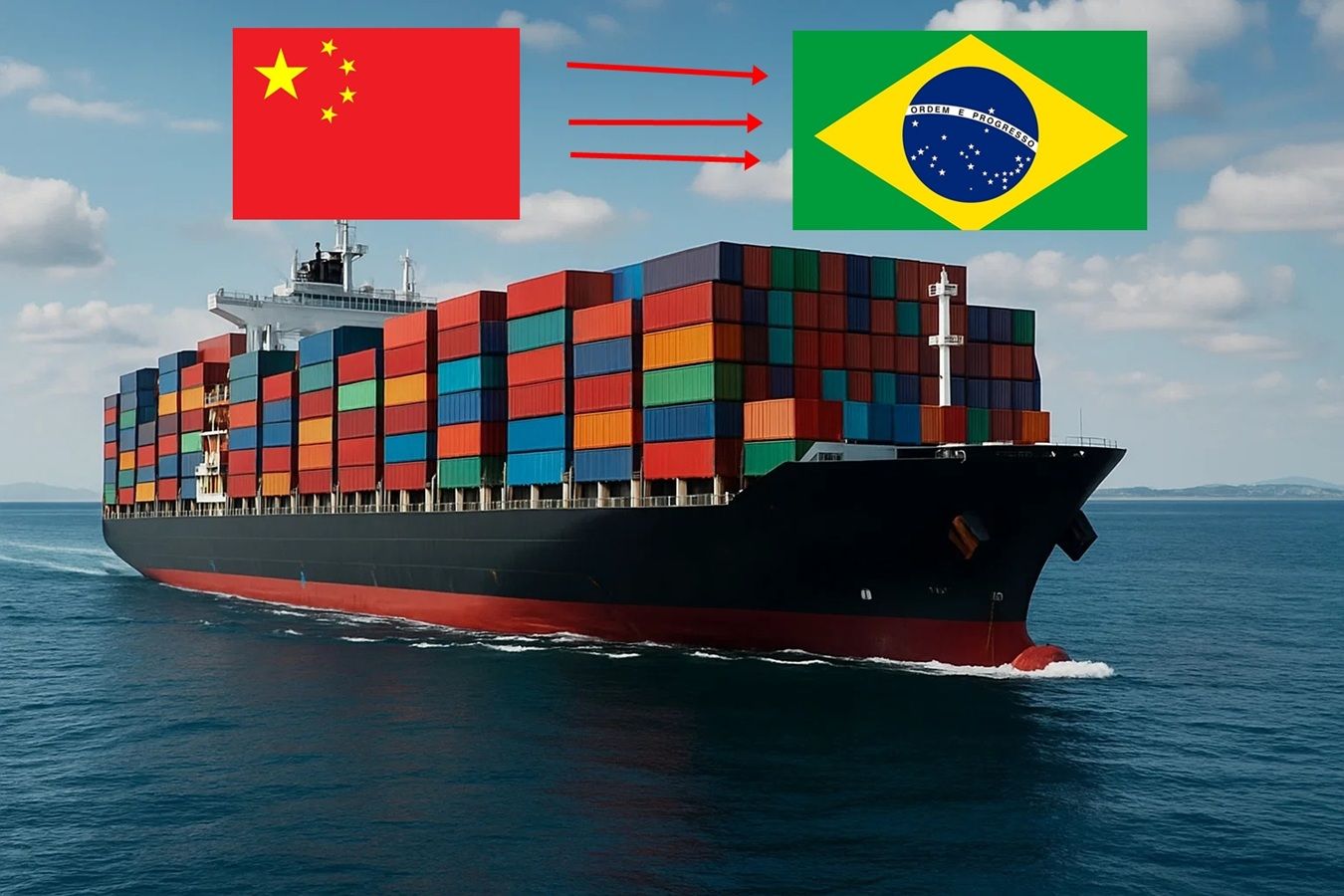
Shipping costs from China to Brazil can make or break your business margins. Get them wrong, and you’re stuck with high expenses and delays. Get them right, and you stay competitive while keeping supply chains smooth.
Understanding freight options, taxes, and transit times is key to importing electronics, furniture, or raw materials. How much should you expect to pay? What’s the cheapest way to ship? This guide breaks it all down; fast, clear, and with no fluff.
Shipping Costs from China to Brazil
Shipping costs from China to Brazil depend on several factors, including freight mode, cargo weight, dimensions, delivery speed, and seasonal demand. Businesses must consider both cost and transit time when selecting the right shipping method.
Sea and Ocean Freight Rate Index
Sea freight is the most economical option for bulk shipments and heavy cargo, but transit times are longer. Rates fluctuate due to global demand, fuel prices, container shortages, and port congestion.
Estimated Sea Freight Costs and Transit Time
| Shipping Mode | Estimated Cost | Transit Time |
|---|---|---|
| Full Container Load (FCL) – 20ft | $1,800 – $4,550 per container | 30–40 days |
| Full Container Load (FCL) – 40ft/40HQ | $2,500 – $5,550 per container | 30–50 days |
| Less than Container Load (LCL) | $80 – $220 per cubic meter | 35–50 days |
Air Freight and Express Shipping Costs
Air freight is the best choice for time-sensitive and high-value goods. While more expensive than sea freight, it significantly reduces delivery time. Express services from carriers like DHL, FedEx, and UPS provide even faster door-to-door delivery.
Estimated Air Freight Costs and Transit Time
| Shipping Mode | Estimated Cost | Transit Time |
|---|---|---|
| Standard Air Freight | $6 – $12 per kg | 5–12 days |
| Express Shipping (DHL, FedEx, UPS) | $10 – $20 per kg | 3–7 days |
Key Factors Affecting Shipping Costs from China to Brazil
Several factors impact shipping costs, making it essential for businesses to monitor changes:
- Fuel Prices: Fluctuations in oil prices directly affect freight rates, with surcharges applied by carriers.
- Customs Duties & Taxes: Brazilian import costs depend on product classification under the NCM system, along with federal and state taxes such as II, IPI, PIS/COFINS, and ICMS.
- Peak Seasons: Costs surge during peak periods, such as the Chinese New Year, Golden Week, and the holiday season. Booking shipments in advance can help mitigate price increases.
- Port Congestion & Shipping Routes: High cargo volumes at ports like Santos, Paranaguá, Rio de Janeiro, and Vitória can lead to longer processing times and higher costs.
- Freight Market Demand: Rates fluctuate based on supply chain disruptions, global trade policies, vessel capacity, and container availability.
Monitoring these factors and working with reliable freight partners can help businesses secure cost-effective shipping options and minimize delays.
Main Shipping Methods from China to Brazil
Choosing the right shipping method is crucial for businesses that want to balance cost-effectiveness, delivery speed, and product safety when shipping from China to Brazil. There are three primary shipping options businesses usually rely on: air freight, ocean freight, and express shipping. Understanding the advantages and drawbacks of each can help you select the most appropriate method for your needs.
Air Freight from China to Brazil
Air freight offers the fastest way to move goods internationally, making it the best choice when time is critical. Typically, air shipments take between 5 to 12 days, depending on the route, connections, and flight schedules. This is ideal for high-value or time-sensitive products, such as electronics, pharmaceuticals, and luxury goods.
Advantages of Air Freight:
- Speed: It’s the fastest standard freight method, with delivery times ranging from 5 to 12 days. Ideal for businesses with urgent delivery needs.
- Reliability: Airlines maintain a strict schedule, making it one of the more predictable shipping options.
- Security: Air freight is generally safer and less likely to experience theft or damage compared to other methods.
However, air freight tends to be more expensive than ocean freight due to higher operational costs and fuel charges. It’s best suited for smaller, higher-value shipments where quick delivery justifies the cost.
Ocean Freight from China to Brazil
For larger shipments or when costs need to be minimized, ocean freight is the preferred method. While transit times for ocean freight can range from 30 to 50 days, it is significantly cheaper per kilogram than air freight.
Ocean freight is ideal for businesses dealing with large quantities of goods, such as manufacturers, wholesalers, and retailers. You can ship everything from raw materials to finished products, and the shipping options (like Full Container Load (FCL) or Less-than-Container Load (LCL)) offer flexibility depending on shipment size.
Advantages of Ocean Freight:
- Cost-Effective: Shipping large volumes of goods by sea offers the lowest cost per unit of all shipping methods.
- Large Cargo Capacity: Ocean vessels can carry vast amounts of cargo, including bulky items like machinery, furniture, and industrial products.
- Flexible Options: FCL and LCL services allow businesses to select the most appropriate option based on shipment volume.
However, ocean freight is slower, and the longer transit times mean that shipments should not be time-sensitive.
Key Ports in China and Brazil
Selecting the right port for your shipment can significantly impact delivery speed and cost efficiency. Ports serve as the starting and ending points for sea and air freight, and the location of your goods in China and Brazil will influence costs, transit times, and logistical planning.
Top Ports in China:
- Shanghai Port: One of the busiest ports in the world, Shanghai offers extensive connectivity to Brazil and is ideal for shipping bulk goods.
- Shenzhen Port: Shenzhen is a major export hub, particularly for electronics, consumer goods, and manufactured products.
- Ningbo Port: Ningbo is well suited for businesses shipping containers, raw materials, automotive parts, and other manufactured goods.
Top Ports in Brazil:
- Port of Santos: Brazil’s largest container port and the primary gateway for China–Brazil ocean freight.
- Port of Paranaguá: An important southern Brazilian gateway, particularly for agricultural products, industrial goods, and containerized cargo.
- Port of Rio de Janeiro: A major southeastern gateway serving businesses in and around Rio de Janeiro.
- Port of Vitória: An important regional gateway with connections to Brazil’s southeastern markets.
Understanding Port Selection for Cost Efficiency
Port selection plays a major role in managing shipping costs. Choosing a port closer to your business or end customers can reduce last-mile delivery expenses. For example, shipping to Santos might be more convenient for businesses serving São Paulo and southeastern Brazil, while Paranaguá may be more suitable for cargo destined for southern Brazil.
Port congestion and traffic levels also affect costs. Higher-traffic ports often have lower shipping rates due to competition among carriers and more frequent sailings. They also tend to have well-established logistics networks, making inventory management, customs clearance, and delivery more efficient.
To avoid unexpected delays, businesses can use real-time port congestion and vessel tracking tools to monitor conditions at major Brazilian gateways. This helps in selecting ports that offer both cost savings and faster processing times.
Express Shipping
For those needing fast delivery without the long wait times of air freight, express shipping services offer an attractive option. Express couriers like DHL, FedEx, and UPS can deliver goods within 3 to 7 days from China to Brazil.
Express shipping typically includes door-to-door delivery, where the courier handles everything from pick-up to final delivery. This method is ideal for smaller, urgent shipments, such as documents, samples, or high-demand consumer products.
Advantages of Express Shipping:
- Speed: Express shipping is the fastest way to get your products from China to Brazil.
- Door-to-Door Service: No need for customs brokerage or dealing with multiple logistics providers.
- Ideal for Smaller Shipments: Express services work best for time-sensitive, high-value, or small-scale shipments.
Although more expensive, express shipping is worth the cost when urgency is the highest priority.
Air Freight vs. Ocean Freight: Which Is Right for Your Shipment?
When shipping goods from China to Brazil, the choice between air freight and ocean freight largely depends on your business goals and shipment needs. Below is a comparison of both options to help you make a more informed decision.
Air Freight vs. Ocean Freight Comparison
| Criteria | Air Freight | Ocean Freight |
|---|---|---|
| Speed | Fastest option, delivery in 5 to 12 days | Slower transit times, 30 to 50 days |
| Cost | Expensive, especially for large shipments | More cost-effective, especially for bulk |
| Capacity | Ideal for small, high-value shipments | Suited for large and bulky shipments |
| Reliability | Very reliable with minimal delays | Can be affected by weather and port congestion |
| Ideal Shipment Type | Time-sensitive, perishable goods, electronics | Large, non-urgent shipments like raw materials or furniture |
| Environmental Impact | Higher carbon emissions per unit of weight | Lower carbon emissions for large volumes |
Air Freight
Air freight is the fastest option, often used for urgent shipments or high-value goods. It ensures a quick transit time, which is crucial for industries like pharmaceuticals, electronics, or fashion, where delays could result in lost revenue or missed market opportunities.
- Advantages: Air freight is best when speed is critical. The security of the goods is another key benefit, as air shipments are typically less prone to damage or theft. Furthermore, for smaller shipments, air freight can be more economical than shipping large volumes via ocean freight.
- Disadvantages: The cost of air freight is the primary drawback, especially for larger loads. It also has a larger carbon footprint, which may be a concern for businesses with sustainability goals.
Ocean Freight
Ocean freight is the most cost-effective method for shipping large volumes of goods. For bulk shipments that are not time-sensitive, ocean freight can provide substantial savings.
- Advantages: Ocean freight offers the lowest cost for transporting large shipments, especially when using Full Container Load (FCL) options. It’s suitable for industries with large quantities of manufactured goods, raw materials, or equipment.
- Disadvantages: The biggest disadvantage is the longer transit times, which may not be ideal for urgent shipments. Port congestion and weather delays can also impact delivery times.
Example of Duty Calculation
When importing goods from China to Brazil, customs duties and taxes can impact the total cost of the shipment. Duties are generally calculated based on the value of the goods, their classification, and their origin. Below is an example of how duty and taxes can affect the landed cost of a shipment.
| Item Description | Value of Goods (USD) | Example Duty Rate | Customs Duty (USD) | Estimated Tax Impact | Total Cost (USD) |
|---|---|---|---|---|---|
| Electronics | $1,000 | 10% | $100 | Varies by tax structure | Depends on NCM and destination |
| Clothing | $500 | 18% | $90 | Varies by tax structure | Depends on NCM and destination |
| Furniture | $2,500 | 10% | $250 | Varies by tax structure | Depends on NCM and destination |
- Duty Rate: The percentage applied to the customs value of the goods to calculate import duty.
- Customs Duty: The amount of money to be paid to customs based on the applicable duty rate.
- Import Taxes: Additional taxes such as IPI, PIS/COFINS, and ICMS may apply depending on the product, importer, and destination.
Brazil’s import tax structure is more complex than a simple duty-plus-GST calculation. The combined burden can be substantial, with II, IPI, PIS/COFINS, ICMS, and AFRMM potentially adding significantly to the landed cost. The exact amount depends on the NCM classification, customs value, state, and shipment type.
Key Factors Influencing Import Taxes and Duties
Import taxes and duties can significantly impact shipping costs when sending goods from China to Brazil. Understanding the factors that affect these costs helps businesses plan better. Key factors include:
1. NCM Code (Mercosur Harmonized System Code)
Each product has an NCM code that determines the applicable duty rate. Brazil uses an 8-digit NCM classification, making accurate product classification essential for calculating import duties and avoiding customs problems.
2. Product Value
Customs assess the value of goods based on the declared customs value and applicable import rules. Higher-value items generally result in higher duties and taxes.
3. Type of Goods
Duty rates vary by product category. For example, electronics, clothing, machinery, and consumer goods can have different NCM classifications and applicable tax rates.
4. Origin of Goods
The country of origin can affect the applicable tariff treatment. Goods manufactured in China may be subject to Brazil’s standard import tariff structure unless a specific preferential arrangement applies.
5. Shipping Method
Air freight clears customs faster than ocean freight in many cases, but the shipping method can influence the overall landed cost, including freight, insurance, and other import-related charges.
6. Importer’s Customs Status
The importer’s registration, documentation, and customs compliance status can affect how efficiently goods move through Brazilian customs. Accurate documentation and proper NCM classification can help reduce avoidable delays.
Tools to Simplify Duty Calculations
To help businesses navigate the complexities of customs duty calculations, there are several online tools and customs resources available. These tools allow you to input the NCM code of your product and shipment value to estimate applicable duties and taxes.
- Brazilian Customs / Receita Federal: Provides official customs and import information.
- NCM Code Finder: Helps identify the appropriate NCM classification, which influences the applicable duty rate.
- Import Duty Calculators: Can help estimate duties and taxes based on product classification and declared value.
By understanding how duties are calculated and using available tools, businesses can better estimate their landed costs and make informed decisions on which shipping method works best for their needs.
Express Shipping from China to Brazil
Express shipping is an excellent option for businesses needing quick and reliable delivery. Unlike standard shipping methods, express services prioritize speed, security, and efficiency. This method is particularly beneficial for time-sensitive shipments such as samples, documents, or small orders that must reach the destination quickly.
Here are some key benefits of express shipping:
- Faster Transit Times: Express shipping ensures the fastest possible delivery, typically taking 3–7 days for shipments from China to Brazil, depending on the destination.
- Reliable Tracking: You get real-time updates on the shipment’s progress, ensuring transparency and peace of mind throughout the shipping process.
- Customs Handling: Express carriers generally take care of customs clearance on your behalf, reducing the chances of delays or issues at customs.
- Cost: While express shipping is more expensive than standard freight options, it can be worth the investment for urgent shipments. The cost varies based on weight, dimensions, and delivery speed.
Express shipping is often the go-to solution for businesses that require quick delivery without compromising on service quality. However, it’s essential to assess your shipping needs and ensure that express shipping is the most suitable option for your business goals.
Shipping Cost Calculator: Picking the Best Method
Choosing the most cost-effective shipping method from China to Brazil can be challenging, especially when there are multiple options available, each with its own set of costs and transit times. A shipping cost calculator is an invaluable tool for businesses to simplify this process.
Here’s how it can help you make the best decision:
- Compare Different Methods: Whether you’re deciding between air freight, ocean freight, or express shipping, a shipping calculator allows you to input specific details (like weight, dimensions, and destination) to see which method offers the best balance of cost and delivery speed.
- Accurate Estimates: Shipping calculators provide real-time cost estimates, helping you avoid unexpected costs or delays. This is especially useful for international shipments where customs fees and other charges can vary.
- Time-Saving: By quickly comparing all available shipping methods, a shipping calculator saves businesses time when planning their logistics strategy.
- Tailored to Business Needs: Many shipping calculators are tailored to businesses that frequently ship large volumes, offering additional features like bulk discounts or integrated tracking for easier management of shipments.
Using a shipping cost calculator ensures that your business makes an informed decision, saving money while ensuring timely delivery. It’s a smart way to assess and select the right method for each shipment, depending on your budget and urgency.
Conclusion
Understanding shipping costs from China to Brazil is essential for making informed decisions. Whether opting for air or ocean freight, the right choice depends on your shipment’s size, urgency, and budget. Key factors like fuel prices, cargo volume, port selection, and Brazilian import taxes influence the overall cost.
By considering import taxes, duties, and using duty calculators, businesses can simplify the process. Balancing cost, transit time, and shipment type will help ensure efficient, cost-effective imports from China to Brazil.
FAQs
1. How long does sea freight take from China to Brazil?
Sea freight transit times vary based on the specific ports of departure and arrival. Generally, shipping from China to Brazil takes between 30 to 50 days, with China–Santos routes often around 30–40 days port-to-port.
2. How much does a container from China to Brazil cost?
The cost of shipping a full container load (FCL) from China to Brazil fluctuates based on factors like container size, shipping route, destination port, and current market conditions. As a 2026 reference, rates can range from approximately $1,800 to $4,550 for a 20ft container and $2,500 to $5,550 for a 40ft/40HQ container.
3. How much does less than full container load (LCL) shipping from China to Brazil cost?
LCL shipping is suitable for smaller shipments that don’t require a full container. Costs are typically calculated per cubic meter, with current reference rates of approximately $80–$220 per CBM. The most economical choice depends on shipment volume and destination charges.
4. What are the main shipping methods from China to Brazil?
The primary shipping methods include:
- Sea Freight: Cost-effective for large shipments with longer transit times.
- Air Freight: Faster delivery for urgent or high-value goods, typically taking 5–12 days.
- Express Shipping: Fastest option with door-to-door service, ideal for small, time-sensitive shipments.
5. What factors influence shipping costs from China to Brazil?
Several factors affect shipping costs, including:
- Fuel Prices: Fluctuations can impact overall shipping rates.
- Shipping Route: Popular routes may offer more competitive pricing.
- Cargo Volume and Size: Larger shipments often benefit from volume discounts.
- Customs Duties and Taxes: Brazilian import fees can substantially affect the final landed cost.
- Seasonal Demand: Peak seasons can lead to higher prices and limited availability.
6. Are there any restrictions on importing goods from China to Brazil?
Yes, certain goods may have import restrictions or require special permits. It’s essential to check Brazilian customs requirements, NCM classification, and any product-specific regulations before shipping.
7. How can I calculate import duties and taxes for goods shipped from China to Brazil?
Import duties and taxes are calculated based on the type of goods, their value, NCM classification, and applicable Brazilian tax rates. Using NCM-based customs resources and import duty calculators can provide more accurate estimates.
8. What documentation is required for shipping goods from China to Brazil?
Essential documents include:
- Commercial Invoice: Details of the transaction between buyer and seller.
- Bill of Lading or Airway Bill: Contract between the shipper and carrier.
- Packing List: Itemized list of shipped goods.
- Certificate of Origin: Indicates the origin country of the goods.
- Import Permits (if applicable): Required for certain regulated goods.
9. Should I work with a freight forwarder for shipping from China to Brazil?
Partnering with a reputable freight forwarder can streamline the shipping process, handle complex logistics, and ensure compliance with international shipping regulations, making the process more efficient and less stressful.
10. How can I track my shipment from China to Brazil?
Most carriers and freight forwarders offer online tracking systems. By entering your shipment or tracking number on the carrier’s website, you can monitor its progress throughout the shipping process.