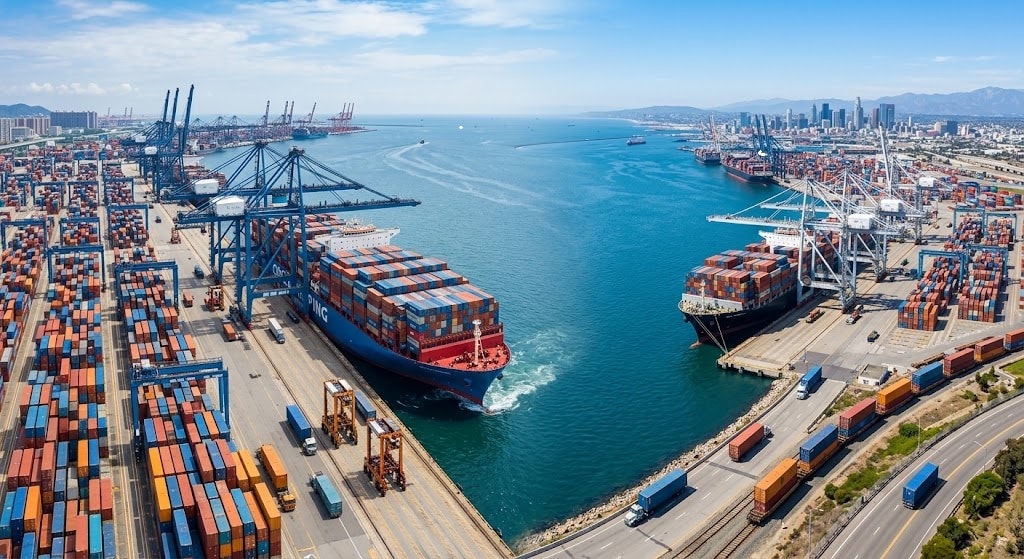
At Hongocean Freight, we help your business reach global markets with our ocean freight services. Whether you need full container load (FCL) or less than container load (LCL) shipping, our team and trusted partners will ensure your cargo arrives at any port safely and on time.
The choice between FCL and LCL shipping depends on the size and type of your cargo, as well as your business needs. Each has its own advantages, so knowing the differences will help you make the best and most cost-effective decision.
In this article, we will examine the key differences between rail and consolidated shipments, compare their pros and cons, and help you decide which option best suits your company’s needs.

What Is LCL Shipping?
When shipping consolidated cargo, your shipment is combined with goods from other shippers in a single container. This is a cost-effective option for small or low-value shipments. You only pay for the space your goods occupy, which helps reduce shipping costs.
In addition, this method offers greater flexibility in terms of shipment volume. You can ship small batches without waiting until you have enough cargo to fill an entire container.
Keep in mind that consolidated shipments often take longer to process at warehouses because they need to be packed and unpacked along with other goods. This can lead to longer delivery times and a higher chance of accidental damage during loading, unloading, or transport.
Advantages and Disadvantages of LCL Shipping
Advantages
- Flexibility: LCL shipping works well when you have smaller shipments. You can send your goods as soon as they are ready, without waiting to fill an entire container. This helps keep your supply chain active and lets you react quickly to customer needs.
- Cost efficiency: With LCL, you pay only for the space your goods use in the container because you share it with others. This can save money for businesses that ship smaller loads or do not ship often.
Disadvantages
- Longer transit times: LCL shipments are combined with goods from other companies, so it takes extra time to group and separate them at each end. If another shipper has paperwork or customs problems, your shipment might also be delayed.
- Higher risk of damage: Shipping your goods with cargo from other companies means more handling. This can raise the chance of damage when loading, unloading, or during the trip.

What Is FCL Shipping?
When you ship a full container load (FCL), you rent the entire container for your goods. This option gives you complete control over your shipment and typically speeds up delivery. FCL is ideal for large shipments or goods that require special care.
FCL shipping is more secure than other types of shipping, which is one of its best features. The likelihood of damage, theft, or loss is much lower because your goods are not shared with other shipments. The container is sealed when shipped and remains that way until it reaches its destination.
However, renting an entire container is generally more expensive. You will have to pay for the entire container, even if it is not full. If you have a small shipment, you may want to consider alternative options, including shipping less than a container load, as this may be cheaper.

Advantages and Disadvantages of FCL Shipping
Advantages
- FCL shipping saves you the most money when you fill the whole container with your products. Because you pay one price for the container, your cost per item drops as you use all the space.
- Because your cargo isn’t mixed with shipments from other businesses, FCL shipping helps reduce the risk of loss or damage while your goods are in transit.
- FCL shipments usually move through ports faster because there’s no need to sort or combine your cargo with others. This can make your shipping process smoother and shorten delivery times.
Disadvantages
- If you cannot fill the container, FCL shipping might cost more because you still pay for the whole container. This is important to consider when shipping smaller loads.
- FCL shipping is ideal for large shipments. If your business typically ships only a few pallets at once, this option might not be the most practical or affordable.
Should you choose full container load (FCL) or less than container load (LCL)?
The efficiency threshold between consolidated and full container loads is in the range of 13–15 cubic meters, but this value is variable. The final decision always depends on the current ratio of sea freight rates and terminal handling charges (THC).
- For cargo volumes exceeding 15 m³, the specific costs of warehouse handling per ton in LCL begin to rise sharply. It often becomes more profitable to pay for the freight of a 20-foot container (FCL), even if it is only half full.
- For large consignments (18–20 m³), a separate container is almost always the better option. In this case, you save not on sea transport, but on the absence of high deconsolidation fees at the port of destination.
| Factor | FCL (Full Container Load) | LCL (Less than Container Load) |
| Cargo volume | Optimal for large volumes filling 70-80% or more of the container | Suitable for small volumes that do not justify renting a whole container (1-15m3 and 1-10 t) |
| Price | More expensive, but provides better control and faster delivery | Cheaper, but may lead to longer delivery times and risk of damage |
| Scheduled deliveries | Ideal for large volume shipments of large quantities of cargo, as there is no waiting for consolidation from multiple shippers. | Suitable for sending small consignments, especially when there is no precise information about the readiness time of the entire consignment |
| Nature of cargo | Suitable for fragile, valuable or sensitive cargo | Suitable only for cargo that does not require special transportation conditions (e.g. temperature) |
| Directions and routes | Routes with minimal stops and direct flights | May require additional handling and sorting at intermediate ports |
LCL vs. FCL Shipping: Which is better?
FCL shipping offers speed and security, making it a good choice for large or bulk cargo. Since it usually costs more, take time to review your shipment size and budget before deciding. Planning can help you save money and get the best value.
LCL shipping works well for smaller shipments when saving money matters more than speed or extra security. It costs less, but transit times are longer, and there is a slightly higher chance of damage or delays compared to FCL.
Summary
When you plan to ship goods, you’ll usually pick between an FCL or an LCL. Each option has its own advantages, depending on what you need. FCL is best for bigger shipments, while LCL is a good fit for smaller ones. Sometimes, it’s worth using a dedicated container for urgent, valuable, or fragile items, even if you don’t fill it completely. If you’re unsure which method suits your cargo, our team can help you decide.