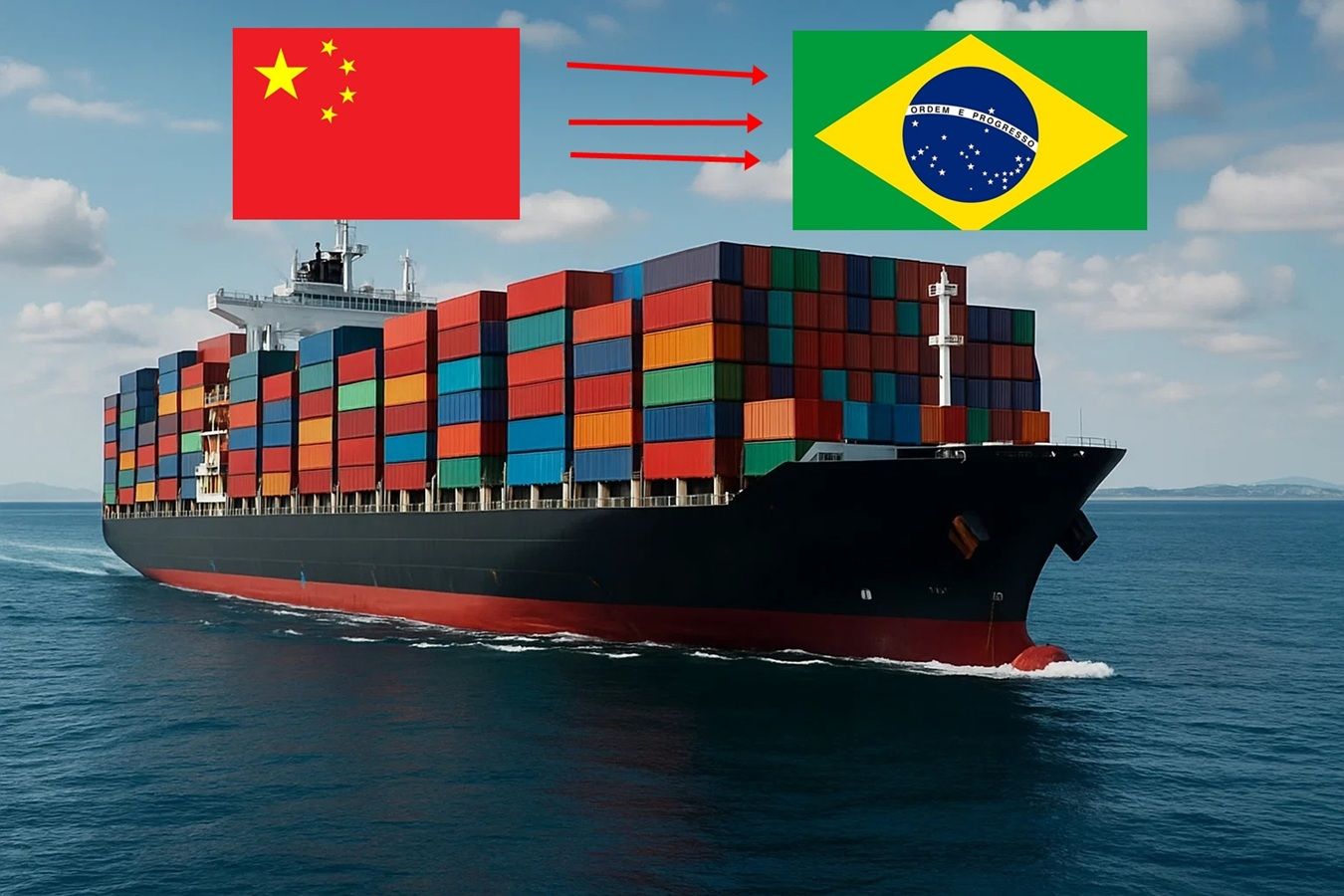
The supply chain is an important concept in international logistics and is the entire journey a product takes to reach its destination. Cross-border transportation between different countries enables the creation of a logistics supply chain that begins with the production of goods and ends when they are used in another country.
Technological advances since the 20th century, such as the development of transportation systems, communication technologies, and large ships capable of transporting large quantities of goods, have significantly reduced “Transit Time” — the time goods spend in transit.
This reduction is crucial because, as globalization accelerates competitiveness, delivering products to customers quickly and before competitors improves a company’s competitive position. In addition, efficiency becomes a relevant factor when considering the time capital is tied up, since there is an investment required to transport the product from one place to another.
The supply chain is an important concept in international logistics and is the entire journey a product takes to reach its destination. Cross-border transportation between different countries enables the creation of a logistics supply chain that begins with the production of goods and ends when they are used in another country.
Technological advances since the 20th century, such as the development of transportation systems, communication technologies, and large ships capable of transporting large quantities of goods, have significantly reduced “Transit Time” — the time goods spend in transit.
This reduction is crucial because, as globalization accelerates competitiveness, delivering products to customers quickly and before competitors improves a company’s competitive position. In addition, efficiency becomes a relevant factor when considering the time capital is tied up, since there is an investment required to transport the product from one place to another.
However, it is important to recognize that, despite the importance of the “time factor” for successful imports, international transport operations are somewhat complex.
Therefore, in this article, we propose that you, as a foreign trade professional, delve deeper into the nuances of international cargo transport —from the exporter’s factory to its final destination.

Modes of Transport
When discussing international transport, it is essential to discuss the means of transport that enable the transfer of cargo between countries.
In China, we use five main modes of freight transport: road, waterway, rail, air, and pipeline.
Of these, waterway, air, and road transport stand out as the most widely used in import and export processes.
Air transport is known for its speed in delivering cargo. Although the costs of loading and unloading facilities, as well as fuel prices, cause freight costs to fluctuate, air transport still plays an essential role in global trade. Especially for the transport of perishable cargo and urgent deliveries.
On the other hand, water transport is the driving force behind international trade, mainly because it can move raw materials, commodities, and finished products. In addition to being able to transport a large amount of cargo in a single trip, this reduces the unit freight cost.
China’s road transport has grown quickly in recent decades and is now the largest in the world. By the end of 2024, the highway network reached over 5.49 million kilometers, with about 190,700 kilometers of expressways. Road transport carries most domestic passengers and freight, offering flexible, door-to-door service.
The choice of transport mode for an import operation depends on the type of cargo to be transported. Generally, the aim is to achieve intermodality so that the specific advantages of each mode can be exploited.
Due to its greater ease of access, road transport is often used as a complement to other modes.

International Shipping
Shipping is the first thing that comes to mind when discussing international transport, as it is a significant cost of the operation.
The process of sending goods to another country is complex; therefore, freight costs are not static. It is calculated by considering all costs, including taxes, terminal storage, import and export fees, customs tariffs, tolls, fuel, and vehicle maintenance, among others.
In addition, a determining factor in freight costs is the importer’s urgency. If an import needs to be completed more quickly, the ideal option is air transport, which, although more expensive, allows the cargo to reach the customer faster.
Related Articles: Sea Freight vs. Air Freight: Choosing the Right Shipping Method for Your Business
There are three methods for paying international shipping fees:
- Prepaid Shipping: Shipping fees are paid immediately after shipment, either at the origin or the country of origin. This method also applies when the buyer covers shipping costs.
- Cash on Delivery (COD): Shipping fees can be paid at any location worldwide. This option provides flexibility for shipping payment.
- Destination Payment: The importer pays this fee upon arrival at the destination or upon pickup of the goods.
How to obtain an international shipping quote?
To obtain an international freight quote, you need to provide the following information:
Nature of the Cargo
The nature of the cargo is a crucial factor in international freight quotes. This means that, before setting the freight rate, it is necessary to understand the specific characteristics of the goods.
Whether it is general cargo, perishable cargo that requires temperature control, or dangerous, excess, or bulky cargo, all these factors influence the cost of freight and the chosen mode of transport.
Depending on the type of cargo, it is essential to assess the applicable regulations to understand the transportation limitations of that cargo in each mode. This ensures safe and appropriate transportation for each type of cargo.
Weight and dimensions of packages
The packing list is the essential document that details this information. For each package listed, it is crucial to specify its weight and dimensions.
In addition, additional information must be specified, such as whether the item is palletized (goods that are placed on pallets to facilitate handling, transport, and storage) and the type of packaging material.
These details are essential for accurately calculating freight costs and ensuring safe, efficient transportation.
Origin and Destination
When requesting an international freight quote, it is essential to clearly specify the origin and destination of the goods. “Origin” and “destination” refer not only to ports or airports but also to transportation methods such as “door-to-port” or “door-to-airport.”
According to defined international trade terms, the origin and destination may differ, ranging from the pickup point to the final delivery point; the final delivery point is not always a port or airport.
Incoterm
The agreed Incoterm must be clearly stated during the international freight quotation process. This code is crucial for standardizing the division of responsibilities between importer and exporter.
Related Articles: Comprehensive Guide to Incoterms®: The 2025 Update and Application
- CPT (Carriage Paid To) / Multimodal
- CIP (Carriage And Insurance Paid To) / Multimodal
- CFR (Cost And Freight) / Sea freight
- CIF (Cost Insurance And Freight) / Sea freight
- DAP (Delivered At Place) / Multimodal
- DPU (Delivered At Place Unloaded) / Multimodal
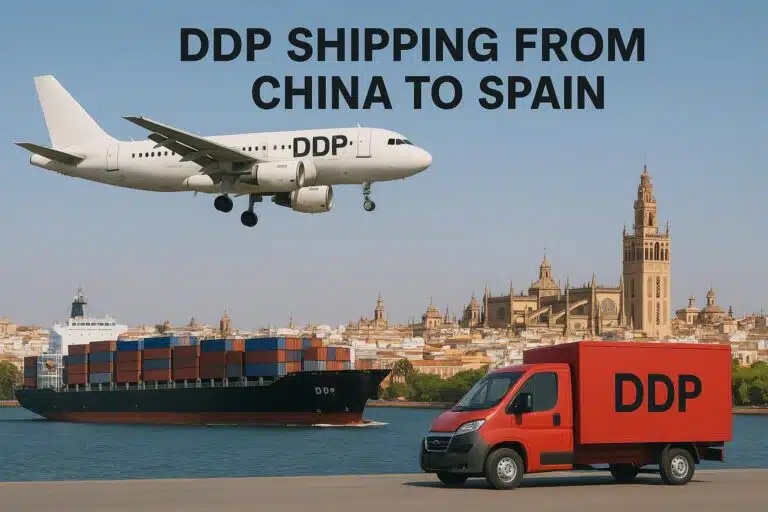
- DDP (Delivered Duty Paid) / Multimodal
Data que se necessita da carga e que se espera o embarque
The date on which the importer needs the cargo is not mandatory information in the quotation process, but it is crucial for the service provider quoting the freight to understand the urgency and determine whether the chosen mode of transport will meet the customer’s expectations.
Similarly, providing the expected shipment date is essential, as it enables the service provider to plan more strategically and improve the process’s predictability.
Who to negotiate international freight with?
Negotiating international freight rates typically occurs through a freight forwarder. Even if this professional does not have their own fleet, they have extensive knowledge of the international logistics scene and are responsible for transportation from cargo collection to final delivery.
It is also possible to negotiate directly with shipping or airline companies.
Role of the Freight Forwarder in International Shipping
The Freight Forwarder is the most suitable service provider for international transport management. This professional determines the most appropriate route, selects the best mode and freight option, and ensures your cargo is transported and delivered in accordance with the established terms, conditions, and deadlines.
Their responsibilities include issuing the bill of lading, selecting the best suppliers for the chosen modes of transport, resolving unforeseen events during transport, and monitoring cargo movement.
Related Articles: Understanding Freight Forwarding: A Comprehensive Guide
In addition to maintaining an up-to-date record of cargo locations, it is necessary to send it to customers or tax authorities when necessary. Freight forwarders also manage cargo collection at the sender’s location and perform the consolidation and deconsolidation of goods.
These professionals are of great importance to companies that prefer to outsource the transportation of imported or exported cargo. With their extensive experience in international logistics, they can reduce both delivery times and the costs of international transportation.

How pricing works in international transport
Pricing in international transport is determined by a complex set of factors and varies significantly depending on the type of service and the mode of transport.
In full container load (FCL) shipping, for example, costs are calculated based on the TEU (Twenty-foot Equivalent Unit). One TEU unit represents a 20-foot container.
Related Articles: Types and sizes of common sea containers
In LCL (Less Container Load) maritime transport, costs are either per BL (per shipment) or based on Weight/Measurement. When comparing the volume of the cargo to its weight, whichever is greater will serve as the base unit for freight pricing. The unit of measurement for weight is tons, and for volume, cubic meters (m³).
In air transport, the approach is similar, with costs determined by the AWB (Air Waybill), which also factors in weight and volume.
International air freight pricing can also be done by Weight/Measurement; however, unlike maritime transport, here 1kg is compared to 6 cubic decimeters (dm³).
Fixed pricing methods, such as Lumpsum Rate, are applied when a fixed freight rate is agreed upon, and an additional charge may apply if the volume or weight previously stated on the packing list is exceeded.
However, it should be noted that each cargo mode and type may require specific calculation methods, reflecting the needs and characteristics of different cargo types and transport routes.
Factors that influence transportation costs
To understand transportation costs, it is important to recognize that cargo transport prices are not fixed; they are influenced by several factors.
Infrastructure: Good logistics infrastructure is essential for optimizing the costs and efficiency of international transportation. This requires well-equipped and well-maintained ports, airports, highways, railways, and intermodal terminals that are capable of supporting the efficient movement of cargo.
On the other hand, poor infrastructure can result in significant congestion, delays, and inefficiencies in the transportation system. In addition, the lack of connectivity between different modes of transportation further complicates logistics coordination.
The result is an increase in the time required to move goods from one point to another, and, consequently, cargo transportation becomes more expensive.
Transport route: It is also a determining factor in transport costs. By studying routes, it is possible to plan and obtain a certain degree of predictability regarding the cargo’s journey to its destination.
However, in international transport operations, unforeseen setbacks may increase the final cost of cargo transport.
In addition to the fees added to the freight cost already known to importers, such as Capatazia, the Currency Adjustment Factor (CAF), and the Bunker Adjustment Factor (BAF), there are also surcharges.
For example, congestion surcharges are added to the freight cost due to increased cargo volume and reduced port capacity. Another example is the winter fuel surcharge, common on routes that pass through very cold regions, to cover extra costs for special fuel that does not freeze at high temperatures.
Want to learn more about ocean freight rates and surcharges? Read our article “How to calculate Ocean Freight costs – Detailed categories”
Another factor that influences the cost of international transport is transit time —the time it takes for cargo to travel from the port or airport of origin to its destination.
The route type directly affects the goods’ transit time. In addition, choosing a direct route or one with transshipment (the process of transferring goods from one mode of transport to another during the delivery journey) can be a strategic decision.
For example, choosing the first port or airport of call for import prevents your cargo from waiting for the ship or plane for a long period, even if this means part of the route must be made by another mode of transport.
Another strategy for maritime transport is to choose shipping companies that offer freight with fewer stops. Direct routes generally cost more because they are faster and in greater demand, but the price is still not comparable to air freight.
Market variations: due to competition or other factors such as fuel price fluctuations and the law of supply and demand. During periods of high demand, international transport prices tend to increase due to greater competition for space on ships, planes, trucks, or trains.
External factors: Political conflicts, instability, or sanctions in certain regions can also influence transport routes and increase risks. This tends to drive up costs due to the need for alternative routes or additional security measures.
Changes in regulations, such as stricter environmental laws or changes in customs tariffs, can also influence international transport costs.
International Transport Insurance
International Transport Insurance is an important and recommended service to ensure the safety of your cargo.
When purchasing insurance, it is necessary to analyze the nature of the cargo, as more sensitive or high-value items entail different risks that directly affect the premium calculation.
The Incoterm used in the operation is also essential, as it indicates the point of transfer of responsibility between the seller and the buyer, thereby determining who should purchase and pay for the insurance. Incoterms determine the extent of coverage, whether to the port of shipment or to the goods’ final destination.
The insured amounts are another important consideration when taking out insurance. The declared value can vary significantly depending on whether it includes only the FOB value of the goods or also freight, taxes, and other import-related expenses. This decision directly affects the premium paid: the higher the insured amount, the higher the insurance cost.
Therefore, the policy must accurately reflect all the amounts at stake so that, in the event of a claim, the compensation covers all expenses involved and not just the value of the goods.
Finally, it is advisable to take out insurance with specialized brokers rather than banks or direct insurers. Brokers tend to offer personalized service and are generally more competitive on costs and coverage.
In fact, a good broker should provide support for claims management, ensuring that, if necessary, the compensation process is agile and fair, allowing the company to minimize interruptions and continue operations without significant loss.