Today, moving goods from point A to point B is no longer a major challenge—over 90% of consumer products worldwide are shipped in containers. Because containers can be easily transferred between trucks, ships, and trains, they have become the backbone of global logistics, linking exporters and importers seamlessly.
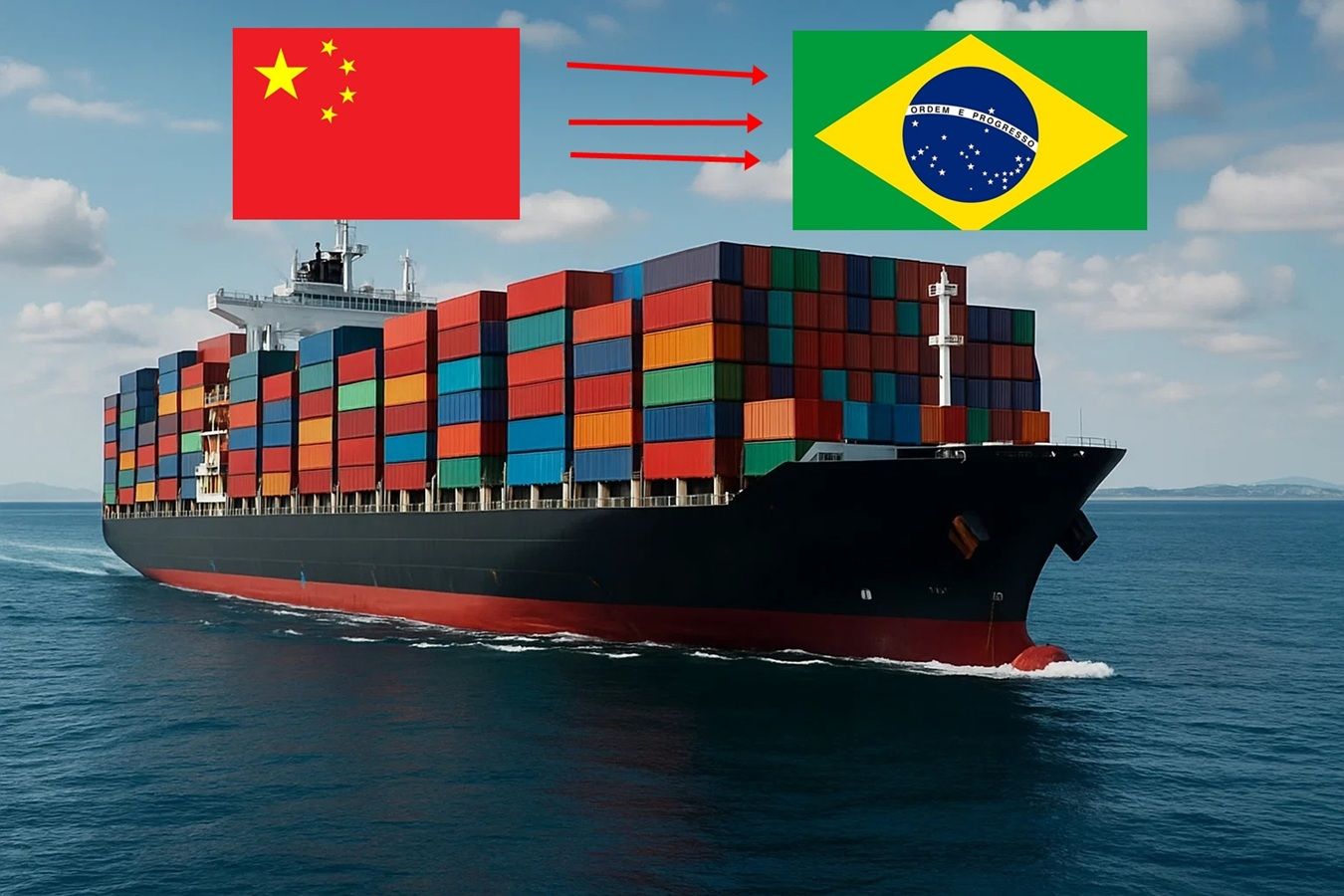
As the world’s largest exporter, China sends out thousands of containers every day, filled with a wide range of goods, including fresh produce, footwear, electronics, and even hazardous industrial materials. Over the past few decades, China has also refined its expertise in managing this massive flow of cargo through its bustling commercial ports, establishing itself as a global leader in containerized trade.
What Types of Containers Are There?
Because container ships and rail transport are among the most efficient ways to move cargo, the shipping industry standardized container dimensions early on to ensure seamless loading and transport across different modes of transportation.
Today, the two most common container sizes are:
- 20-foot containers
- 40-foot containers
The main difference between them is length, which directly affects both weight capacity and internal volume.
For a deeper look at the different types and sizes of sea containers, check out our guide: “Types and Sizes of Common Sea Containers.”

Who Are the Key Players in Container Shipping?
Container shipping typically involves three primary stakeholders:
- Importers: the businesses or individuals receiving goods from overseas.
- Exporters: the companies or suppliers selling and sending goods abroad.
- Shipping carriers: the ocean freight companies that move containers from exporters to importers.
In addition to these main players, a wide range of supporting services keeps the process running smoothly. These include port operators, trucking companies, shipping agents, freight forwarders, and other logistics partners who help coordinate the complex journey of each container.
China Export Process: Sea Freight
Suppose you decide to purchase a batch of products from China. Once the goods are ready and packed, they will be transported to the supplier’s warehouse or port for export. Depending on the delivery terms under Incoterms, this responsibility may fall to you (or more precisely, your freight forwarder in China) or the manufacturer.
Depending on the shipment volume and container loading requirements, you may choose Full Container Load (FCL) or Less than Container Load (LCL). FCL means the purchased goods occupy an entire container; for LCL, you reserve a dedicated space within a shared container for your order.
At this stage, agents and freight forwarders join the process, assisting importers and exporters in transporting goods to the port, collecting containers from shipping lines, booking space on vessels, and loading and sealing containers once they are filled at the exporter’s warehouse.
After all goods are loaded into the container, it is sealed with an identification number and transported from the warehouse to the designated port of shipment for loading onto the vessel.
The carrier also documents the type and quantity of goods in the container, the container identification number, the loading and discharge ports, the vessel name, and consignee information in a document called a Bill of Lading (B/L). This enables the consignee to retrieve the goods in their country of origin. The B/L is subsequently handed over to the shipper, who then transfers it to the consignee (via courier or electronic release). This document is critically important as it confirms legal ownership of the goods.
Subsequently, the exporter’s representative—the freight forwarder—prepares all port documentation and customs declarations, conducts final container inspections, and pays port charges for moving containers within port warehouses or storage facilities. The Chamber of Commerce issues the exporter a Certificate of Origin, which is essential for customs clearance within the Russian Federation.

Port Operations Process
Major international ports have specialized terminals designed to load and unload containers from ships and transfer them seamlessly to trains or trucks. Ports that consistently handle high cargo volumes are known as “hubs.”
Before containers are loaded onto a vessel, they are staged at the terminal according to the ship’s departure schedule. In most cases, containers arrive at the port several days in advance to ensure smooth loading operations.
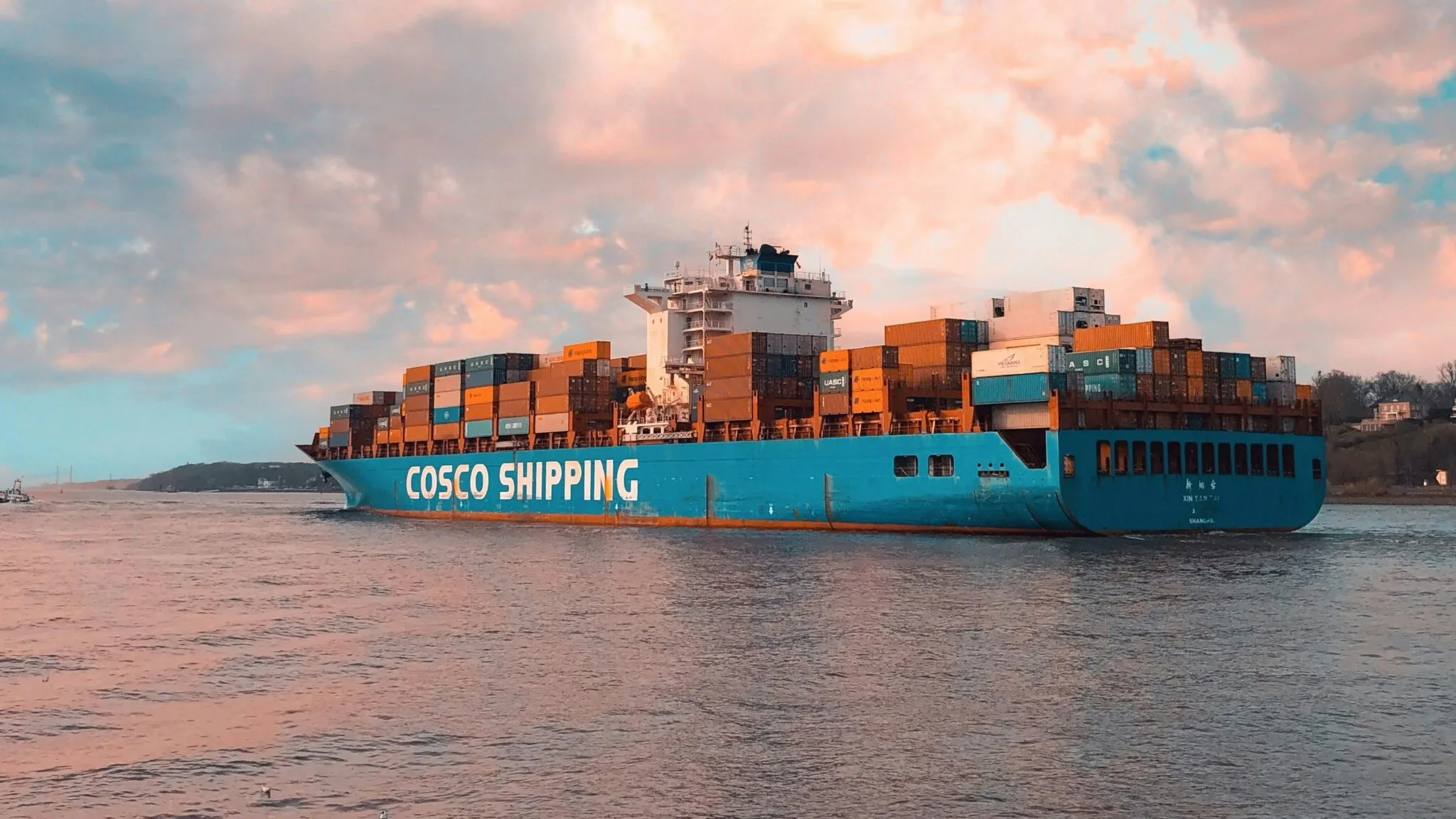
Ahead of each voyage, the ship’s captain receives detailed instructions about which containers need to be loaded at specific ports. The number of containers a vessel can carry depends on its size: smaller ships may hold only 100–200 containers, while the largest ocean-going container ships can carry up to 24,000.
Loading is carried out by giant steel cranes—often the iconic machines seen in images of busy ports. Containers are stacked both on deck and inside the vessel’s cargo holds. Each ship’s route includes a planned sequence of port calls, so the loading plan is critical; it determines how efficiently containers can be unloaded at each stop.
Every vessel follows a set schedule and approved route, often along coastal lines. For example, the shipping corridor between China and the United States is served by numerous global and Chinese carriers, including Maersk, Yang Ming, MSC, and others.
How Containers Are Collected at Seaports
When a vessel arrives at its destination port, containers are unloaded by large cranes and moved by port trucks to designated storage areas or warehouses.
Before the cargo can be released, import customs clearance must be completed. This includes paying any required taxes, duties, or fees in accordance with local regulations. Once clearance is granted, the freight forwarder in the destination country contacts the terminal to schedule pickup of the containers.
To collect the cargo, the consignee or freight forwarder must present the Bill of Lading—the same document originally issued at the port of departure.
After pickup, containers are typically transported by truck to the consignee’s warehouse or distribution center. There, the seals are broken, and the cargo is unloaded. Once delivery is complete, the freight forwarder returns the empty container to the carrier’s designated container yard, where it is prepared for the next shipment.
How Containers Are Transported by Rail

The rail freight process is relatively straightforward. Containers are first trucked from the supplier’s warehouse to the nearest rail terminal, where they are transferred onto trains using specialized handling equipment such as cranes and trucks.
From China, trains can travel directly to Russia or pass through Mongolia or Kazakhstan. When planning rail transport, shippers must carefully choose the route and follow the specific loading requirements of each railway terminal, which may vary. Additional time also needs to be factored in for transferring containers between Chinese and Russian locomotives, as well as delays that may occur at border crossings due to differences in railway track gauge.
Unlike ocean freight, where the Bill of Lading is the key document, rail shipments rely on a Railway Bill of Lading. This document serves a similar purpose, ensuring the goods are delivered correctly to the consignee.
Once the train reaches its destination terminal, containers must clear customs. This process involves submitting cargo and customs documentation, paying duties and fees, and securing approval to release the goods to the freight forwarder.
Finally, the carrier arranges delivery of the containers to the consignee and returns the empty equipment to a designated storage facility, where it awaits reuse for future shipments.
Multimodal and Intermodal Transport

Goods can be shipped using a single mode of transport (such as only by sea or only by rail) or through a combination of different modes—for example, by sea, then rail, and finally by truck.
If each leg of the journey is handled by a separate carrier, this is referred to as intermodal transport. If the shipment involves two or more modes of transport but is managed by a single carrier (known as a multimodal transport operator) that oversees the entire journey from pickup to delivery, it is referred to as multimodal transport.
In the United States, most cargo arriving from China is transported via intermodal transport because it is generally more cost-effective and time-efficient. One advantage of multimodal transport, however, is simplified documentation: shippers provide all shipment details once, and everything is recorded in a single transport contract with the logistics provider.
A typical scenario looks like this: vessels depart from Chinese ports and arrive at U.S. West or East Coast ports. After customs clearance, containers are loaded onto trains bound for the Midwest. If there is a delay between unloading at the port and the departure of rail services, freight companies often arrange temporary container storage at the terminal until the next leg of transport begins.
The primary document used in multimodal transport is the FIATA Bill of Lading, issued by the freight forwarder. This serves as a guarantee, giving the consignee the right to claim the goods upon arrival at the destination.
Upon arrival, unloading depends on the type of shipment:
- For FCL (Full Container Load), the container is usually delivered directly to the consignee’s warehouse.
- For LCL (Less than Container Load), the cargo is unloaded at the freight forwarder’s warehouse, where the consignee can either pick it up or have it delivered to a specified address, depending on the agreement.