Shipping a car from China to the United States involves more than choosing a carrier and booking transportation. Importers must select the right shipping method, prepare the required documents, meet U.S. safety and emissions requirements, clear customs, and arrange final delivery.
Chinese vehicles can offer competitive pricing, advanced technology and a wide range of models. However, importing a vehicle also requires careful attention to U.S. regulations, particularly those administered by U.S. Customs and Border Protection (CBP), the Environmental Protection Agency (EPA), and the Department of Transportation (DOT).
This guide explains how to ship a car from China to the USA, including shipping methods, estimated costs, transit times, required documents, customs clearance, and vehicle compliance requirements.
Why Import Cars from China to the USA?
Importing a vehicle from China can make sense for several reasons, depending on the vehicle, its intended use, and whether it meets U.S. import requirements.
Cost Advantages
One of the main reasons people consider importing cars from China is price.
Chinese-manufactured vehicles can be competitively priced compared with similar vehicles available in the United States. However, the purchase price is only one part of the total cost.
Importers should also consider ocean or air freight, customs duties, broker fees, compliance costs, inland transportation, storage and registration expenses before deciding whether importing a vehicle is financially practical.
Electric Vehicles and New Technology
China is a major manufacturer of electric vehicles and automotive technology.
Many Chinese manufacturers offer vehicles equipped with advanced driver assistance systems, modern electronic features and competitive efficiency ratings.
However, a vehicle that meets international standards is not automatically eligible for permanent importation into the United States. Importers must confirm that the specific vehicle meets applicable U.S. safety and emissions requirements.
Access to Exclusive Models
Some Chinese-manufactured vehicles are designed for markets outside the United States and may not be available through U.S. dealerships.
Importing from China can provide access to unique designs, compact vehicles and specialized models. This can be particularly relevant to collectors, businesses and consumers looking for vehicles that are not commonly available in the U.S.
China’s Automotive Industry Has Expanded
China’s automotive industry has developed substantially over the past decade.
Manufacturers now produce a wide range of vehicles for international markets. However, compliance requirements remain an important part of the import process.
Some vehicles may require modifications before they can be driven legally in the United States, while vehicles that already meet applicable U.S. requirements can generally move through the import process more easily.
How to Ship a Car from China to the USA
There are three main ways to transport a vehicle from China to the United States:
- Roll-On/Roll-Off (RoRo)
- Container shipping
- Air freight
The right option depends on your budget, vehicle type, security requirements and delivery timeline.
RoRo Shipping
Roll-On/Roll-Off shipping is one of the most commonly used and economical methods for transporting vehicles internationally.
The vehicle is driven directly onto a specialized vessel and secured inside the ship during transportation.
Advantages:
- Lower shipping cost
- Simple loading process
- Suitable for standard vehicles
- Practical for larger vehicle shipments
Disadvantages:
- Less protection than container shipping
- The vehicle is exposed to the marine environment
- Slight handling or exposure-related damage may be possible
For importers primarily concerned with controlling transportation costs, RoRo can be a practical option for standard-size vehicles.
Container Shipping
Container shipping provides greater protection and more flexibility.
Importers can generally choose between shared-container and sole-container transportation.
Shared Container
A vehicle shares a container with other cargo or vehicles.
The transportation cost is divided between the shipments, which can make this option more economical.
Sole Container
A single vehicle is transported in its own container.
This provides greater control, protection and privacy and can be useful for higher-value vehicles.
Container shipping is commonly considered for luxury vehicles, high-value automobiles, modified vehicles and shipments that include personal effects.
Air Freight
Air freight is the fastest transportation option but also the most expensive.
Typical transit time is approximately 3–7 days.
Benefits:
- Fast transportation
- Secure handling
- Lower exposure to damage
- Suitable for urgent shipments
Disadvantages:
- Significantly higher transportation costs
- May cost more than the vehicle’s purchase price in some cases
Air freight is generally reserved for rare collector vehicles, prototypes, high-value vehicles or time-sensitive shipments that cannot wait for ocean transportation.
Which Shipping Method Should You Choose?
The best shipping method depends on the vehicle and your priorities.
RoRo may be suitable when cost is the main consideration and the vehicle is a standard-size automobile.
Container shipping provides additional protection and can be a better fit for expensive, modified or high-value vehicles.
Air freight is generally used when delivery speed is more important than transportation cost.
The shipping method should therefore be selected before booking transportation, because the choice affects both the total cost and the preparation requirements.
Step-by-Step Process for Shipping a Car from China to the USA
Importing a vehicle from China involves several stages. Complete each stage before moving to the next.
Step 1: Choose a Freight Forwarder
First, choose a freight forwarder or vehicle transportation provider experienced in international automobile shipments.
A qualified forwarder can assist with:
- Vessel space booking
- Transportation planning
- Export documentation
- Shipping arrangements
- Customs coordination
- Inland delivery
Experience with international vehicle shipments is particularly important because automobile imports involve transportation requirements as well as U.S. regulatory requirements.
Step 2: Prepare the Required Documents
Before the vehicle is shipped, prepare the necessary documentation.
Common documents include:
- Original carrier’s Bill of Lading
- Commercial Invoice
- Proof of ownership or foreign registration
- EPA compliance forms
- DOT compliance forms
- Safety certifications
- Modification documents, when applicable
Incomplete or inaccurate documentation can result in customs delays and additional storage or transportation costs.
Step 3: Prepare the Vehicle
The vehicle should be inspected and prepared before loading.
Typical preparation includes:
- Cleaning the undercarriage to remove dirt and debris
- Reducing fuel to the required level
- Checking the engine compartment
- Checking the battery and vehicle safety
- Removing personal items unless properly sealed
Vehicle preparation helps meet transportation requirements and can reduce problems during inspection.
Step 4: Load the Vehicle
Loading procedures depend on the selected transportation method.
RoRo: The vehicle is driven directly onto the vessel and secured in the designated vehicle area.
Container Shipping: The vehicle is positioned inside a 20-foot or 40-foot container and secured for ocean transportation.
Shared Container: Multiple vehicles may be loaded into one container to reduce transportation costs.
Proper loading is important for protecting the vehicle throughout international transportation.
Step 5: Ship the Vehicle to the United States
Common ocean routes include:
Shanghai / Ningbo → Los Angeles / Long Beach
Air freight may also be arranged from major Chinese airports, including Shenzhen, to U.S. destinations such as New York or Houston.
Typical transit times are:
- Ocean freight: approximately 30–40 days
- Air freight: approximately several days
Tracking systems can be used to monitor the shipment while it is in transit.
How Much Does It Cost to Ship a Car from China to the USA?
The total cost depends on the transportation method, vehicle dimensions, origin and destination, and whether the vehicle requires additional compliance work.
The following estimates represent the primary transportation costs:
| Shipping Method | Estimated Cost | Transit Time | Typical Use |
| RoRo | $1,000–$1,500/car | 30–40 days | Standard vehicles |
| Shared Container | $1,200–$2,000/car | 30–40 days | Cost-conscious importers |
| Sole Container | $2,500–$3,500/car | 30–40 days | Luxury or high-value vehicles |
| Air Freight | $10,000+ /car | 3–7 days | Urgent or collector vehicles |
These figures cover the primary international transportation cost. They do not include applicable import duties, taxes, customs broker fees, compliance expenses or inland transportation within the United States.
U.S. Import Duties and Other Fees
Transportation is only one part of the landed cost.
Importers may also need to budget for:
Import Duty
The source material estimates a general passenger-car import duty of approximately 2.5% of the purchase amount.
The actual duty applicable to a vehicle should be confirmed based on its classification and import circumstances.
Gas Guzzler Tax
Certain vehicles with low fuel-efficiency ratings may be subject to the Gas Guzzler Tax.
EPA Compliance Costs
If the vehicle does not meet applicable EPA requirements, modifications or other compliance procedures may be necessary.
These costs can include services from qualified compliance providers.
Customs Broker Fees
A customs broker can prepare entry documentation, communicate with CBP and assist with the customs clearance process.
Inland Transportation
After the vehicle is released from customs, it still needs to reach its final destination.
Inland truck transportation from the port to a residence, dealership or warehouse is therefore an additional cost.
Storage and Port Charges
Additional charges may arise if a vehicle remains at the port because required documents or compliance requirements have not been completed.
Potential charges include:
- Port storage
- Terminal handling
- Inspection fees
- Other port-related charges
U.S. Vehicle Import Regulations
Importing a car into the United States is not simply a transportation process.
The vehicle must also meet applicable U.S. safety and emissions requirements.
Motor Vehicle Safety Requirements
The Motor Vehicle Safety Act applies to motor vehicles imported into the United States.
Imported vehicles must meet applicable Federal Motor Vehicle Safety Standards (FMVSS).
Vehicles that already meet the applicable U.S. requirements can generally proceed through the standard import process.
A non-conforming vehicle may require modifications through a DOT Registered Importer before it can be legally operated on U.S. roads.
EPA Requirements
The Environmental Protection Agency regulates vehicle emissions and related environmental requirements.
Importers generally need to demonstrate that the vehicle complies with applicable EPA requirements.
Certain temporary imports and other special circumstances may qualify for exemptions.
Examples include:
- Vehicles temporarily imported for testing or exhibition
- Vehicles imported for tourist travel under certain conditions
- Vehicles previously exported from the United States and returned without specification changes
Vehicles that do not meet applicable EPA requirements may require modification or other compliance measures before release.
DOT Requirements
The Department of Transportation regulates vehicle safety requirements.
Importers may need to demonstrate compliance through the appropriate certification and documentation.
If the vehicle does not meet applicable requirements and no exemption applies, it may be treated as non-conforming and require modification before it can be released for normal use.
What Documents Are Required to Import a Car?
Accurate documentation is one of the most important parts of the vehicle import process.
Missing or incorrect documents can delay customs processing or prevent the vehicle from being released.
Bill of Lading and Commercial Invoice
The original Bill of Lading identifies the shipment and provides transportation information such as weight, value and shipping terms.
The Commercial Invoice records the purchase price, seller information and transaction terms.
Both documents are generally provided to the customs broker and CBP as part of the import process.
Proof of Ownership and Registration
Importers may need:
- Original title
- Contract of sale
- Foreign vehicle registration
- Evidence of previous U.S. registration, where applicable
These documents establish ownership and help support the vehicle’s import documentation.
EPA and DOT Forms
The import process may require:
- EPA Form 3520-1
- DOT Form HS-7
These forms are used to declare compliance, exemptions or other applicable import circumstances.
A permanent vehicle label may also be required to demonstrate compliance with applicable U.S. manufacturing and safety requirements.
Registration and License Documents
Once the vehicle arrives in the United States, additional documents may be required for registration.
These can include:
- Registration documents
- Temporary license plates
- Foreign license plates in qualifying temporary-import situations
- National license plates from the country of origin
- Driving permits or international identification
Other Supporting Documents
Depending on the shipment, CBP may require additional documentation.
This may include:
- Proof of insurance
- Importer’s passport
- Business license
- Compliance reports
- Modification documentation
Preparing these documents before shipment can reduce the possibility of customs delays.
How Does Customs Clearance Work?
Once the vehicle arrives at a U.S. port, it enters the customs clearance process.
CBP reviews the shipment documentation, applicable duties and regulatory compliance before releasing the vehicle.
Use a Customs Broker
Many importers work with a licensed customs broker.
The broker can assist with:
- Entry filing
- Document preparation
- Duty and fee calculations
- Communication with CBP
- Compliance documentation
A freight forwarder working with an experienced customs broker can coordinate transportation and customs procedures together.
CBP Entry Bond
Most commercial imports require appropriate customs bond coverage.
The source material identifies a normal CBP entry bond as part of the vehicle import process. The bond provides security for applicable duties, taxes and compliance obligations.
If sufficient bond coverage is not available, CBP may delay the release of the shipment or require additional security.
Pay Applicable Duties and Fees
Before the vehicle can be released, applicable duties and fees must be addressed.
Potential charges include:
- Import duties
- Gas Guzzler Tax
- Merchandise Processing Fee (MPF)
- Harbor Maintenance Fee (HMF) for ocean shipments
- Terminal Handling Charges
- Port storage
- Inspection fees
CBP Reviews the Vehicle Information
During clearance, CBP may review:
- Original Bill of Lading
- Vehicle Identification Number (VIN)
- Engine information
- EPA documentation
- DOT documentation
- Proof of ownership
- Registration information
- Other supporting documents
If the vehicle does not meet applicable federal safety or emissions requirements, additional compliance measures may be required before release.
What Happens After Customs Release?
Once CBP has completed the clearance process and applicable duties and fees have been paid, the vehicle can be released.
The importer can then arrange final delivery.
Common options include:
- Pickup at the port
- Inland truck transportation
- Door-to-door vehicle delivery
If a freight forwarder has arranged inland transportation, the vehicle can be moved from the port to a residence, dealership or other final destination.
Vehicle Registration After Import
Customs clearance does not necessarily complete the entire import process.
After the vehicle reaches its destination, the importer may need to complete state registration requirements before operating the vehicle on public roads.
Temporary Plates
Depending on the state and circumstances, temporary plates may allow the vehicle to be operated while permanent registration is being processed.
Permanent Registration
Permanent registration generally requires the vehicle to satisfy applicable state and federal requirements.
Importers should confirm registration requirements with the relevant state Department of Motor Vehicles.
Cost-Saving Tips for Car Shipping
There are several ways importers can manage transportation costs.
Use Shared Container Shipping
Sharing a container can reduce the transportation cost per vehicle compared with using a dedicated container.
Consider RoRo for Standard Vehicles
If the vehicle does not require the additional protection or flexibility of container shipping, RoRo can provide a lower-cost alternative.
Work With an Experienced Freight Forwarder
A freight forwarder that can coordinate international transportation, customs documentation and inland delivery may help simplify the process and reduce avoidable costs.
Plan Ahead
Booking transportation and preparing documents in advance can help reduce additional expenses during busy shipping periods.
It also gives the importer more time to address compliance issues before the vehicle reaches the U.S. port.
Final Thoughts
Shipping a car from China to the USA requires coordination between international transportation, customs clearance and vehicle compliance.
The basic process is:
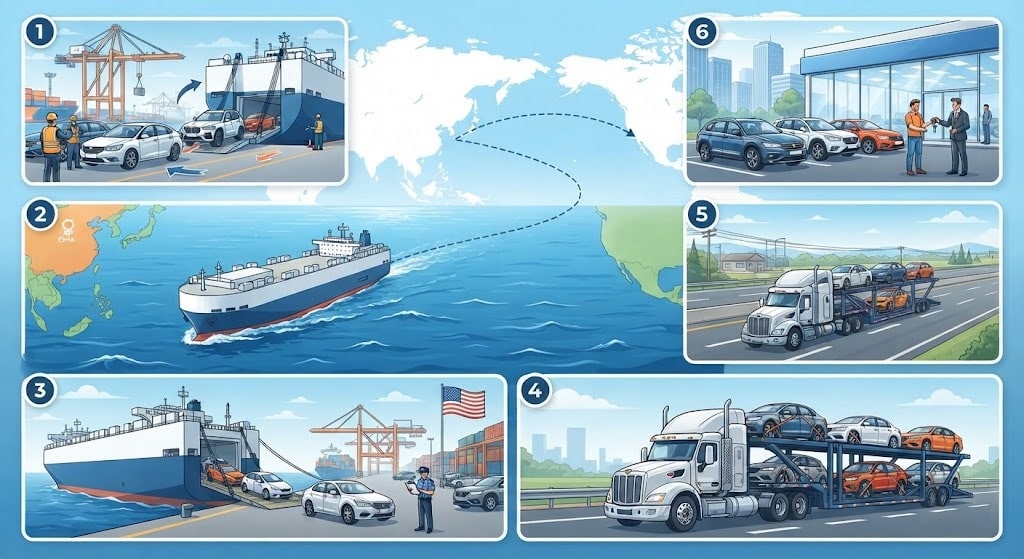
Choose a shipping method → Prepare the vehicle → Prepare documents → Ship from China → Complete CBP clearance → Pay applicable duties and fees → Arrange inland delivery → Complete registration
The biggest issues are usually not the ocean or air transportation itself. Documentation, vehicle eligibility, EPA and DOT compliance, customs requirements and final registration can all affect the overall timeline and cost.
Planning these requirements before the vehicle leaves China gives importers more time to address potential problems and helps reduce delays after arrival in the United States.