Shipping from China to the USA is rarely just about finding a freight rate and booking a container. The tariff you pay, the HTS code you use, the shipment timing, and even how you declare the cargo can all change the final landed cost.
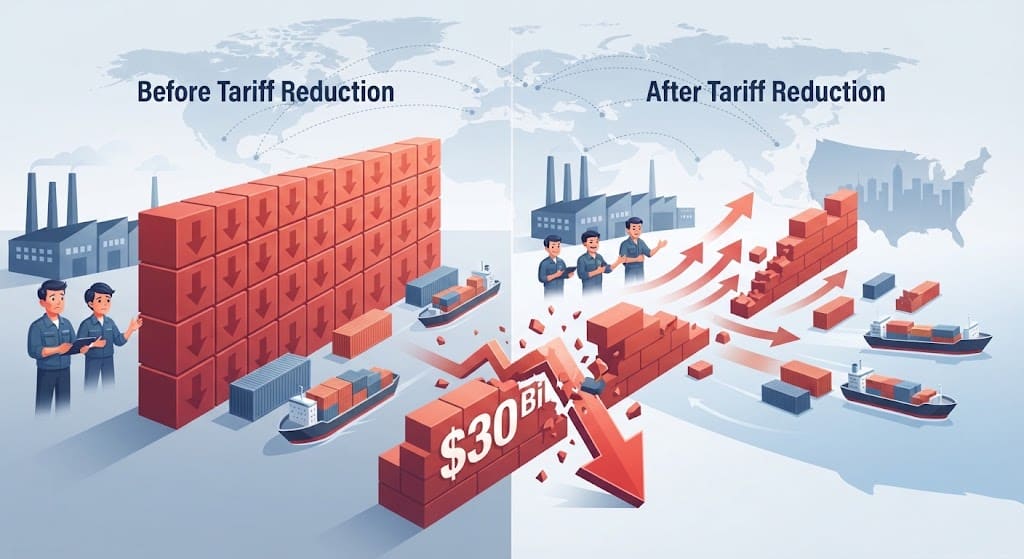
The latest U.S.-China tariff changes may give some Chinese exporters more room to manage those costs. A new framework covers approximately $30 billion of imports on each side, with more than 90% of the products on the agreed lists expected to receive more favorable tariff treatment once the required domestic procedures are completed.
But the headline number does not tell the whole story.
If you ship from China to the U.S., the practical questions are more specific: Does your product qualify? Which HTS code applies? When does the new treatment actually take effect? And should you change your booking or inventory plan?
This guide breaks down the latest tariff changes, the products most likely to be affected, and the shipping and customs issues Chinese exporters should watch for. It also covers how to plan bookings, prepare documents, choose a shipping method, and avoid unnecessary costs during the busy U.S. shipping season.
2026 U.S.–China Tariff Changes
For companies shipping from China to the USA, tariff changes matter most when they change the amount you actually pay at import. But that number depends on the product, its classification, country of origin, and the tariff measures that apply.
Here are the main points to watch.
1.1 Latest Update: $30 Billion Reciprocal Tariff Reduction Framework
China and the United States have agreed on a framework covering approximately $30 billion of imports in each direction.
The important detail is that this is not a blanket tariff reduction for every Chinese product. The framework focuses on specified, non-sensitive products, and the final treatment depends on implementation through each country’s domestic procedures.
For U.S. importers buying from China, the U.S. framework identifies products such as toys, household appliances, baby products, kitchen and bathroom goods, and holiday products. Many of these products also move in large volumes during the year-end shopping season.
That makes the timing important.
If you are shipping seasonal consumer goods, a lower duty can change your landed cost. But it only helps if the shipment actually qualifies and the new treatment is already effective when the entry is filed.
1.2 Not Every Product Gets the Same Treatment
This is where exporters and importers need to be careful.
A tariff reduction covering selected products does not mean every shipment from China to the USA suddenly receives the same rate. Products outside the agreed lists can remain subject to existing duties and other product-specific trade measures.
Section 301 is one example. Certain China-related products remain subject to additional tariffs, while other products can also be affected by separate programs such as Section 232 or trade-remedy duties. The applicable rate depends on the exact product and HTS classification.
So before you price an order, check the HTS code and the tariff measures that apply to that particular product.
That extra step matters more now because two products that look almost identical commercially can still fall under different tariff provisions.
1.3 What Changes for Businesses?
For businesses shipping from China to the USA, the change has two sides.
Potential savings:
Products covered by the new framework may face lower additional duties. That can reduce landed costs and give importers more room to set prices or negotiate orders.
Higher classification risk:
Different products may now receive different tariff treatment. An incorrect HS/HTS classification, country-of-origin declaration, or customs entry can result in the wrong duty payment, additional customs questions, or clearance delays.
For freight forwarders, this makes pre-shipment work more important.
Checking tariff treatment before booking is usually much easier than trying to fix the problem after the container arrives at a U.S. port.
How the Tariff Changes Affect Importers and Exporters
For companies moving goods between China and the U.S., the impact comes down to three things: duty cost, product pricing, and customs compliance.
The potential savings are real for qualifying products, but they are not automatic. Your shipment must still meet the applicable tariff requirements.
2.1 Potential Benefits: Lower Duties and More Room on Costs
The most obvious benefit is lower import costs for qualifying products.
- Exporters: Lower duties on products such as household goods, furniture, toys, and small appliances can reduce the landed cost of goods entering the U.S. market. This can give sellers more flexibility in setting final selling prices.
- Importers: Lower tariffs on selected U.S. exports, including agricultural products, personal care goods, and medical devices, can reduce import costs for Chinese buyers.
- Cross-border trade: If tariff costs fall on selected consumer products, trading activity may increase, which can also create additional demand for ocean freight, air freight, LCL consolidation, and other logistics services.
For a business shipping hundreds or thousands of units, even a relatively small change in the duty rate can affect the landed cost of the entire order.
That is why you should calculate the first estimate at the SKU level, not by applying one average tariff rate to the whole shipment.
2.2 Common Pitfalls: What Freight Forwarders Should Watch
The tariff change also creates a few practical problems that are easy to overlook.
- Assuming every product qualifies: The reduction applies to specified products. Cargo outside the agreed scope may continue to face existing duties.
- Missing the effective date: A framework or announcement is not necessarily the same thing as an effective customs rate. Confirm when the new treatment actually applies before changing your shipment schedule.
- Incorrect HS/HTS classification: Similar products can fall under different tariff provisions. A wrong classification can lead to overpayment, customs questions, or clearance delays.
- Checking too late: Review the HTS code, country of origin, applicable tariff measures, and effective date before booking the cargo. Doing this early gives both the importer and freight forwarder a much clearer picture of the actual landed cost.
The basic rule is simple: do the tariff check before the cargo moves, not after it arrives.
3. Practical Guide: Shipping, Customs, and Export Planning Under the New Tariff Rules
Tariffs are only one part of the China-U.S. shipping equation.
The same shipment still needs a booking, export documentation, customs entry, ocean or air transportation, and final delivery. During peak season, each part can affect the final cost and delivery date.
The following steps can help importers and exporters plan China-U.S. shipments more effectively.
3.1 Booking and Shipping Schedule
If your product is covered by the tariff reduction, the lower duty may improve the economics of the shipment. But that does not mean you should wait until the last minute to book freight.
- Products covered by the tariff reduction: Book space on major China-U.S. routes early, especially for high-volume consumer goods. Peak-season demand can tighten vessel and container capacity and push freight rates higher.
- Products outside the reduction lists: Recalculate the landed cost using the applicable tariff rate. If the shipment is large, consider whether staggered shipments make more sense than moving the entire order at once.
- Shipment timing: Confirm the effective date and customs treatment before scheduling the cargo. The sailing date alone does not determine which tariff treatment will apply.
This is particularly important around the U.S. holiday season. A shipment that looks cheaper on paper can still become expensive if the cargo misses a cutoff, arrives during congestion, or sits at the destination while customs clearance is being completed.
3.2 Customs Declaration and HS/HTS Classification
The HTS code is one of the first things to check when calculating the landed cost.
A small classification difference can change duty treatment, so don’t leave it until the customs entry is being prepared.
- Review the HS/HTS code: Confirm the product classification before shipment. Use the actual product specifications rather than relying only on a supplier’s old classification.
- Prepare complete product information: Keep the commercial invoice, packing list, product description, country-of-origin information, and other required documents consistent.
- Apply the correct tariff treatment: Separate the MFN duty, additional tariff measures, and any product-specific duties before calculating the total import cost.
A freight forwarder can help review the tariff structure and estimate duty exposure, but the product information must still be accurate.
The cleaner the paperwork is at origin, the fewer questions there are likely to be when the shipment reaches the U.S. side.
3.3 Choosing the Right Logistics Solution
The tariff rate is only part of the shipping decision. Shipment size, delivery deadlines, and final destination still determine which transport method makes sense.
- Large-volume shipments: For sufficient cargo volume, FCL can spread transportation costs across more units and provide more predictable handling.
- Small shipments and samples: LCL or consolidated shipping can be more practical when the cargo does not justify a full container.
- Route selection: Compare transit time, freight rates, port conditions, and customs handling when selecting a China-U.S. service.
There is no single shipping method that works for every order.
A container of stable replenishment stock may suit ocean FCL better. Smaller orders can move through LCL. Urgent or high-value cargo may justify air freight when the cost of waiting exceeds the cost of flying.
The important part is to calculate the total landed cost and delivery requirement, rather than choosing a mode based only on the freight quote.
3.4 Risk Monitoring and Shipment Support
Tariff policy does not stay still.
Product lists, exclusions, tariff codes, and implementation details can change, so a rate that works for one shipment should not automatically be copied to the next one.
- Monitor policy updates: Keep checking official notices and review upcoming shipments when tariff rules change.
- Pre-check higher-risk shipments: For products that may face additional duties or closer customs review, prepare the classification, origin information, product descriptions, and supporting documents before cargo leaves China.
- Track the shipment after departure: Monitor port operations, customs clearance, and final delivery. Early visibility gives you more time to respond before delays turn into storage, demurrage, or other charges.
For regular China-U.S. importers, this is less about checking the news every morning and more about building tariff checks into the normal shipping workflow.
What Businesses Should Do Next
The new tariff framework may create opportunities, but businesses should look beyond the headline tariff rate.
Before changing your purchasing or shipping strategy, review the product, inventory position, tariff treatment, and transportation plan together.
- Review product mix: Identify which products are covered by the tariff reduction and calculate whether the lower duty changes the landed cost enough to affect your U.S. pricing or sourcing plans.
- Plan inventory carefully: Adjust purchasing and production schedules based on confirmed orders, implementation dates, and expected peak-season demand. Lower tariffs do not automatically justify building excess inventory.
- Work with an experienced freight forwarder: A logistics partner familiar with China-U.S. customs and tariff requirements can support booking, HS/HTS classification checks, documentation, customs clearance, and final delivery coordination.
The goal is not simply to find a lower tariff.
It is to make sure the lower tariff actually reaches your final landed cost without being lost through a classification error, missed effective date, expensive freight booking, or avoidable customs delay.
Conclusion
The latest U.S.-China tariff changes could reduce duty costs for eligible products and give businesses more room to manage pricing, inventory, and sourcing.
But the savings are not automatic.
The product still needs to qualify. The HTS classification needs to be correct. The country of origin needs to be properly declared. The effective date needs to be confirmed. And the shipment itself still needs to move through export clearance, international transportation, U.S. customs, and final delivery.
For Chinese exporters shipping to the USA, these details are becoming part of the same decision.
A lower tariff can improve the numbers, but only if you plan the shipment correctly from the start.
As a China-U.S. freight forwarder, Hongocean helps businesses manage these moving parts before and during shipment. Our support includes duty and tariff calculations, HS/HTS code pre-checks, booking and shipping solutions, customs documentation, and clearance support.
When businesses handle freight, customs, and tariff planning together, they get a clearer view of the real landed cost—and fewer surprises when the cargo reaches the United States.