
When conducting import/export operations with overseas countries, CFSs (Container Freight Stations) play a crucial role in handling the loading and unloading of container cargo, as well as collection and sorting. In recent years, as the digital transformation of the entire supply chain and logistics has accelerated, the optimal use of CFSs has once again garnered attention. This article provides a detailed explanation of the definition and historical background of CFSs, the benefits of introducing them, specific use cases and challenges, and the outlook for logistics and trade in the future.

What is a CFS?
A CFS (Container Freight Station) is a dedicated facility for collecting, sorting, loading, and unloading cargo when handling marine containers and air cargo. It is a crucial point in international logistics, as it serves as a base for packing export cargo into containers (vanning) and unloading import cargo from containers (devanning). In particular, when handling LCL (Less than Container Load) cargo, it is used to aggregate small amounts of cargo from multiple shippers to fill containers, thereby increasing transportation efficiency.
Historical background of CFS
It is said that large-scale international logistics using containers began in the 1950s. As container transport became more widespread around the world, CFSs were established around ports and in the suburbs of major cities, and the infrastructure for handling container cargo expanded rapidly.
- Larger volumes and faster logistics: As shipping volumes increased, the load capacity per ship also expanded. Efficient “loading and unloading hubs” were required.
- Globalization of the supply chain: As companies expand their overseas operations, demand for imports and exports surges. The use of CFSs at multiple locations becomes the standard.
- Advances in information management technology: Developments in systems that centrally manage container and cargo information have enabled improvements in traceability and lead time management.
CFS has evolved based on this historical background, and in recent years, collaboration with logistics digital transformation has led it to a new stage.

The role of CFS
A CFS is not simply a place where containers are loaded and unloaded. It serves as a crucial hub that impacts the entire supply chain, from upstream to downstream logistics. Specifically, it plays the following roles:
- Cargo collection, sorting and packaging
- Consolidating small amounts of cargo and creating the most optimal transport method
- Facilitating customs inspections and clearance procedures
- Inventory management support
- It has temporary storage capabilities and can also be used as an inventory base.
- Responding to various needs, including emergency response and partial delivery
- Cost optimization and improved transport efficiency
- Minimize empty space in containers by consolidating LCL shipments
- Reduce transportation problems by using specialized packing and loading techniques
Impact of CFS on business
By using CFS appropriately, shippers can expect the following benefits:
- Reduced transportation costs : Since large quantities of cargo are transported together, logistics costs per unit are lower.
- Shorter lead times : Cargo handling becomes more efficient, and schedule management becomes easier.
- Quality control and traceability: Cargo packaging and sorting are all centralized at the CFS, reducing the risk of cargo damage and making it easier to maintain accurate tracking information.
- Stability of the entire supply chain: Smooth transportation to domestic and overseas bases enables a flexible response to fluctuations in demand and emergency situations.
These benefits improve cost management and customer satisfaction across the business, ultimately strengthening corporate competitiveness.
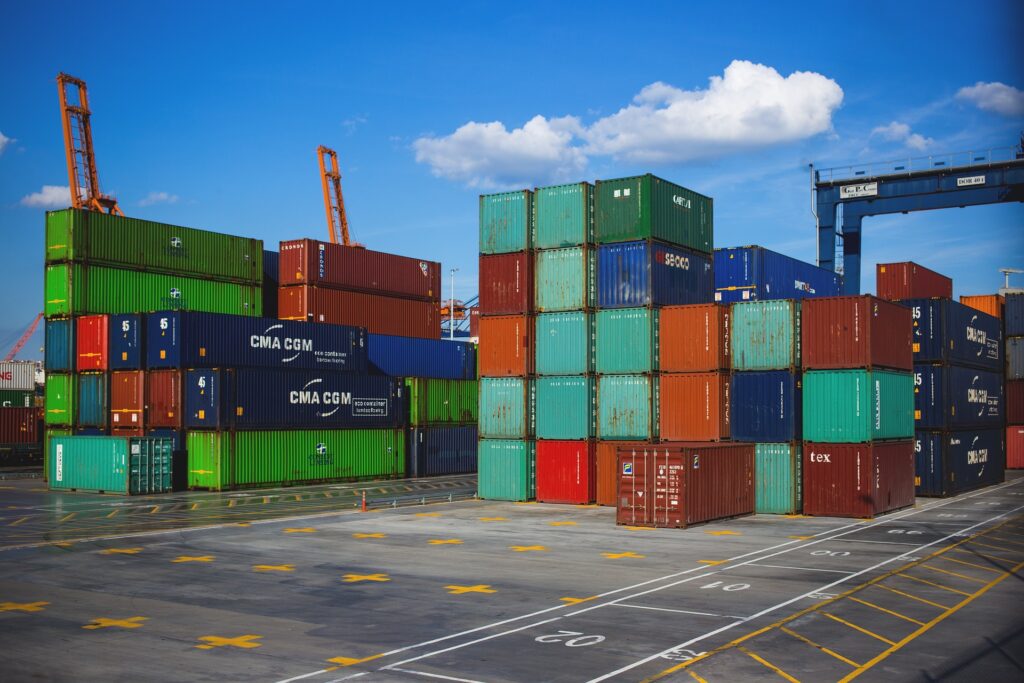
Specific benefits of introducing CFS
Cost reduction
The biggest advantage of using a CFS is the optimization of transportation costs. LCL transportation, in which small cargoes are shared among multiple shippers, is highly effective in reducing costs per company. Furthermore, specialized workers efficiently handle loading and unloading, which also contributes to reducing labor and storage costs.
Shortening lead times
Because CFSs handle multiple cargoes simultaneously, loading and stowage plans become more efficient, and departure and arrival schedules become more accurate. If a CFS is located near port facilities, truck transport can be minimized, thereby shortening the overall lead time.
Improving quality control and traceability
CFSs handle cargo with care and have systems in place to prevent damage and loss. Additionally, with the use of IT systems to manage incoming and outgoing shipments, an increasing number of cases allow cargo status and location information to be tracked in real-time.
- Reducing cargo accident rates
- Improved accuracy of inventory management
- Benefits include faster responses and reporting to customers, ultimately increasing reliability throughout the supply chain.
High flexibility and emergency response capabilities
In today’s world of increasing globalization and frequent disruptions to supply chains due to natural disasters and political situations, utilizing CFSs at multiple locations has the advantage of allowing for a quick response to changes in transportation routes and the re-collection of cargo.
Basic flow using CFS
- Cargo collection and delivery to the warehouse
- Collecting cargo from multiple shippers and delivering it to the CFS
- By completing packaging and labeling in advance, work efficiency is improved.
- Sorting, inspection, and customs clearance procedures
- Checking packaging, quantity, and quality within the CFS
- Document verification and customs clearance procedures were carried out
- Bunning
- Loading export cargo into containers
- Avoid overcrowding and uneven loading to minimize damage during transport
- Transportation (shipment, land transport, and transportation to the airport in the case of air cargo)
- Once the container is full, it is transported to the port or airport.
- Thorough schedule management to prevent delays
- Devanning (unloading)
- The container is opened at the importing CFS, and the cargo is sorted by the shipper.
- Arrange secondary delivery (domestic delivery) if necessary
By conducting this entire process in a specialized facility, we can efficiently optimize costs and manage lead times.
Explanation of related terms
- Vanning : The process of loading cargo into containers. Optimal loading can reduce logistics costs.
- Devanning : The process of removing cargo from a container. Safe and smooth operation is important.
- LCL (Less than Container Load) : When there is not enough cargo to fill a container, the cargo is transported together with other companies’ cargo. CFS plays a major role.
- FCL (Full Container Load) : A form of transport in which a container is used exclusively by one company and is nearly fully loaded.
Key points to consider when using CFS
- Integration with appropriate IT systems
- Exchange information with WMS (warehouse management system) and TMS (transportation management system) to visualize work status
- Advance logistics, digital transformation, and achieve real-time traceability
- Work standardization and personnel training
- Vanning and devanning techniques depend on the worker’s skill level.
- Manual preparation and training are essential for safety management and quality maintenance
- Cost comparison and utilization of multiple locations
- Compare and understand CFS usage fees and storage periods in advance
- Using multiple CFSs depending on the situation to spread risks and improve transport efficiency
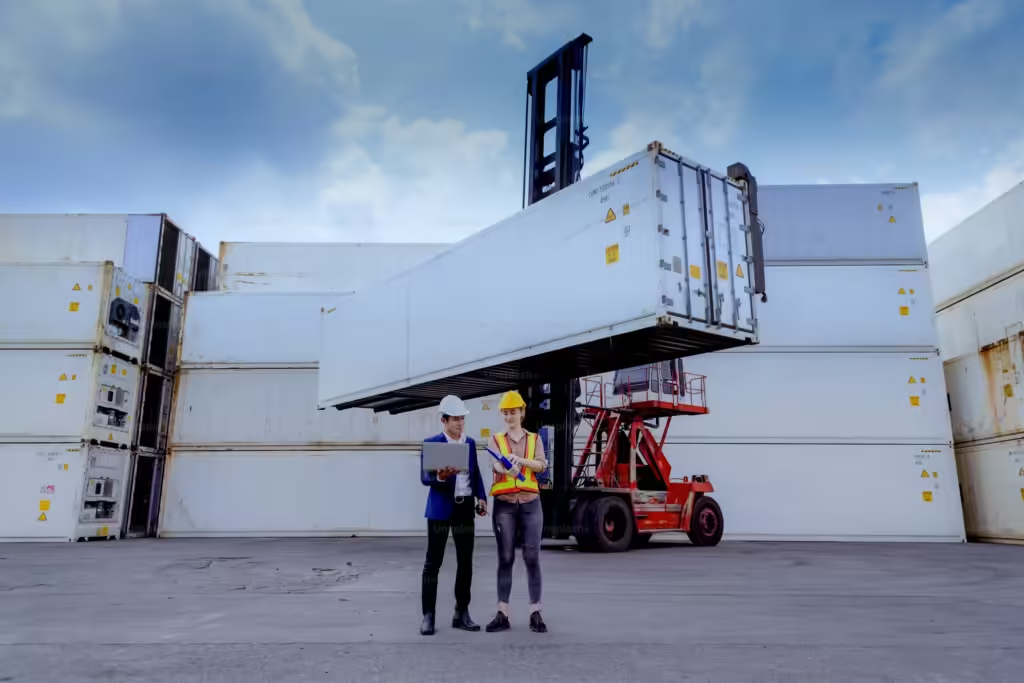
Challenges facing CFS and industry trends
Labor shortages and workload
The logistics industry as a whole is facing a significant labor shortage. Because CFSs require manpower, primarily for loading and unloading tasks, a chronic labor shortage can lead to a decline in service quality and work delays. While the introduction of automation technology and robots is progressing, investment costs are high, and managing the transition period poses a significant challenge.
Rising costs and intensifying competition
Operating a CFS incurs significant costs, including port usage fees, capital investment, labor costs, and others. Due to recent international developments, currency fluctuations, and rising fuel prices, overall logistics costs are increasing, necessitating that operators pass on price increases to users and adjust service levels accordingly.
Delays in DX
There are still many CFS where customs procedures are still document-based, and analog management is still deeply rooted. To digitize the entire supply chain and improve traceability, it is necessary to thoroughly review existing business processes. Improving the IT environment of CFSs will be a key focus area going forward.
Industry trends: DX and supply chain advancements
On the other hand, to overcome these challenges, an increasing number of CFSs are incorporating the latest technology. For example,
- Real-time inventory visibility
- Automatic optimization of loading plans using AI
- Automatic loading by a work robot
Efforts to promote logistics digital transformation are underway, including the following. All of these will contribute to cost reduction, shortened lead times, and reduced human error, and are expected to become even more widespread in the future.
Summary: The role of CFS in the era of logistics digital transformation
The logistics industry is entering an era where the advancement of supply chains and the promotion of logistics digital transformation are essential global trends . In this context, CFSs still have a significant presence as infrastructure for the efficient handling of container cargo.
- Benefits of using CFS
- Cost reduction and productivity improvement
- Shortening lead times and strengthening customer responsiveness
- Improving traceability and thorough quality control
- Flexibility to handle global logistics
- Challenges facing CFS
- Labor shortages and workload
- Delays in DX limit business efficiency
- Further collaboration is needed to achieve overall supply chain optimization
To overcome these challenges, a company-wide strategic approach led by the Chief Logistics Officer (CLO) is essential. By redefining CFSs as the cornerstones of the supply chain rather than simply warehouse locations and combining them with the latest digital technologies, true logistics digital transformation can be achieved.

