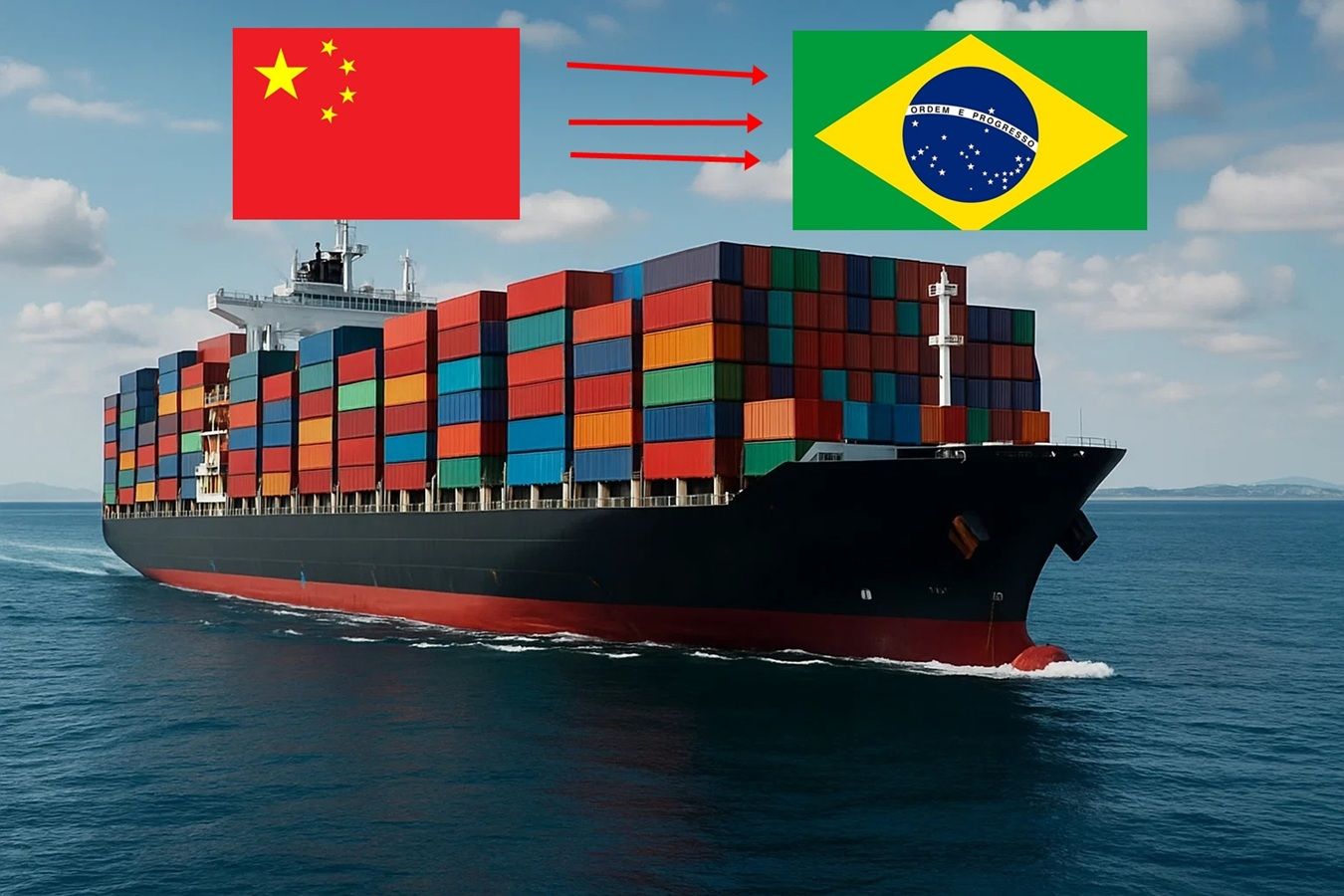
Trade deficits are an important part of the conversation about the U.S. economy. Trade deficits aren’t just numbers; they have real-world effects on supply chains, procurement costs, and trade policy concerns, especially for enterprises.
With tensions between the U.S. and China rising and the USMCA framework changing, it’s important to know the scale and types of trade imbalances in each country so you can make smart decisions.
This article talks about the U.S. trade deficit, how it affects key partners like China, Mexico, and Japan, and what businesses should do about it.

The U.S. Trade Deficit and Its Impact on Businesses
Many people see the U.S. trade deficit as a national issue, but it also directly affects how businesses operate. This trade imbalance influences daily business activities, including costs, sales opportunities, financial planning, and risk management.
This section explores how trade imbalances affect business performance, both in its structure and in everyday operations.
When the US buys more things from other countries than it sells to them, it has a trade deficit. In other words, the value of things and services that Americans buy from other countries is higher than what American companies sell to other countries.
When the trade gap widens, the country relies more on foreign suppliers. This reliance can influence pricing, investment decisions, supply chain planning, and long-term competitiveness.
| index | Meaning and practical impact |
|---|---|
| trade balance | The difference between exports and imports is directly linked to purchasing costs and the selection of suppliers. |
| current account balance | The trade balance plus the services balance and investment income. Affects financial procurement risk. |
| Deficit by country | A criterion for determining whether import dependence is concentrated in a particular country. |
Companies use this information to determine their “price negotiation power,” “supply stability,” “exchange rate impact,” and “risk of future policy changes” in advance.
If you do a lot of business with countries that rely heavily on imports, you will need a plan that accounts for risks such as increases in tariffs or the suspension of procurement due to geopolitical issues.
Direct and indirect impacts on business activities
Trade deficits can have numerous practical implications, including:
Instability in procurement costs and pricing strategies
For companies heavily reliant on imports, the higher the proportion sourced from deficit countries, the greater the risk of procurement cost volatility due to tariffs and exchange rate fluctuations.
This makes pricing more challenging and puts pressure on profit margins.
Supply chain restructuring due to tariff and regulatory changes
To reduce trade deficits, the U.S. government may impose retaliatory tariffs or import restrictions on specific countries.
To address this, companies must build flexible supply chain networks, ensure sourcing from multiple countries, and consider shifting to “near-sourcing” (e.g., sourcing from Mexico).
Currency shocks and financial risks
Persistent trade deficits may weaken the U.S. dollar overall. While a weaker dollar benefits exports, it increases procurement costs for dollar-denominated imports and squeezes profit margins.
Companies will need to strengthen their foreign exchange forward contracts and hedging strategies to mitigate this.
Understanding Political and Policy Risks
Negotiations with countries with large trade deficits, such as U.S.-China relations and the USMCA, may undergo significant shifts in response to government trade policies.
Companies with concentrated import sources in specific regions should anticipate policy risks from potential government transitions and consider diversifying business partners alongside localizing production.
Credit and Financial Risk Spillover Effects
Widening trade deficits can also impact interest rates and inflation across the entire economy. For instance, if rising import prices drive up domestic costs, central banks may raise interest rates, thereby increasing borrowing costs for businesses.
This would elevate the cost of capital investment and working capital financing. In certain circumstances, companies may be forced to revise their business plans.
China is the largest source of the U.S. trade deficit. The two economies are deeply integrated, and the structural deficit stems from multiple factors, including differences in price competitiveness, variations in the concentration of production bases, and policy frictions.
This section explains the procurement risks, supply dependencies, and policy risks faced by businesses from multiple perspectives and provides trade statistics.
U.S.-China Trade Deficit and Product Breakdown
Although the U.S. trade deficit with China has shown signs of narrowing in recent years, its scale remains substantial.
The annual deficit is projected to reach approximately $380 billion by 2024. The bulk of this deficit is concentrated in specific product categories.
| Import Category (Top Items) | Contribution to the Trade Deficit |
|---|---|
| Electronic Components (e.g., Smartphones, Computers) | Account for about 30% of total imports and rely heavily on the U.S. manufacturing base. |
| Apparel and Footwear | Labor-intensive industries with strong price competitiveness and high dependency. |
| Furniture, Toys, and Miscellaneous Goods | As consumer products, they show strong demand and are characterized by seasonality and high trade volume. |
| Machinery Parts and Tools | Essential industrial components necessary for manufacturing other products. |
The primary export products are aircraft, agricultural goods, and semiconductor manufacturing equipment, with a focus on advanced technology and controlled items.
The trade deficit stems from structural imbalances: imports consist mainly of consumer goods, while exports are limited in volume and concentrated in specific sectors.
Dependencies and Challenges in the Supply Chain
The greatest challenge facing enterprises is that while sourcing from China offers low costs, large volumes, and stability, it remains heavily influenced by factors such as government policies, geopolitics, and logistics.
Labor-Cost-Driven Dependency Structure
China continues to offer low-cost labor and a developed manufacturing infrastructure, establishing a system capable of completing diverse production processes—from components to finished goods—within a single country.
Consequently, many U.S. companies rely on China to improve procurement efficiency, yet this has led to an expanding trade deficit.
Impact of Political Tensions and Tariff Policies
Since 2018, due to Sino-U.S. trade friction, additional tariffs have been imposed on approximately 65% of Chinese imports through “Rounds One through Four” of tariffs.
Many goods subject to these tariffs include electrical equipment, metal products, chemicals, and other items widely used in industry, directly impacting companies’ cost structures.
Geopolitical Risks and Logistics Disruptions
Since 2020, the impact of the pandemic, tensions in the Taiwan Strait since 2022, port congestion, and shipping delays have all created challenges for businesses, including “uncertainty in delivery dates.”
Companies operating on just-in-time production models, in particular, face mounting inventory pressures and are compelled to seek alternative sourcing locations.
Countermeasures and Corporate Strategic Directions
In response to this trade deficit structure, enterprises can adopt countermeasures broadly summarized as follows:
Shifting to Cross-Border Procurement
The company plans to diversify its production base across Vietnam, India, Indonesia, and other countries to reduce the risks associated with overreliance on China.
Reviewing Local Procurement Ratios
A reassessment of sourcing strategies is underway. The company is considering shifting procurement from its Chinese subsidiaries to other regions — and, in some cases, exploring reshoring production to the United States.
Redesigning Supply Chains
A more resilient and flexible supply chain network will be developed, emphasizing medium- to long-term stability and adaptability to policy changes.
Strengthening Policy Monitoring
Risk preparedness will be enhanced by closely tracking developments in U.S.-China trade relations, including tariff negotiations and technology-related regulations such as the CHIPS Act.
Given the scale and persistence of the U.S. trade deficit with China, the issue extends far beyond macroeconomic statistics — it fundamentally shapes corporate strategic direction.
Strategic decisions regarding procurement or investment cannot rely solely on cost or volume analysis. Companies must now integrate broader considerations, including geopolitics, regulatory frameworks, exchange rate volatility, and logistics dynamics, into their long-term planning.
Trade with North America (Mexico and Canada)
For the United States, the two countries with the closest trade ties—both geographically and institutionally—are its neighbors, Mexico and Canada. Trade with these nations extends far beyond simple commodity distribution; they function as “institution-supported regional economic zones,” serving as critically important procurement and sales bases for businesses
This chapter will delve into the institutional environment under the United States-Mexico-Canada Agreement (USMCA), the structure of trade deficits, and their practical implications.
The Institutional Framework of the USMCA and Its Impact on Business
The United States-Mexico-Canada Agreement (USMCA) replaced NAFTA in July 2020. It has created a more stable structure for U.S. businesses working in North America.
Key institutional enhancements include:
Strengthened Regional Content Requirements for Automotive Parts
The agreement now calls for more auto parts to be made in North America. As a result, companies are adjusting their supply chains and investing more in local manufacturing.
Clearer Labor Standards Provisions
The USMCA sets clear labor protections for Mexican workers. This change encourages ethical manufacturing and helps keep competition fair throughout the region.
Modernized Rules for E-Commerce and Intellectual Property
New rules for digital trade and intellectual property have made it easier for companies to manage e-commerce, logistics, and legal requirements.
These changes do more than just cut down on red tape. They aim to boost U.S. industries, support fair labor practices, and strengthen supply chains. Businesses now need to find the right balance between following the rules, managing costs, and staying competitive.
Overview of the U.S. Trade Deficit with Two North American Countries
| Country | Estimated Annual Deficit | Major Trade Goods |
|---|---|---|
| Mexico | Approximately USD 130 billion | Automobiles, electronic products, agricultural goods, etc. |
| Canada | Approximately USD 30–40 billion | Crude oil, natural gas, lumber, automotive parts, etc. |
The deficit figures are estimated based on recent average annual levels.
Trade with Mexico often involves processing and assembly work. Companies import components, assemble them in Mexico, and then send the finished products back out. Many of these goods are later used or further processed in the United States.
In contrast, the trade deficit with Canada largely stems from exchanges in primary commodities such as crude oil, natural gas, and timber. At the same time, there is substantial two-way trade in manufactured components, particularly automotive parts.
It is important to note that the U.S. trade deficit with North American partners is largely structural. It reflects a cooperative industrial division of labor rather than simple supply-demand imbalances or price competition.
In the automotive industry, production networks between the United States, Mexico, and Canada, established under the United States–Mexico–Canada Agreement (USMCA), are especially important. Because of this, a trade deficit does not always indicate an economic problem. Instead, it often shows how closely the countries collaborate within the regional supply chain.
Supply Chain Strategic Advantages
Operating in Mexico and Canada offers significant benefits for corporate procurement strategies, specifically in the following areas:
Advantages in Transportation Time and Costs
As neighboring countries, transportation times are short, and cost fluctuations are relatively minimal.
Institutional Stability
The USMCA clearly defines tariffs and rules of origin, enabling predictable procurement and production planning.
Industrial Synergy and Skilled Workforce
Mexico’s manufacturing concentration and Canada’s technical expertise and resource procurement capabilities bolster commercial operations.
Another key advantage is reduced geopolitical risk, given relatively low political tensions.
Actionable Steps and Future Outlook
Businesses operating in North America should prioritize:
- Certification of origin and strict compliance with regulations
- Leveraging local production and processing
- Addressing sustainability and labor standards
- Optimizing logistics and inventory
While NAFTA mechanisms may undergo further revisions or renegotiations, the importance of intra-North American trade remains unshakable.
Companies are urged to fully utilize this stable framework by developing “balanced sourcing strategies” that consider not only costs but also institutional and societal factors.
Trade Deficits with Japan, Germany, and Vietnam and Industrial Structure
Regarding the U.S. trade deficit, the countries warranting attention after China and North America are Japan, Germany, and Vietnam.
The trade deficits with these nations each stem from distinct structural factors, requiring businesses to consider multiple elements when formulating procurement and investment strategies. This section outlines the nature of trade with each country, its industrial structures, and the implications for corporate strategy.
Defective Structures and Characteristics of Corporate Collaboration with Japan
The U.S. trade deficit with Japan is projected to reach approximately $70-$80 billion by 2024, primarily comprising high-value-added manufactured goods.
For U.S. companies, the focus of cooperation with Japan lies not in price advantages but in technology and reliability. Even amid trade deficits, many U.S.-Japan joint ventures have secured strategic benefits through technological collaboration.
| Automobiles (complete vehicles and parts) | Highly rated for its high quality and durability, with the proportion of local production increasing |
| Precision equipment | Imports that depend on technological capabilities, such as medical equipment and measuring instruments |
| Chemical products and industrial materials | Reflecting advanced material technology such as semiconductor materials, resins, and paints |
Corporate strategy must meet the following conditions:
- For products highly dependent on technology, we will strengthen collaboration with Japanese partners.
- In the medium to long term, we will gradually reduce reliance on imports through joint development and licensing, achieving independent production.
- Establish quality and delivery date management systems to ensure stable transactions with Japanese suppliers.
Trade Deficit with Germany and Trade Relations Centered on Industrial Machinery
The trade deficit with Germany is approximately $60 billion, primarily in industrial products and luxury consumer goods.
Notably, German technology excels in precision machinery and automotive sectors, with German products maintaining a reputation for high performance and reliability in the U.S. market.
| Industrial machinery and production equipment | For automation and manufacturing lines. Mainly for long-life, high-performance equipment. |
| Luxury cars and parts | There is also a strong aspect of branded consumer goods such as Mercedes and BMW. |
| Medical and chemical equipment | Many proprietary technologies in niche fields are difficult to replace |
For enterprises, this directly impacts “capital investment” and “technology introduction.” Moreover, this gap should not be viewed as a one-sided loss but rather as a “necessary expenditure.” From a strategic perspective, the following points are crucial:
- Implementation decisions with a long-term outlook, including investment recovery plans
- Consider joint development and local assembly with European manufacturers
- Review contractual arrangements, including technology licensing and technology transfer
Trade Deficit with Vietnam
In recent years, Vietnam’s trade deficit has grown at the fastest pace.
This trade deficit is projected to exceed $30 billion by 2024, outpacing growth rates in other countries. The primary driver is supply chain restructuring, as U.S. companies shift procurement from China to Vietnam.
| Clothing and footwear | Labor-intensive, low-cost, and capable of mass production |
| Home appliances and electronic parts | A field attracting attention as an alternative production site to China |
| Woodworking products and furniture | Large-scale procurement for retailers is progressing |
Trade with Vietnam is characterized by “price competitiveness” and “diversified production locations,” but it also faces the following challenges:
- Concerns exist that inadequate infrastructure and port development may cause logistics delays.
- Compliance with local laws and regulations (labor and tax systems) is essential, alongside managing contract fulfillment risks.
- The issue of declining cost competitiveness due to rising wages is also emerging.
For enterprises, adopting a strategic approach is crucial:
- Position Vietnam as a complementary base to China and establish a multi-country procurement system
- Strengthen quality control and compliance with delivery deadlines for long-term contracts.
- Leverage professional consultants to address labor and legal risks.
Future Policy and Corporate Strategic Direction
The United States’ trade deficit and its associated trade policies are closely intertwined with shifts in international politics and economics. For businesses, this is not merely an external factor; it is a critical variable that fundamentally shapes procurement, sales, and financial strategies.
Here, we will clarify current policy trends and outline the strategic direction enterprises should pursue.
Prospects for Tariff Policy and Free Trade Agreement Renegotiations
Over the past few years, the United States has been strengthening tariffs against major trade deficit countries, including China. As of 2024, many tariffs targeting China (commonly referred to as “Section 301 tariffs”) remain in effect, and additional tariffs on strategic goods such as semiconductors, batteries, and electric vehicle components are under consideration.
Meanwhile, the Biden administration prioritizes economic cooperation with European and Indo-Pacific nations, with upcoming free trade agreement negotiations and frameworks drawing significant attention.
Indo-Pacific Economic Framework (IPEF)
This agreement does not involve tariff liberalization but rather focuses on supply chain cooperation, digital trade, and decarbonization.
Reconsidering the Transatlantic Trade and Investment Partnership (TTIP)
The possibility of renegotiating the Transatlantic Trade and Investment Partnership Agreement between the U.S. and Europe remains on the table for the future.
Regular Review of the USMCA (2026)
Adjustments to local sourcing requirements are anticipated, and there is scope for reviewing supply chain strategies.
Businesses need to monitor developments in these agreements, focusing on mid-term shifts in procurement costs, potential tariff benefits, and the need to strengthen compliance.
Addressing the Impact of Exchange Rate Conditions and Interest Rates
Persistent trade deficits will affect the supply-demand balance of the U.S. dollar, leading to exchange rate fluctuations.
In the second half of 2024, the Federal Reserve will maintain high interest rates to curb inflation, while the interest rate differential between the Eurozone and emerging markets is expected to narrow.
Consequently, the U.S. dollar may continue to appreciate, with the following anticipated impacts:
- Reduced import costs (impact of a strong dollar)
- Currency depreciation risk for overseas sales (U.S. export companies)
- Increased financing costs (interest rate trends)
The company should consider the following financial strategies:
- Strengthen hedging through forward foreign exchange contracts and currency swaps.
- Introduce local-currency transactions and price-escalation clauses.
- Optimize the portfolio by diversifying currency exposure across procurement and sales.
Restructuring Supply Chains and Addressing Geopolitical Risks
Over the past few years, supply chains have repeatedly faced disruptions from “unforeseeable” events, including the pandemic, Sino-US friction, the war in Ukraine, and disruptions to shipping routes in the Red Sea.
The following geopolitical and policy risks are expected to persist in the future:
- Escalating tensions in the Taiwan Strait and the South China Sea
- China’s expansion of the export control scope
- Potential government transitions and tariff policy restructuring in Europe
In this environment, the strategic approach businesses should adopt can be summarized as “building multi-tiered, flexible supply chain networks.”
| Multinational Procurement | Conducting risk assessments for diversified procurement in China, Vietnam, and Mexico |
| Proximity Procurement | Establishment of a remanufacturing system with short delivery times within the United States, Mexico, and Canada |
| Digital Compatible | Introduction of inventory optimization system that visualizes supply and demand data in real time |
| ESG and human rights | Introduction of Supplier Code of Conduct and forced labor risk management |
By implementing these measures, enterprises can enhance their ability to respond to sudden environmental changes.
Summary
When businesses look at U.S. trade deficits with different countries, they can better understand each trading partner and find ways to lower procurement costs and reduce supply risks. It is especially important to set up flexible, quick-response systems in today’s complex environment, where policies, exchange rates, and trade rules can change rapidly.
To create a balanced supply chain, companies should assess their reliance on China and leverage North America’s stable systems and Vietnam’s lower costs. At the same time, they need to use digital tools for procurement, inventory, and logistics while complying with trade agreements and rules. This approach helps build stable, efficient supply chains.
In an uncertain international environment, companies must prioritize both “procurement quality and flexibility.”