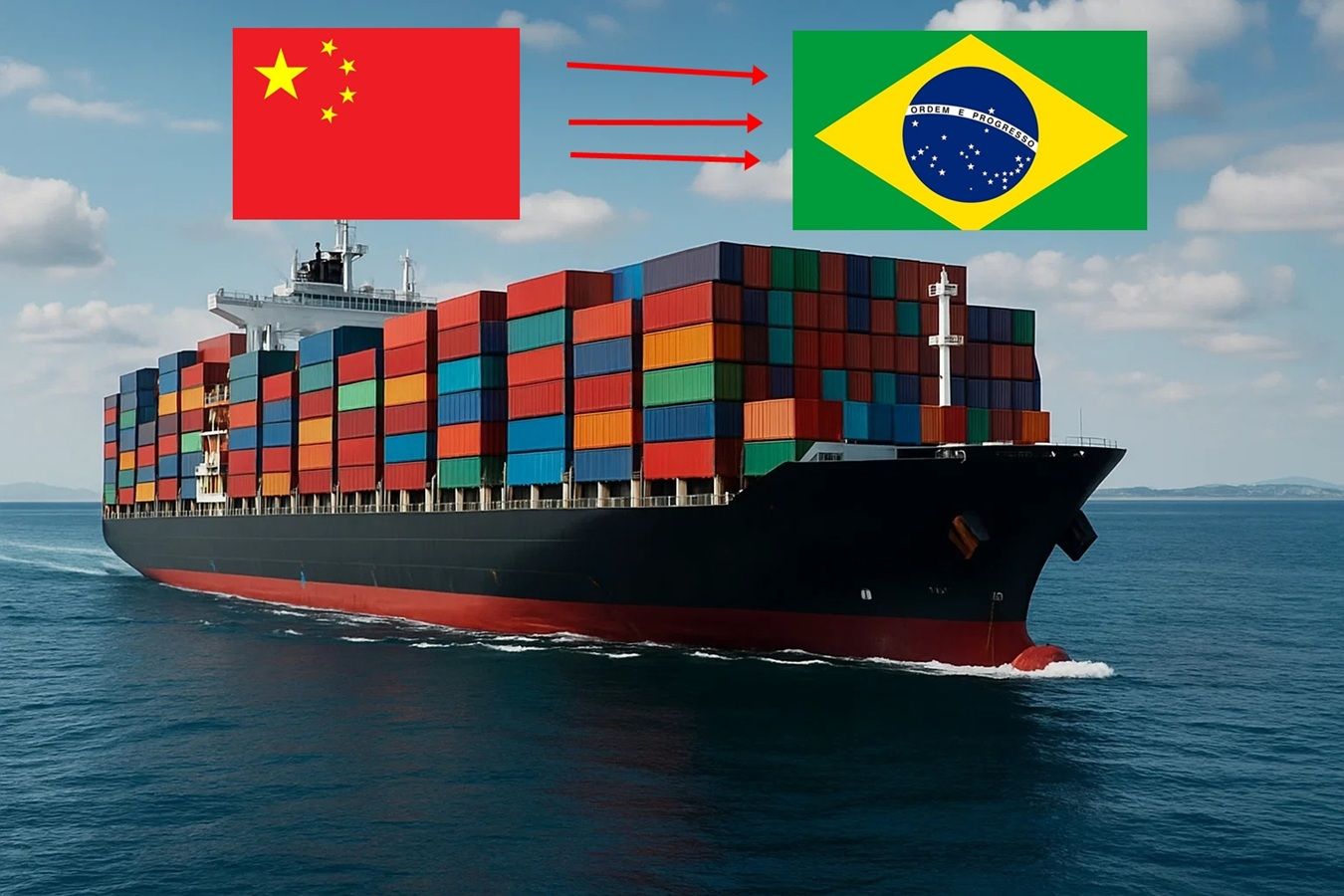
Last week, ocean container shipping costs stabilized after more than a month of sharp declines. However, forecasts for August indicate that spot freight rates will fall further.

The decline in transportation costs was driven by two main factors. The first was President Donald Trump’s trade policies, which led to tariff increases on imports from his major trading partners. A large number of shipments previously ordered to avoid the impact of tariffs were shipped to the U.S. between April and July. This rush is expected to wane in August.
The U.S. is implementing protectionist policies globally, and logistics must adapt to these new conditions.
The second reason for this change is that transportation services are gradually outstripping demand, both as a result of the first reason and the systematic introduction of new container ships by shipowners.
Drewry Quotes
“After weeks of turbulence,” the global Drewry Index (DWCI) fell just 1% last week to $2,499/TEU. The index peaked at $3,543/TEU on June 12 in the second quarter, which means it has fallen nearly 30% since then. Notably, the DWCI began the year (Jan. 9) at $3,986/TEU and then continued to fall until early April.
Drury reports, “This uncertainty began in April following the announcement of tariff increases in the US, which led to freight rates rising from May to early June. The market then declined sharply until mid-July, after which the downward trend tapered off and the rate of decline slowed significantly.”
Freight rates on the following routes saw the largest six-week decline: the Shanghai to Los Angeles route, down 55.5% (from $5,914/TEU on June 12 to $2,632/TEU on July 31); and the Shanghai to New York route, down 43% from $7,285/TEU to $4,135/TEU. Drury emphasized that as the U.S. paused to raise tariffs on Chinese products until mid-August, shipping lines are reducing services and canceling more flights along the Pacific coast and around Africa.
Paradoxically, after a series of rises and falls, spot freight rates from Shanghai to North Sea ports rose by $4 (week/week) last week to $3,290/TEU, up from $2,837 on June 12th. This was due to the fact that some cargoes were transshipped from China to these ports for onward shipment to the US. Freight rates from Shanghai to Mediterranean ports declined during this period ($4,054 on June 12 and $3,362/TEU on July 31).
Forecast
The Drewry Container Transportation Forecast report predicts that the supply/demand balance will weaken again in the second half of this year, leading to further declines in spot freight rates. “The volatility and timing of changes in freight rates will depend on the uncertainty surrounding Trump’s future tariffs and changes in capacity resulting from the introduction of entry fees for Chinese vessels at US ports.”
In its analysis, DB Schenker noted that the “tariff war” has led to a sharp increase in demand, which has caused congestion in Asian and European ports, with delays at berth ranging from a few days to sometimes up to two weeks. These bottlenecks will continue into August.
DB Schenker reports, “For refrigerated cargo carriers, these delays multiply the risk of spoilage and waste in the worst case scenario, but also multiply costs in the best case scenario, triggering equipment shortages and leading to a chain of shortages and delays in the future.”